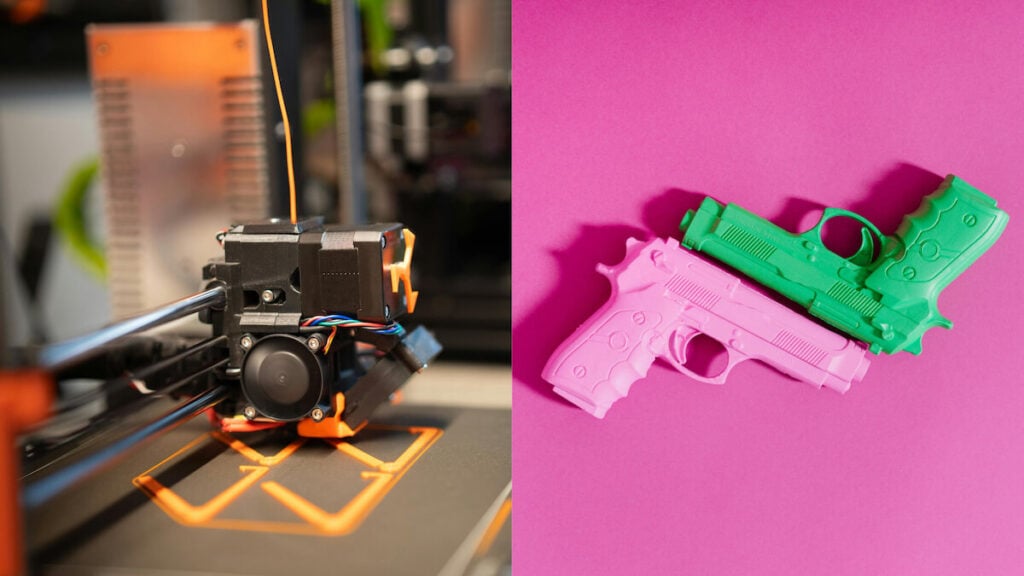
California lawmakers passed legislation requiring 3D printers sold in the state to include software that detects and blocks firearm blueprints before printing begins. The proposal would require manufacturers to install “firearm-blocking technology” that scans digital design files before printing. The software would block files flagged as capable of producing firearms or illegal gun parts.
According to TechSpot, Assembly Bill 2047, known as the California Firearm Printing Prevention Act, passed the state Assembly in a 58-19 vote and now advances to the California Senate.
Under the proposal, California’s Department of Justice or another state agency would establish technical standards for the detection systems by January 1, 2028. Manufacturers would then need to submit compliance certifications for every printer model sold in the state before July 1, 2028.
The state would also publish a list of compliant and non-compliant printer models. Beginning March 1, 2029, companies would be prohibited from selling non-compliant printers in California. Sellers violating the law could face civil penalties of up to $25,000 per violation.
The bill also makes it a misdemeanor to intentionally disable or bypass the required software to manufacture firearms.
Supporters argue the legislation targets untraceable “ghost guns” before they can be manufactured. Gun safety organization Everytown for Gun Safety cited data showing recoveries of 3D-printed crime guns across 20 cities increased nearly 1,000% over the past five years.
Critics, however, argue the proposal could disrupt open-source printing systems, create privacy concerns, and prove technically unreliable. The Electronic Frontier Foundation described the bill as “censorware,” warning the measure could push users toward manufacturer-controlled software ecosystems and cloud-based file inspection systems.
California Residents Condemn 3D Printer Restriction
The legislation quickly triggered backlash online from technology enthusiasts, software developers, and open-source communities who argued lawmakers do not understand how 3D printing systems actually function.
“This is the problem with tech-illterate people making policy on technology,” one commenter wrote while criticizing the proposal.
The same individual argued the idea “sounds good in principle” before questioning how detection systems could realistically identify firearm components. “How is a printer supposed to know what combination of parts creates a gun?” the commenter asked.
Others argued the software itself may be technically impossible to implement reliably. “This so called software doesn’t exist and cant exist,” one commenter stated.
Another user criticized lawmakers’ understanding of the technology itself. “Even worse, and highlighting how idiotic this is, 3d printers dont ever actually print 3d models,” the commenter wrote.
Some residents focused more on the privacy and surveillance concerns tied to mandatory file inspection systems.

“This is terrible because it requires 3D printers to connect to a third party for verification before every print,” one commenter wrote while warning about “privacy and security issues.”
Another commenter argued the proposal could expand broader monitoring systems tied to consumer hardware. “It’s a great idea if you are in the business of surveilling your own citizens ;-)” the individual remarked.
It remains unclear whether manufacturers or open-source advocacy groups will challenge the proposal before California begins enforcing compliance requirements in 2028.