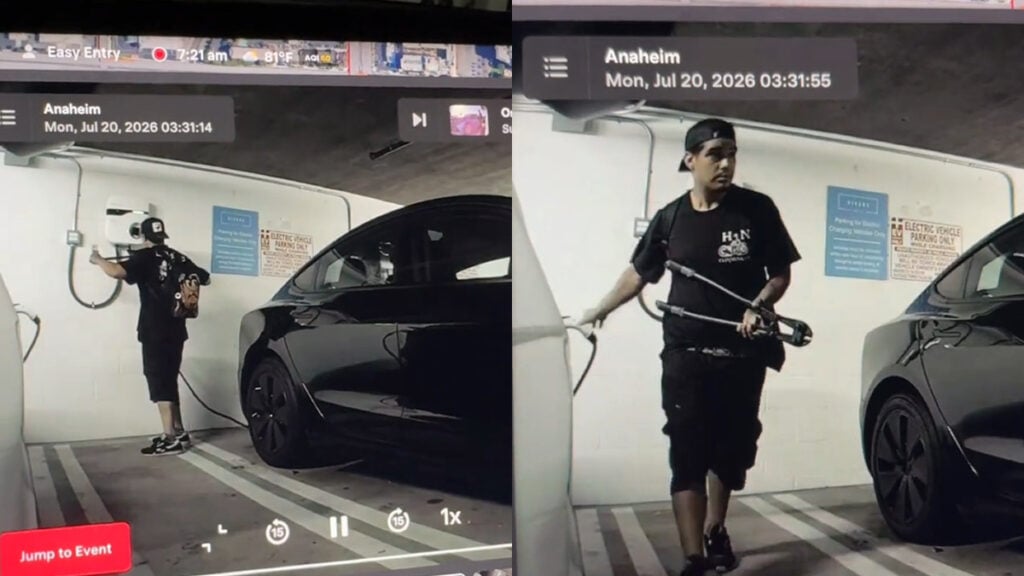
An Anaheim, California man says his Tesla charging cable was stolen by a man and woman while his vehicle was charging. The alleged theft was captured by the Tesla’s built-in cameras, clearly showing the pair as they removed the cable. The incident has drawn attention as charging cable thefts continue to rise across the United States.
The video was uploaded by TikTok user @tommiecrossholmes, who typically shares clips from his daily life. The footage of the alleged theft in California quickly spread online, attracting hundreds of thousands of views as viewers reacted to the suspects being caught on the Tesla’s cameras.
The video shows a man approaching the Tesla with what appears to be a pair of cable cutters before cutting the charging cable connected to the vehicle. A woman then walks over carrying a large tote bag and places the cable inside before the pair leave the scene. Throughout the incident, both individuals appear calm and unhurried, leading many viewers to speculate they had done something similar before.
According to the owner, the Tesla’s cameras recorded the entire incident, providing a clear view of the suspects’ faces during the alleged theft. The clip does not show any confrontation between the owner and the pair, only the footage captured by the vehicle itself.
The incident also reflects a wider trend. According to the Associated Press, charging cable thefts have increased across the United States as thieves target the copper wiring inside electric vehicle charging cables. The thefts have affected charging stations in multiple states, including Washington, California, Texas, and Arizona. Although the copper inside each cable has relatively low scrap value, replacing a damaged charging cable can cost operators hundreds or even thousands of dollars, leaving charging stations out of service and creating headaches for EV owners.
California Viewers Debate Tesla Cable Theft
The video’s comment section quickly turned into a discussion about both the theft itself and the broader issue of electric vehicles. Many viewers expressed frustration that thieves were willing to commit a crime for what they believed was a relatively small amount of scrap metal. Others pointed out that the damage caused by cutting the cable costs far more than the value of the copper inside. “All for 35 cents worth of copper,” one user wrote.

Some commenters said the video from California showed a growing problem they had experienced firsthand. Several shared stories of charging stations or workplace parking lots where multiple charging cables had been stolen despite surveillance cameras, bright lighting, and police reports. Others questioned whether the suspects would ever be caught or face consequences.
The discussion also expanded into electric vehicles in general. Some argued that cable thefts were becoming another inconvenience for EV owners and said the incident reinforced their preference for gasoline-powered vehicles. Others pushed back, saying the problem was caused by criminals rather than the vehicles themselves. A number of viewers also called for stronger security measures, including better surveillance and harsher penalties for those targeting public charging infrastructure.
The California suspects may have walked away with a charging cable, but they also left with something else: a front-row appearance on Tesla’s cameras. Sometimes the smartest witness is parked right beside the crime.