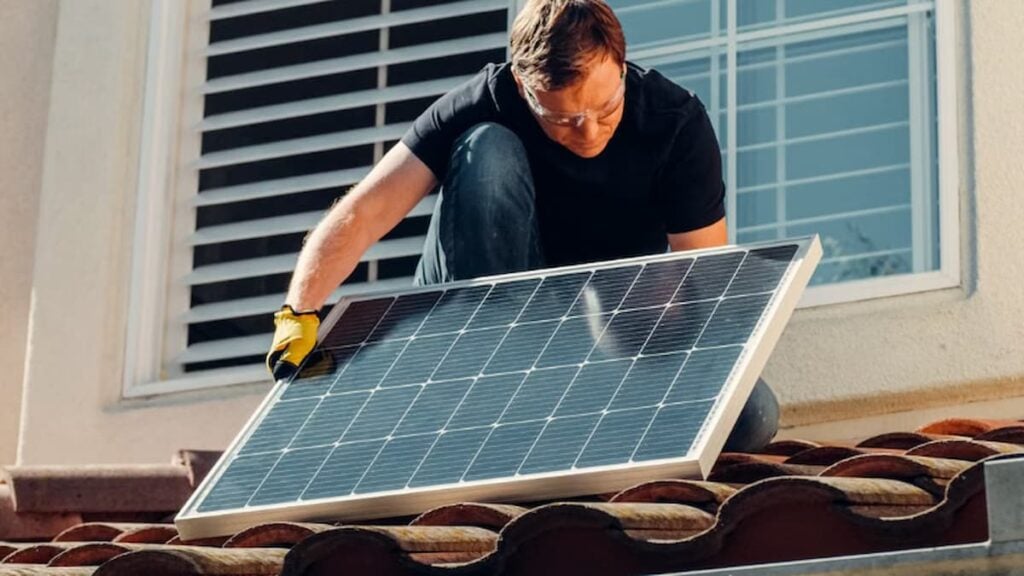
California residents struggling with high electricity bills could soon get some relief, with the state legalizing small plug-in solar systems that supporters say could save households up to $450 a year. The new law opens the door for renters and homeowners to generate their own power using compact solar panels without going through the lengthy approval process typically associated with traditional rooftop systems.
According to KPBS, Gov. Gavin Newsom signed the Plug and Play Solar Act into law this week, clearing the way for Californians to use qualifying solar systems of up to 1,200 watts. Rather than requiring a traditional rooftop installation, the smaller systems can be placed on balconies, patios, or other suitable spaces and plugged directly into a home’s electrical system.
The change could understandably be welcome for Californians feeling the pinch from some of the country’s highest electricity costs. Supporters of the new law estimate that a small plug-in system could shave as much as $450 a year off a household’s electricity bill, while also giving renters and people without access to a suitable rooftop a much cheaper way to generate solar power.
There are still a few catches, however. The law does not take effect until January 1, and qualifying systems will need to meet a new national safety standard. Depending on the equipment, some households may also need an electrician to install a special outlet, while the law itself is currently set to expire in 2030 unless lawmakers decide to extend it.
California Residents React to New Plug-In Solar Law
The change quickly caught the attention of Californians online, with many questioning why smaller solar systems faced so many hurdles in the first place. “It’s still absurd to me that the government (city, state, federal, whatever) can simply declare that it’s illegal for you to catch sunlight,” one Reddit user argued.
Others focused on whether the new systems could actually make solar more affordable. “Plug in solar makes a lot of sense for people in similar scenarios,” another person wrote. “Lower bar to entry, won’t take forever to pay off and no construction.”
For some residents, the news was enough to make them reconsider their own solar plans. “How does this work? The power goes back into your outlet and becomes available for the rest of your house to use… how?” one person asked, adding, “We are in the middle of quotes for a solar panel system and this might be an easier start.”
California’s high electricity costs remained a sore point throughout the discussion. One frustrated commenter asked why the state couldn’t “install public co-op solar farms in the desert and lower the [expletive] rates?” Not everyone was sold on the new approach, however, with another sceptic describing it as a “colossal pain and a financial boondoggle.”
Ultimately, the success of California’s new approach may come down to dollars and cents. With electricity bills continuing to squeeze household budgets, residents will likely be watching closely to see whether plug-in solar can deliver the savings supporters have promised. Up to $450 a year may not solve California’s wider energy-cost problem, but for families feeling the pinch, every little bit helps.