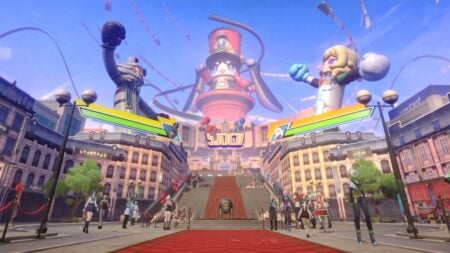
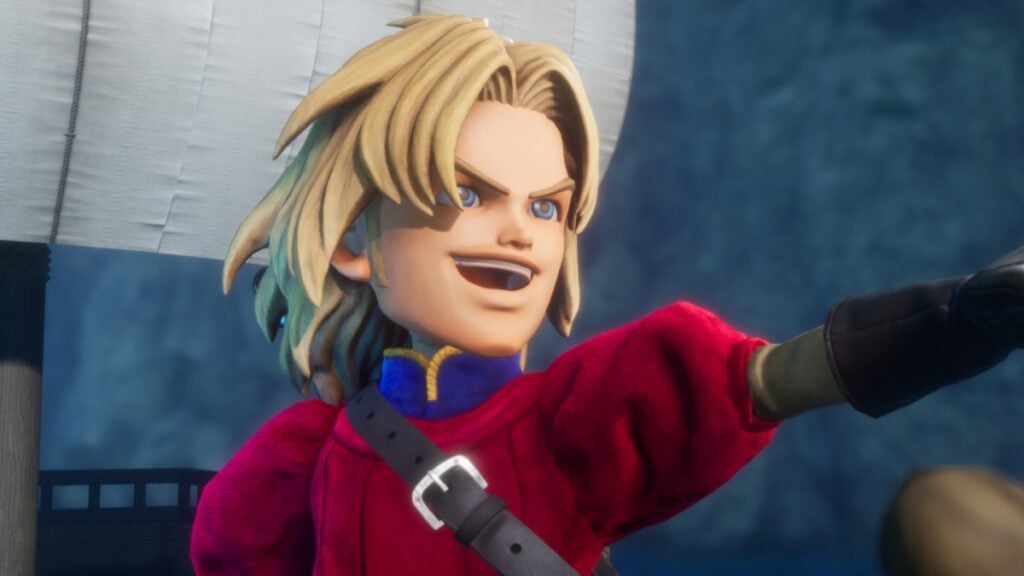
In the past, Dragon Quest was the RPG series I followed on and off. However, after reviewing the HD-2D Erdrick Trilogy last year, I fell in love with this franchise and became a fan of farming slimes and slaying golems. When Dragon Quest VII Reimagined was announced, I was ecstatic, especially since I never finished the 3DS version. Now, with a new style, brand-new combat additions, and a streamlined story, I can confidently say that Dragon Quest VII Reimagined is my favorite game in the whole series so far, and one whose visual style is just as great as the HD-2D we’ve all come to love.
A Tale That Transcends Time
Dragon Quest, as a series, has always managed to immerse us in this journey of starting as a fledgling adventurer and slowly becoming a world-saving hero—Dragon Quest VII Reimagined isn’t an exception.
The tale begins with the protagonist, the son of a fisherman, and Kiefer, a warrior set to become the next king, both eager to go on an adventure beyond the confines of their island. After finding a strange tablet fragment and welcoming Maribel, the mayor’s daughter, into the party, they travel through time and slowly realize that the world has been fragmented, with some islands stuck decades in the past. Here, our adventurers become heroes destined to restore the world.
Now, the story of Dragon Quest VII might not be new to many, but it is certainly a novelty for those jumping into this voyage for the first time. For that reason, I will not spoil any details, especially the changes in the remake. However, the storytelling aspect of Dragon Quest VII Reimagined is among the best in the franchise.
This installment focuses more on the individual stories of each island, past and present, slowly building an overarching plot that transcends time. While the general narrative shines, the islands’ stories sometimes eclipse it. I found myself laughing to the point that my stomach hurt, and just watching the screen silently as I held back my tears in others. It is remarkable to see what the developers have done with the plot here: they can tell so many self-contained stories yet not abandon the overarching narrative.
Of course, the whole cast of characters shines as well, but not as much as the world. In a way, it feels as if Dragon Quest VII puts the islands front and center to drive the plot, and I really enjoyed that. Still, that doesn’t mean characters are left on the sidelines. All party members are highly memorable, with my favorites being Maribel and the fan-favorite Ruff.
As for what isn’t in this version anymore, I’d say it didn’t feel like a big loss. The original Dragon Quest 7 and even its first remake were already among the longest in the series, and at times, they felt bloated. I prefer what Reimagined has done with its story pacing, and while I still feel a few things could have arrived sooner, gameplay-wise, this is the best way to experience this classic.
A Vocation for Every Adventurer
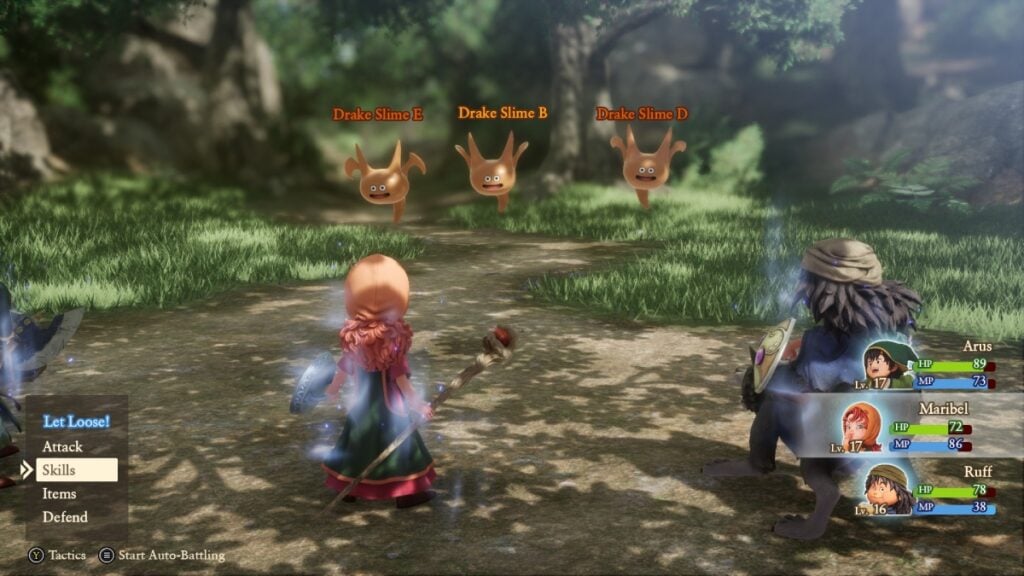
Besides the superb narrative, the combat system of Dragon Quest VII Reimagined is among the best in the series. While it still retains its turn-based foundations, it has vastly changed to become more accessible, yet just as challenging and as deep as many might remember.
Some of the most notable changes are the addition of the “Let Loose” mechanic, the rework of Monster Hearts, and the Moonlighting feature.
Out of all those, you’ll get the first two pretty quickly in the game. Let Loose allows you to activate a vocation-exclusive ability that either gives a damage bonus to all spells or even completely negates the damage of one enemy attack. Each job has a different effect, and it was nice to swap vocations around to find that perfect effect during combat.
Monster Hearts, on the other hand, are now equipable items that give you passive bonuses, which also open the door to many interesting builds. For instance, one Slime Heart restores 10 HP every turn; you can pair that with your tank-like character to make an almost invincible party member. Since every Monster Heart is different, and you can equip two at a time instead of accessories, you can really make some outstanding combinations, which ended up becoming one of my favorite side activities in the game.

Beyond that, the vocation system has also received some love, with players now being able to equip two at a time, which further increases build options for your party members. I’m not among the best min-maxers out there, but those playing on the hardest difficulty will have a field day when creating some wild combinations.
Now, my only gripe about this remake is that, despite the adjustments to improve pacing, vocations still take a long time to arrive. I wouldn’t have an issue if your original vocation was still getting some unlocks. However, you can max out your first job quickly and then get stuck with it until 15 hours later, when the vocation system becomes available. It isn’t a big deal, especially since the narrative often made me forget about the combat, but after a while, you just want to experience something new gameplay-wise.
Other than that, Dragon Quest VII Reimagined nails its combat system and makes it highly accessible to new players, while retaining its depth, which will be great for veterans of the series. Also, and something I appreciate from modern turn-based games, is that you can still pick your fights in the overworld, and even wallop your foes before entering combat for an advantage.
Exploration Done Right
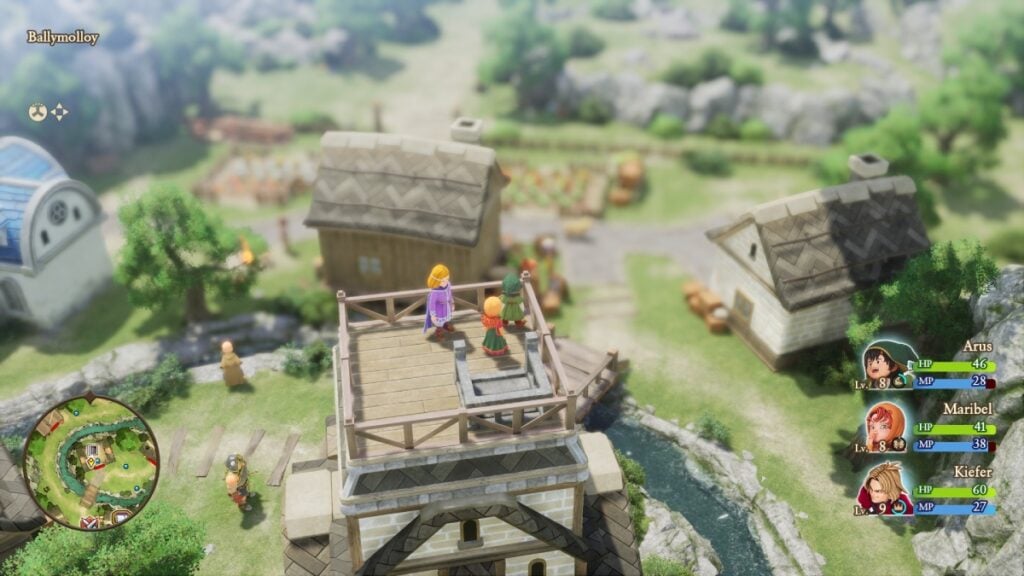
One of the many staples of turn-based RPGs is how linear they tend to feel, and that is perfectly fine. However, at times Dragon Quest VII Reimagined abandons that linearity in favor of player-driven exploration that is highly rewarding.
To give you an example, once the world opens up, you’ll get some clues about where the next fragments are. Usually, you’ll locate them on the island you’ve brought back to the present. However, you won’t get the exact location, so you’ll have to go searching for it, and maybe even find a few items along the way or encounter something you weren’t expecting.
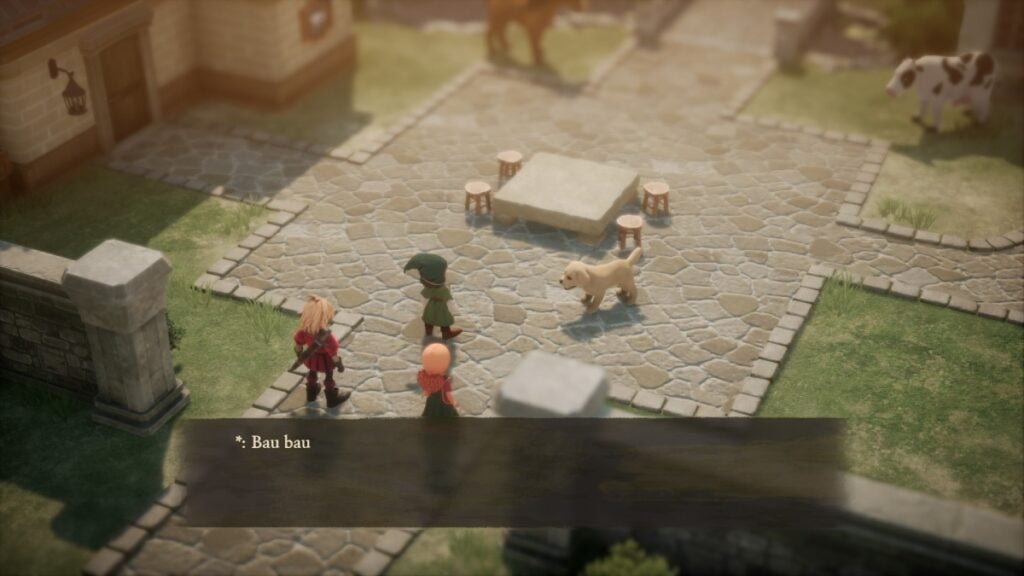
Yet what makes exploration even more enjoyable is the map’s beauty. It is hard to believe that Square Enix has now created two gorgeous styles for its remakes, but it has. Before, I thought nothing could top the beautiful HD-2D style. But now, I love this diorama-like approach, with unique 3D models that give the game a nostalgic tint while also feeling modern for new audiences. It is the middle ground between the style of Dragon Quest XI and the old-school games of the series. And frankly, I hope Square Enix continues adopting this style for more remakes of whatever game they want to bring into a modern stage next.
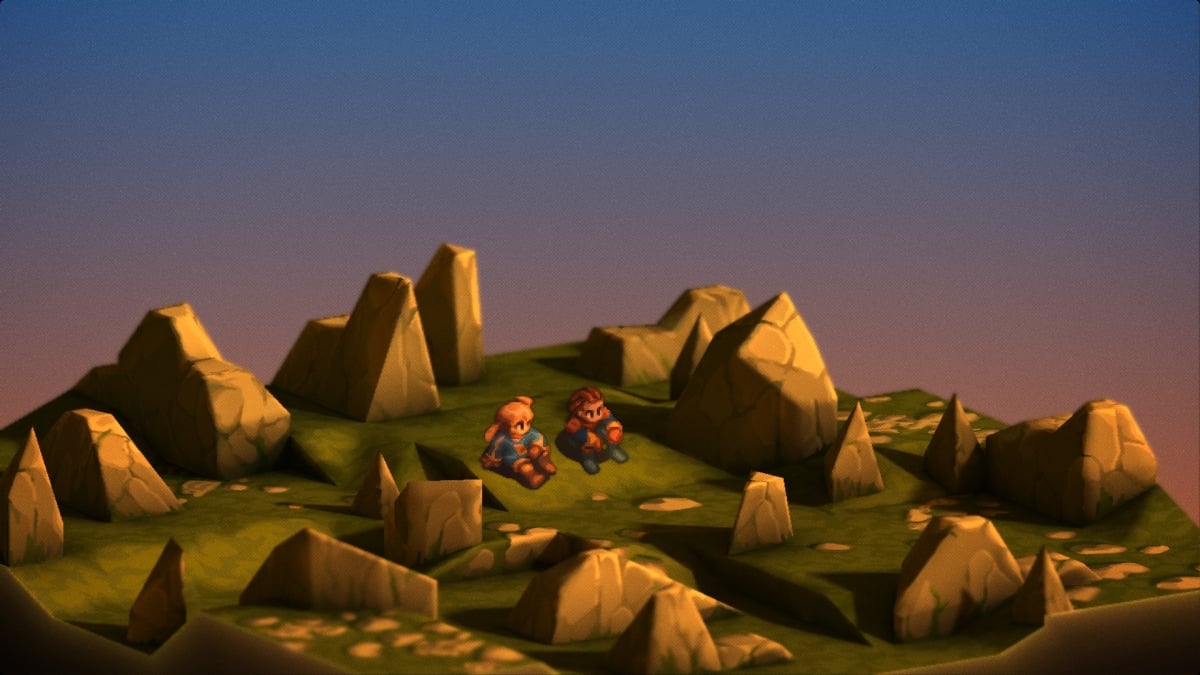
Even if the narrative and the combat are the two things people will talk about the most, the exploration part is something that stuck with me even after I closed my adventure log. It is strange how, despite playing another version of this game in the past, this is the one that really immersed me into its world and characters, and it is all thanks to this map housing so many items to discover and monsters to fight—it really sells you the sense of adventure that few games manage to do.
A New Standard for Remakes
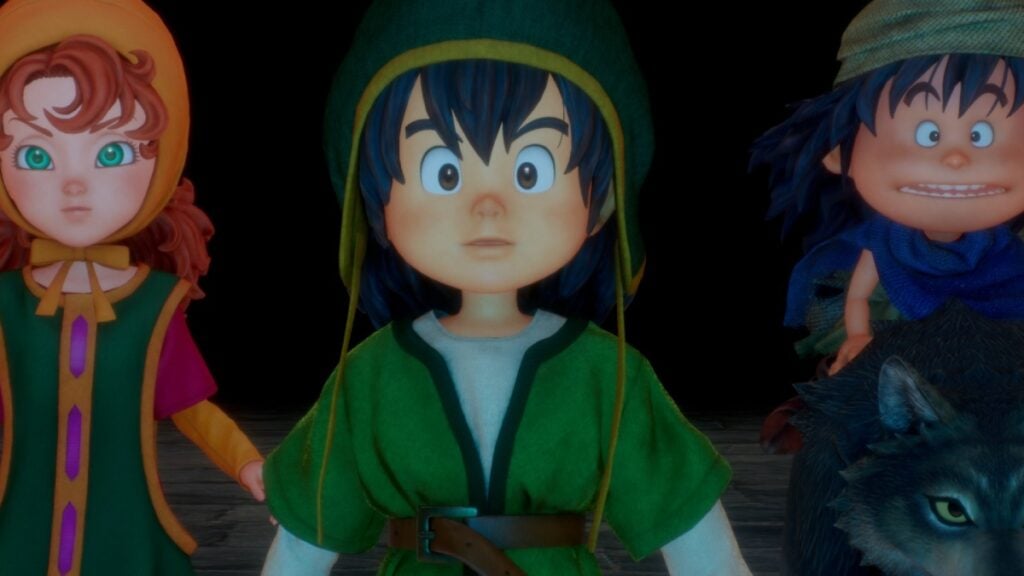
Square Enix excels when it comes to remakes, and in the case of Dragon Quest, this one takes the crown. Dragon Quest VII Reimagined does more than streamlining the longest adventure of the franchise. It brings back the feeling of being an adventurer who becomes a hero in an epic tale. But beyond that, it also positions itself as one of the most accessible Dragon Quest titles and one that sets a new standard for remakes of this series.
Even if I think the vocation system could have arrived a bit earlier, the truth is that the game enthralls you at every turn with its unforgettable stories and characters. I never thought Dragon Quest VII Reimagined would quickly become my favorite game in the franchise, and I only hope we will get to see other games remade with this approach because Square Enix has done a remarkable job at reviving a timeless classic.
Dragon Quest VII Reimagined (PC Reviewed)
Dragon Quest VII Reimagined flawlessly combines the old-school feel of this game, but revamps many of its systems to make it one of the most accessible entries in the whole series.
Pros
- A superb narrative
- Excellent new combat features
- A gorgeous visual style
Cons
- Vocations take too long to unlock