
A proposed Trump administration rule that would expand political oversight of federal grant funding is drawing sharp criticism from advocacy groups, scientists, Democratic lawmakers, and online commenters who fear it could give presidential appointees unprecedented influence over money already appropriated by Congress.
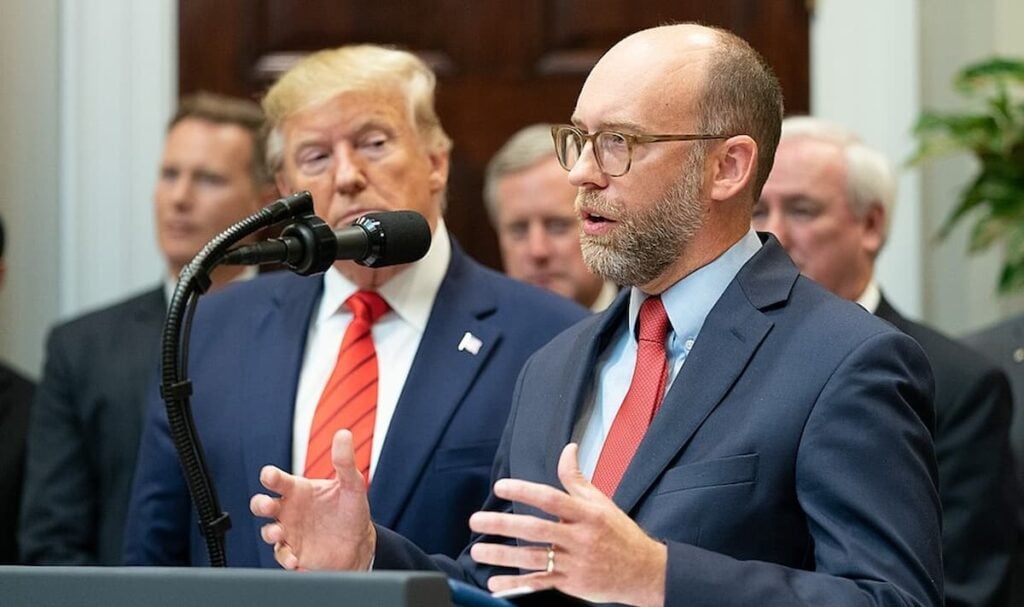
The proposal, developed by Office of Management and Budget Director Russell Vought, would require federal agencies to conduct reviews of grants before they are issued. According to the rule, agencies would need to ensure funding decisions align with federal priorities, applicable law, and what it describes as the national interest.
More than 300 organizations signed a letter urging the administration to extend the public comment period, arguing that the proposal could affect grant-making across the federal government. The groups warned that the rule’s reach could extend to billions of dollars in funding tied to research, education, public health, and local development projects.
As recently written about by Common Dreams, critics have focused on language that would allow political appointees to screen grant recipients based on standards that include whether organizations promote what the rule calls “anti-American values” or support “ideologies that deny the biological reality of sex or the sex binary in humans.”
Lawyers for Good Government and the Environmental Protection Network recently argued that the rule could place senior political officials in charge of approving or canceling individual grants while reducing due process protections for recipients.
Jillian Blanchard of Lawyers for Good Government described the proposal as “an executive power grab that would hand presidential political appointees unchecked control over more than a trillion dollars that Congress appropriated in the interests of all Americans.”
Citizens Warn of Political Loyalty Tests
Discussion of the proposal exploded on Reddit’s r/law community, where many commenters framed the issue as a constitutional battle over congressional spending authority.
One commenter argued that “the Executive branch does not control the allocation of funds. Congress does,” adding that legal challenges should be used to block what they view as executive overreach.
Others expressed concern that federal funds could be distributed based on political loyalty rather than public need. The article’s central claim that organizations could face a test of whether they are “sufficiently loyal to the president” is a clear focal point of discussion.
Some reactions were even more blunt. One commenter wrote that officials were “just straight-up stealing our tax money,” while another described the proposal as “literally robbing the country blind.”
Several users singled out Vought himself. References to the television series The Boys appeared throughout the thread because of the shared surname with the fictional corporation Vought International. One commenter simply declared, “Vought is evil,” while another called him “the most dangerous of the bunch.”
Rep. Rosa DeLauro, the top Democrat on the House Appropriations Committee, echoed broader concerns, warning that communities could lose access to disaster relief, medical research funding, Head Start programs, and other services if grant decisions become tied to political considerations.
The proposal remains open for public comment, with critics continuing to argue that it could reshape how federal funding is distributed across the United States.