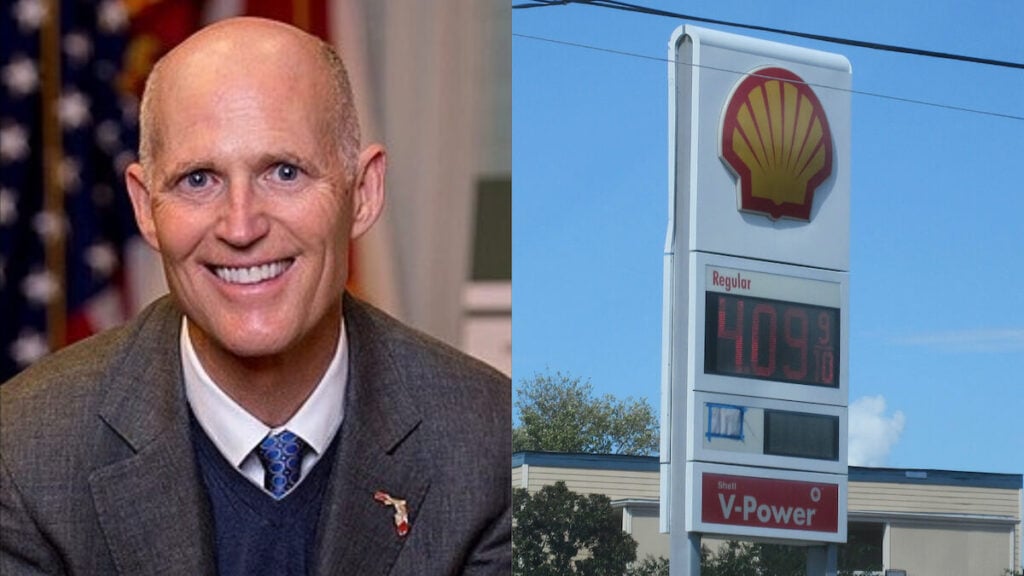
Florida Sen. Rick Scott rejected the argument that the Iran war was a choice while discussing rising gas prices. He acknowledged frustration over high gas and diesel prices but contrasted those costs with what he described as nuclear danger. Scott said he did not want his children or grandchildren “killed by a nuclear weapon.”
During an interview on CNBC, a host raised criticism that the war had worsened affordability despite Republican promises. Scott rejected that framing and said Iran had been close to obtaining a nuclear weapon.
“It wasn’t a war of choice,” Scott said. He argued previous presidents had appeased Iran and accused the country of killing Americans for decades. He said action was necessary if Iran intended to obtain a nuclear weapon and use it against Americans.
Scott then turned to energy costs. He said nobody likes war or high gas and diesel prices. However, he again contrasted those concerns with the risk he associated with nuclear weapons.
“I don’t like high gas prices, but I don’t want to be killed by a nuclear weapon,” Scott said.
He also defended President Donald Trump’s energy approach and said the administration was building up domestic oil and gas production. Scott added that progress would take time.
Rick Scott Faces Backlash Over Iran War, Gas Prices and Nuclear Warning
Scott’s comparison drew ridicule from users who rejected the choice between higher fuel costs and the threat he described.
One response mocked the framing directly: “Now it’s ‘pay $6 for diesel or you might get nuked.’ Fear is the entire sales pitch.” Another pushed back on the either-or argument, writing, “As if there are only 2 options. I like cheap gas, solar power, electric cars, and not being blown up.”
Others leaned into sarcasm. “Rick Scott’s whole energy plan is a choose your own doomsday book,” one user wrote. Another rejected the nuclear warning outright: “Iran was never going to nuke the US. Nobody is buying your BS anymore.”
The dispute now centers on whether the nuclear risk Scott describes justifies the economic pain he acknowledged, particularly as Americans continue dealing with higher prices at the pump. For his critics, however, the comparison has done little to ease those concerns, with many continuing to challenge both his argument and the fear they believe is being used to sell it.