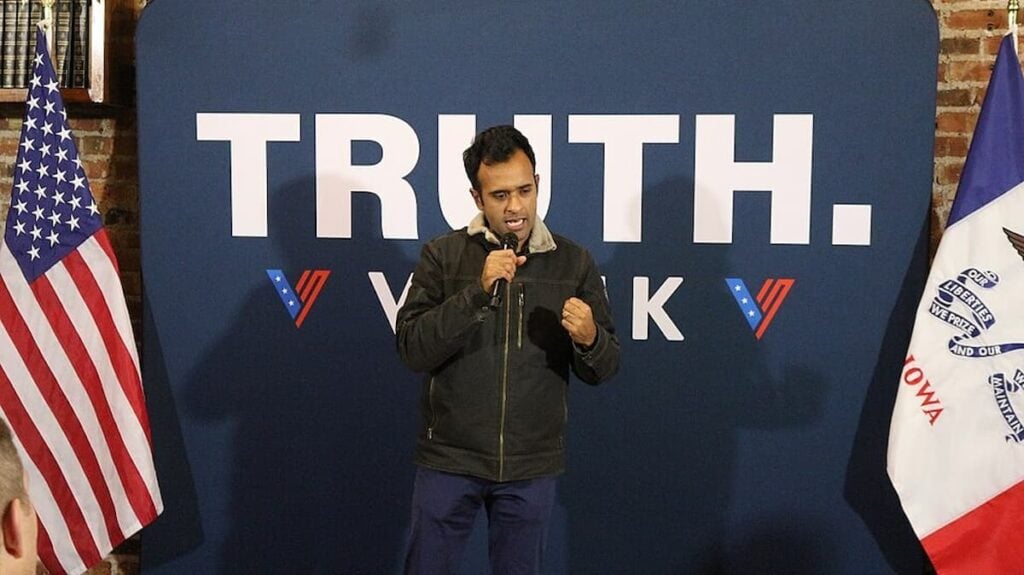
A fresh fact check is fueling another political hot potato in Ohio after Republican gubernatorial nominee Vivek Ramaswamy denied that he ever pushed to close public universities, despite earlier public statements calling for the state’s higher education system to be consolidated.
The report points to Ramaswamy’s own March video, where he said Ohio has “too many” universities and argued they “need to be consolidated.” It also cites a later campaign column proposing a state review of public institutions, identifying overlapping missions, declining enrollment, and potential administrative consolidation.
At a recent town hall in Strongsville, however, Ramaswamy rejected the characterization that he wanted to shut universities down. Instead, he said his focus has always been on eliminating duplicate academic programs. That explanation has done little to quiet critics.
Over on the Ohio subreddit, commenters seized on the apparent contradiction. One of the most upvoted reactions summed up the mood with a sarcastic, “Fork found in kitchen,” suggesting the discrepancy was unsurprising. Others were far more direct.
“He publicly stated so just in the last few weeks,” one commenter wrote. “All you need to do is listen.”
Another argued that “digital video logs don’t just disappear,” referencing the campaign videos and interviews cited in the fact check.
Even some commenters who questioned the article’s framing acknowledged the distinction at the center of the debate. One user argued that Ramaswamy’s previous comments appeared to focus on consolidating academic programs rather than literally closing university campuses, suggesting the headline stretched beyond the quoted evidence. That perspective highlighted the central disagreement over whether restructuring programs would inevitably lead to diminished campuses or institutional closures.
Ohio Republicans Already Broke Ranks
The criticism has not come only from political opponents. Republican Gov. Mike DeWine publicly rejected the idea of consolidating Ohio’s public universities earlier this year, saying the state’s campuses remain important for students who cannot afford to relocate for college.
State Sen. Jerry Cirino, a Republican who has played a leading role in higher education legislation, also questioned the proposal. While saying discussions about branch campuses and low enrollment programs were worthwhile, he expressed skepticism about broader consolidation of Ohio’s university system.
University leaders echoed those concerns, arguing that regional campuses serve unique local communities and should not be viewed solely through enrollment figures.
The renewed attention arrives as higher education becomes an increasingly prominent issue in Ohio’s governor’s race.
Supporters of Ramaswamy argue his goal is greater efficiency and stronger specialized academic programs. Critics counter that his more recent comments conflict with his earlier public statements and campaign writings.
With archived videos, opinion columns, and town hall remarks all circulating online, the debate has shifted beyond policy itself to a broader question of consistency. As the campaign intensifies, those earlier comments are likely to remain part of the conversation, especially as voters compare what candidates said months ago with what they are saying today.