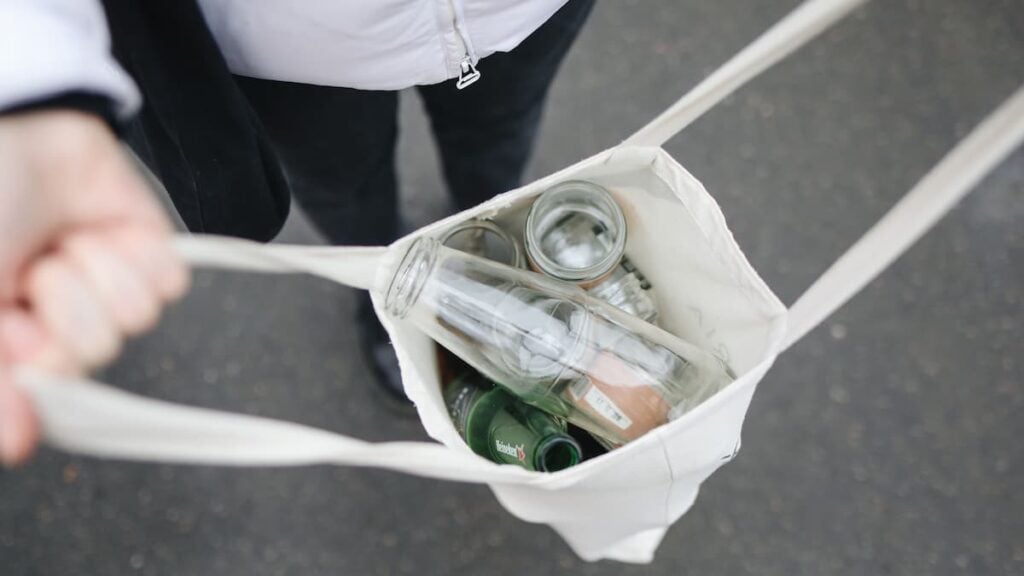
For Michigan families used to collecting cans and bottles for their 10-cent deposits, returning them has long been an easy way to put a little money back in their pockets. But more residents appear to be deciding the hassle simply isn’t worth it, with Michigan‘s bottle return rate falling to a decades-low 69.4% and an eye-catching $119.2 million in deposits going unclaimed last year.
As reported by ClickOnDetroit, Michigan’s bottle return rate dropped to 69.4% in 2025, its lowest level in decades. State data shows residents paid $389.7 million in bottle deposits during the year but received only $270.4 million back, leaving $119.2 million unrefunded — up from $116.4 million the previous year.
Remarkably, the decline is particularly striking when compared with Michigan’s past return rates. Before the pandemic, 88.7% of eligible containers were redeemed in 2019, while rates regularly exceeded 90% in earlier years. The latest figures therefore suggest a significant shift in how residents are using a system that has been part of everyday life in Michigan for decades.
The falling return rate has also renewed debate over whether Michigan’s bottle return system needs to change. Retailers have raised concerns about the time, staffing and space required to process returns, with some pushing for dedicated redemption centers instead. For residents, however, the bigger question may simply be whether getting their 10 cents back is still worth the time and effort involved.
Michigan Residents Explain Why They’re Giving Up on Bottle Returns
Michigan residents had plenty to say about the decline on Reddit, with some surprised that so many people were apparently willing to leave their deposits behind. One person couldn’t believe it, writing, “You’re telling me that 30.6% of ppl just throw that shit away? I just returned bottles last night. I will return more tonight. Wtf? I wish I had money like that!” For others, however, the problem was less about the money and more about the inconvenience. “I hate how you have to take bottles back where they came from. I shop at Aldi, Trader Joe’s, etc. and the private brands all have to be sorted and kept separate. It makes me less likely to return them,” another explained.
Several residents also complained about machines refusing containers they believed should have been accepted. One recalled, “The last time I went over half would not be accepted even though I purchased them at that exact store.” Another summed up their frustration more simply: “It is totally brutal. The time it takes usually means it is not worth your time.”
For some Michiganders, those frustrations have already been enough to change their habits completely. “I’ve been this way since COVID; not worth my time or money to fight with broken machines over, at most $1 or $2 when I got shopping a few times a month,” one person admitted. Another described having to split returns between different retailers, writing, “I buy Izze from Costco. My husband takes cans back to Kroger. For some reason, Kroger doesn’t take certain flavors so those have to be taken back to Costco. It is maddening!”
For Michigan residents, the numbers suggest the problem isn’t that people suddenly stopped caring about getting their dime back, but that many no longer feel the process is worth the hassle. When broken machines, rejected containers and trips to multiple stores stand between families and a few dollars in deposits, it’s perhaps unsurprising that more people are simply giving up. With $119.2 million left unclaimed in 2025, however, that’s an awful lot of dimes being left on the table.