
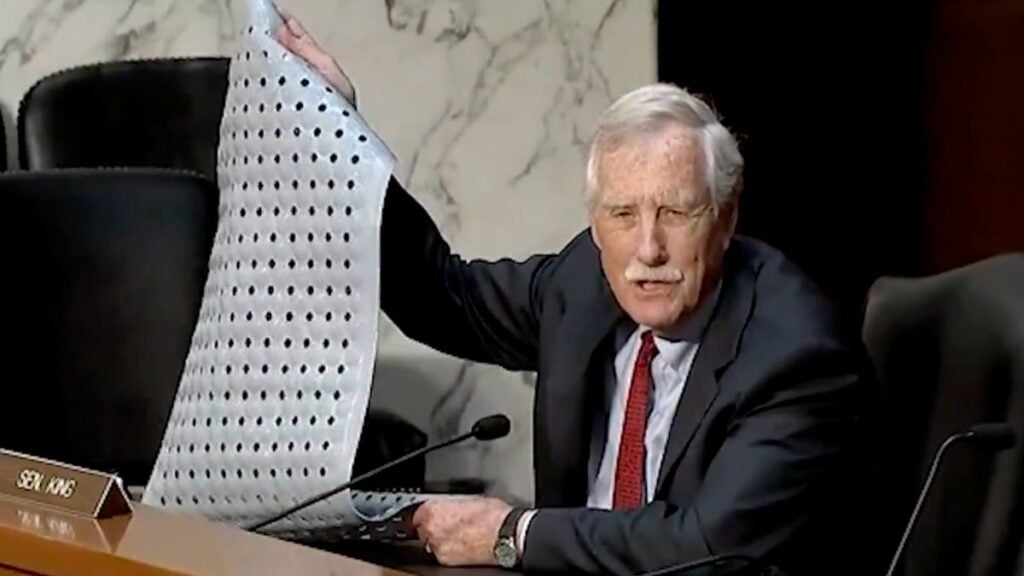
Falls reportedly cause 39,000 deaths for American seniors over 65 every year, and another 3 million trips to the ER. Their number one cause: the bathroom. Maine Independent Sen. Angus King’s solution is an $11 bath mat that has divided the internet nearly equally after a clip of him talking about it went viral.
In the clip currently circulating, King lays out the argument for making simple fall-prevention equipment covered by Medicare. As a point, he mentions a non-slip bath mat costing $11 that, when compared to tens of thousands for a hospital stay, shows the economic benefit of prevention.
He literally holds up a rolled-up bath mat, calls himself the “Johnny Appleseed of bath mats,” and says it’s “insane” that the system reimburses injuries but not basic safety items.
“Send out 20 or 30 million of these,” he says, noting the potential for a positive return when compared to reacting to falls. The comment is in line with the bill King introduced along with Rep. Seth Magaziner (D-RI), called the Stand Strong for Medicare Act.
The Stand Strong for Medicare Act would add to Medicare Part B to cover fall prevention equipment such as grab bars, non-slip shower mats, shower chairs, and bed rails. These are items that currently fall outside of what Medicare covers, as they are typically considered personal comfort items, rather than necessary medical items.
14 million seniors fall each year, causing 3 million emergency room visits, and resulting in 39,000 deaths. It’s estimated that non-fatal falls alone cost the healthcare system $80 billion per year and are the leading cause of injury in older adults.
Internet Reacts To Maine Sen. Angus King’s Medicare Bath Mat Proposal
The comment section split faster than most. Several responses acknowledged the underlying logic while still raising objections. “There are many things wrong in the world, and especially with US entitlement programs, but this is a thoroughly decent idea. If managed correctly, a prevention program focused on low-cost items like bathmats would likely have an outsized ROI,” one person wrote.
Another made the same case from a different angle: “We need to incentivize good health behaviors. Preventative care would probably save us way more than reactive care.”
The waste argument came back hard. “Sure, just mail out 50 million unnecessary bath mats. You are the reason we’re broke,” one comment read, while another asked flatly: “You want to mail out bathmats en masse, whether or not people need or want them? And you think this is handling taxpayer money responsibly?”
One comment introduced a darker read on why the system might resist the idea at all: “Broken hips make more money for the medical industry so no, we won’t send you bath mats. What’s next, make all people healthy and fit?” And one response went straight for the political angle: “Well, since you guys made a point to cut the taxes on Social Security for yourselves, maybe you can take those savings and buy your own damn bath mat.”

Maine Sen.’s math is that an $11 bath mat purchased by millions of seniors who might be at risk costs much less than the immediate hospital fees and long-term care costs that come with a fall. While it is unclear exactly whether his proposal includes mailing a plethora of bath mats or if it’s just a point about their accessibility via Medicare reimbursement, the difference is in the details of the bill.
The legislation itself does not suggest the mass mailing of the equipment. Rather, it would establish the ability to reimburse yourself for the purchase of fall prevention equipment through Medicare.