As someone who’s been a fan of the Monster Hunter series for many years, it’s unusual to have so many releases in such a short time. Whether it is a creature-collector RPG, an expansion, or a brand-new, gorgeous adventure, we’ve been eating well, like a hunter before a hunt. Now it is time for Monster Hunter Outlanders to get the spotlight it deserves. While it can be a bit overwhelming at times, it is still a wonderful Monster Hunter experience, and the most accessible one we’ve had in several years.
Welcome to Aesoland
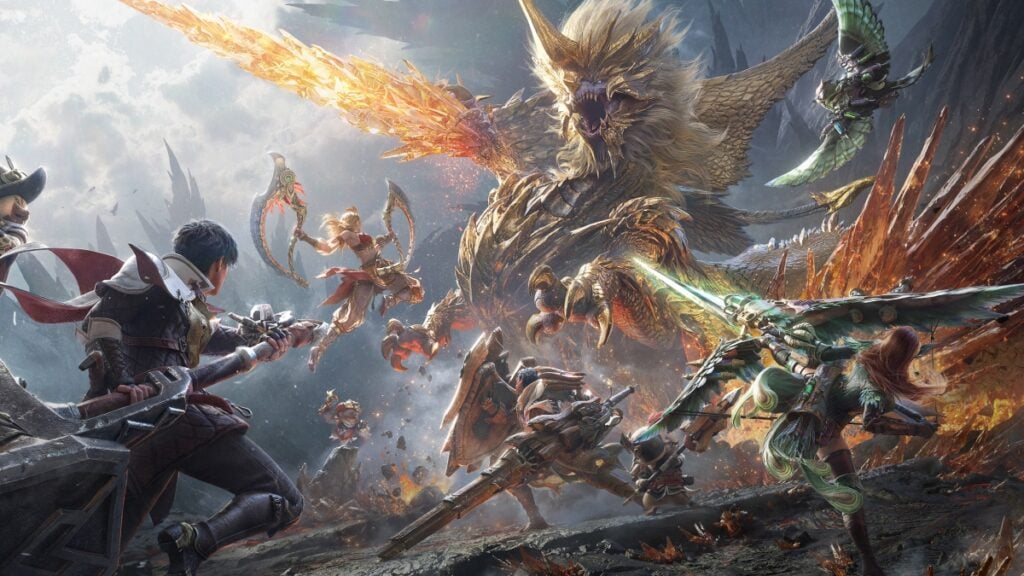
After its announcement, I was fortunate to attend hands-off and hands-on preview events for Monster Hunter Outlanders, testing different builds, with the last one being the one many other Adventurers will likely play soon.
Once I got access to the test, I joined my server, created my Fated Adventurer, and once again experienced the intro cinematic that makes my jaw drop every time.
Right off the bat, Monster Hunter Outlanders is among the most impressive Monster Hunter games out there, hands down. Despite being a mobile-exclusive installment, I’m surprised by just how mind-blowing everything looks, and we all have to thank the TiMi Studio tech wizards for that. Even on my tablet, which isn’t the best on the market right now, I was able to play with a steady framerate and good visuals. Yet, those with a more modern mobile device will really get to see Aesoland in all its splendor.
But many former Hunters may be wondering, “Just how close is Outlanders to a proper Monster Hunter experience?” Well, the truth is that it is quite similar and at the same time vastly different. While I will go over the progression systems in a bit, I’d like to focus on the combat area first.
Since Outlanders is landing on mobile devices, it shouldn’t come as a surprise that the developers made this title extremely accessible, and I say that as something great. As soon as you control your character for the first time, you get to pick between Adventure and Classic mode.
Adventure simplifies combat. A lot. You only tap two or three buttons: one for your basic attack, one for your skill, and one to dodge. While I consider myself a veteran hunter of the sort, doing my daily Omega and Gogmazios grinds on Wilds, I really liked Adventure mode, especially for the quick hunts where I only needed a few materials to craft an armor piece or weapon.
Yet, Classic mode is where you can really let your skills take shape. Here, you have way more inputs, no attack warnings, and it’s all about giving you that, well, as the name implies, classic Monster Hunter experience. Still, it is quite simplified, but I think it is a fantastic middle ground, especially for a mobile-exclusive game with a smaller screen.
Despite being a bit skeptical during my first runs in Monster Hunter Outlanders, from its first beta tests to this last one, I am extremely satisfied with what TiMi Studio achieved. Adapting such a huge franchise to mobile is no easy feat, but the developers found a great compromise that appeals to both newcomers and veterans.
Lastly, and if you’re wondering why I haven’t talked about the story yet, it’s because Monster Hunter Outlanders suffers from one issue many other live-service games have in their 1.0 version: a lack of narrative focus.
That’s not to say it is bad. Frankly, it’s on par with many other stories in the Monster Hunter universe, but don’t expect anything groundbreaking or tear-jerking, at least not in this version. That said, the worldbuilding around Aesoland is great, and it really sells the experience of landing in this unexplored, dangerous land to hunt these behemoths, which, let’s face it, is what we all love most.
The Long Grind
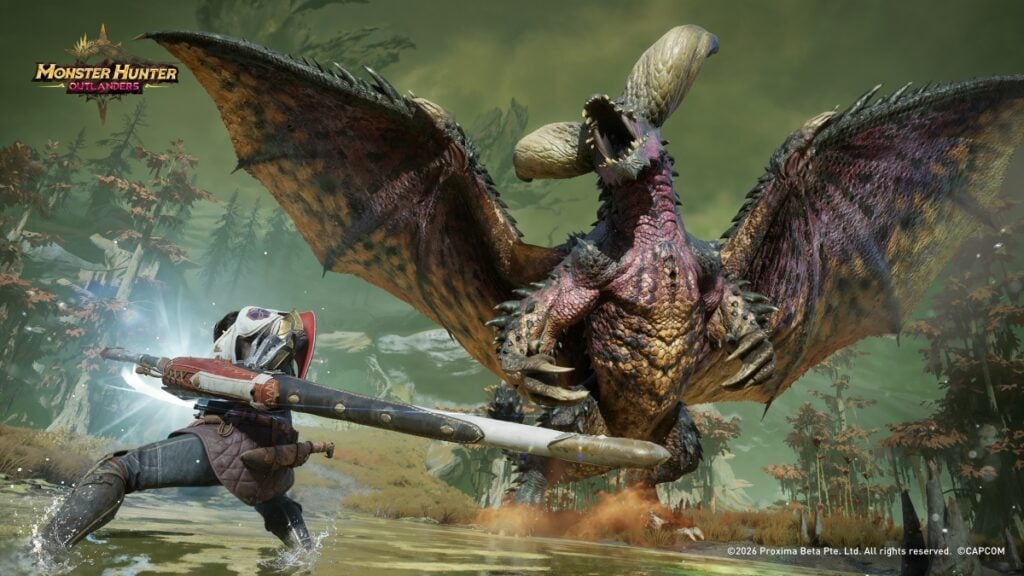
Grinding is synonymous with Monster Hunter, and once again, I say that in a good way—I’ve always loved that gameplay loop. Smacking the same monster over and over just to see if you get that material for your last armor piece or weapon is amazing. So, the truth is, I’m somewhat impervious to the grinding process in several titles. Still, one thing you should know is that Monster Hunter Outlanders has gacha elements.
What I mean by gacha-coded is that you’ll be looking at dozens of currencies and even more on top of that as you progress through the game. Add that to the many materials you have to get for your armor and weapons, and yeah, it will be hard to keep up.
Normally, I wouldn’t complain about something like this. After all, every mainline Monster Hunter title is overwhelming in a way, especially after reaching the endgame. Yet, Monster Hunter Outlanders might be even more overwhelming to players who only know the classic experience and have never played a gacha.
Another issue, one I have with every other game in this same vein, is the gatekeeping. While it isn’t as egregious as the one in Endfield, you need to be aware that Outlanders will place several bumps on your road. You may want to continue with the story, but instead of just getting a new armor set to face the new monster, you’ll have to level up one or two different things.
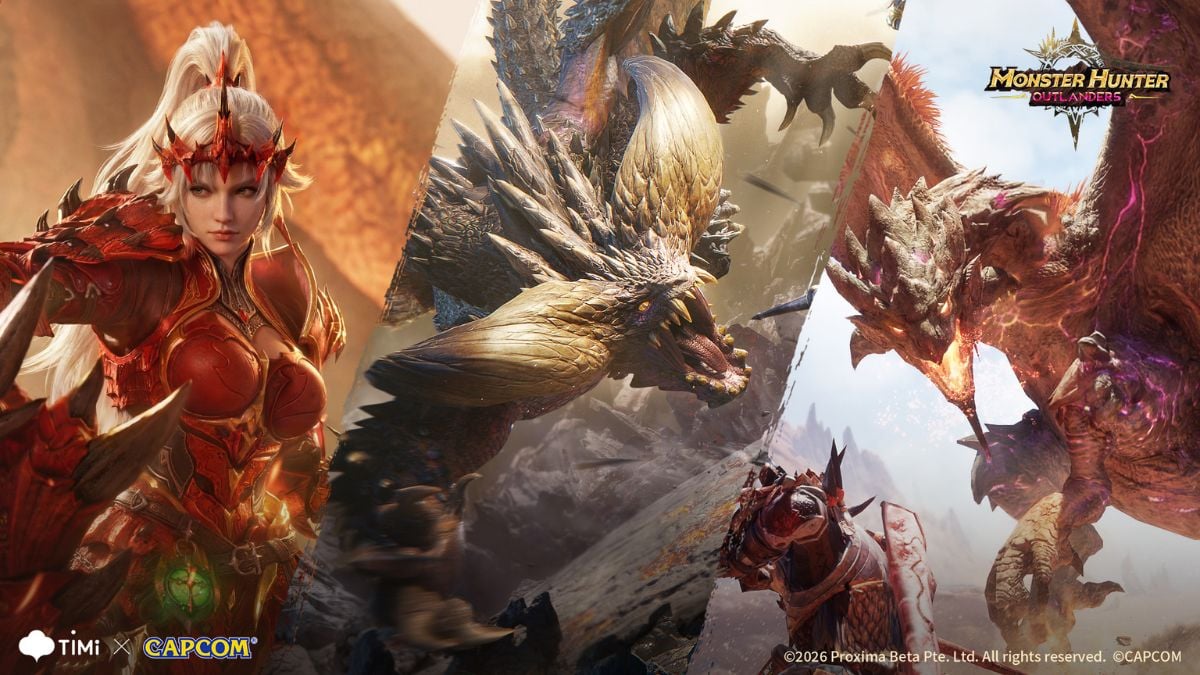
All in all, Monster Hunter Outlanders has plenty to do from the start. Completing the first story missions unlocks many activities, such as Free Hunts, map exploration, expeditions, and so on, so I never felt that gatekeeping as a deterrent. But if you’re not used to these systems, then you might feel a bit frustrated if all you want is to progress fast to reach the endgame.
As for other gacha-like elements, you have your Adventurer banner, Buddy, your standard banner, and so on. I don’t mind all of these elements, as the game was extremely generous in giving pulls, not only for the banner, but also for many of the launch events. However, as I always say, we’ll have to see how the pull economy is once it launches and during its future patches.
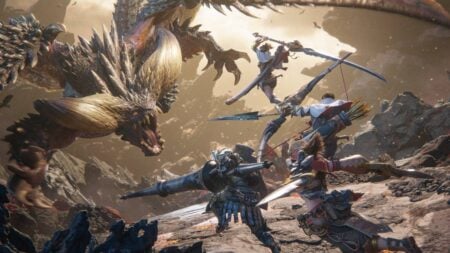
Another thing I want to praise, and this is something Capcom needs to work on for its next big Monster Hunter game, is how to make a proper co-op. TiMi Studio nailed it. You can squad up with other players for some quick hunts, some daily grind, and even join a guild to make matchmaking easier. Yet, the progress carries over across all players, at least from what I saw, which I really appreciated, since we need that for the mainline series.
The Adventure Begins
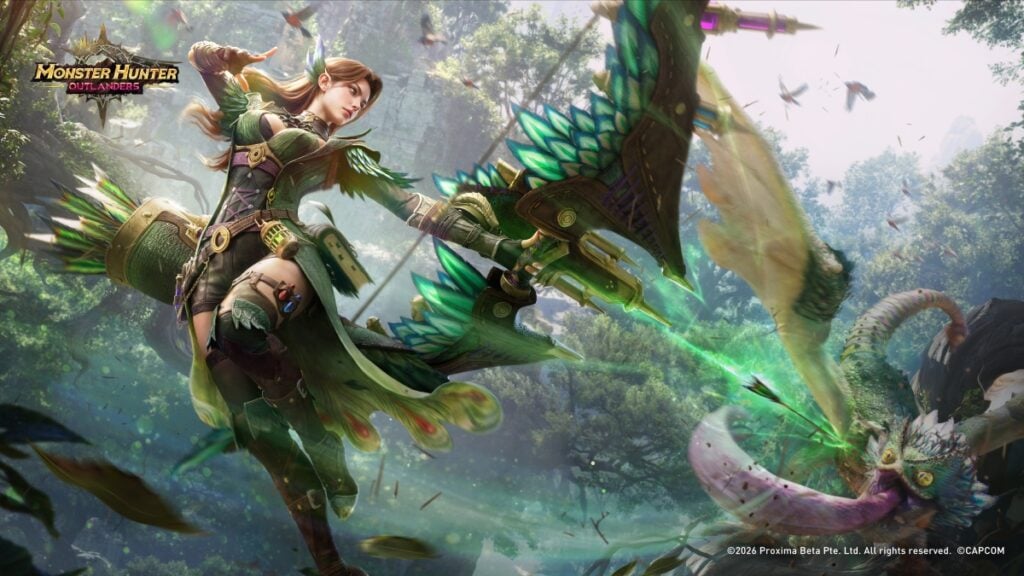
In the end, Monster Hunter Outlanders surprised me in ways I didn’t expect, and that is thanks to how well the studio adapts elements from the series with some new touches. It keeps the challenge of fighting these giant creatures, but adds many QoL features many fans have been asking for. And on top of that, these new additions just make the experience more enjoyable and as addictive as one would expect.
Even if the grind can feel long at times and some systems, such as Adventurers and Buddies, may catch a few players off guard, it’s still extremely accessible for every type of hunter. Overall, Monster Hunter Outlanders is an enormous success and stands alongside its other towering siblings in the series.