
Skip To...
Octopath Traveler quickly became one of my favorite RPG series. Besides its gorgeous HD-2D style, it delivers intriguing storytelling, a memorable cast of characters, and engaging combat mechanics that make the turn-based genre shine. Previously, my favorite in the series was Octopath Traveler 2. Its storytelling and gameplay aspects were unmatched, until now. Octopath Traveler 0 goes the extra mile to deliver more than a port of Champions of the Continent. It features some of the franchise’s best storytelling, accompanied by highly strategic combat that never feels stale, and a touch of cozy town-building. It may lack a bit on the visual part compared to its predecessor, but it is still a must-play for RPG fans.
Orsterra’s Ringbearer
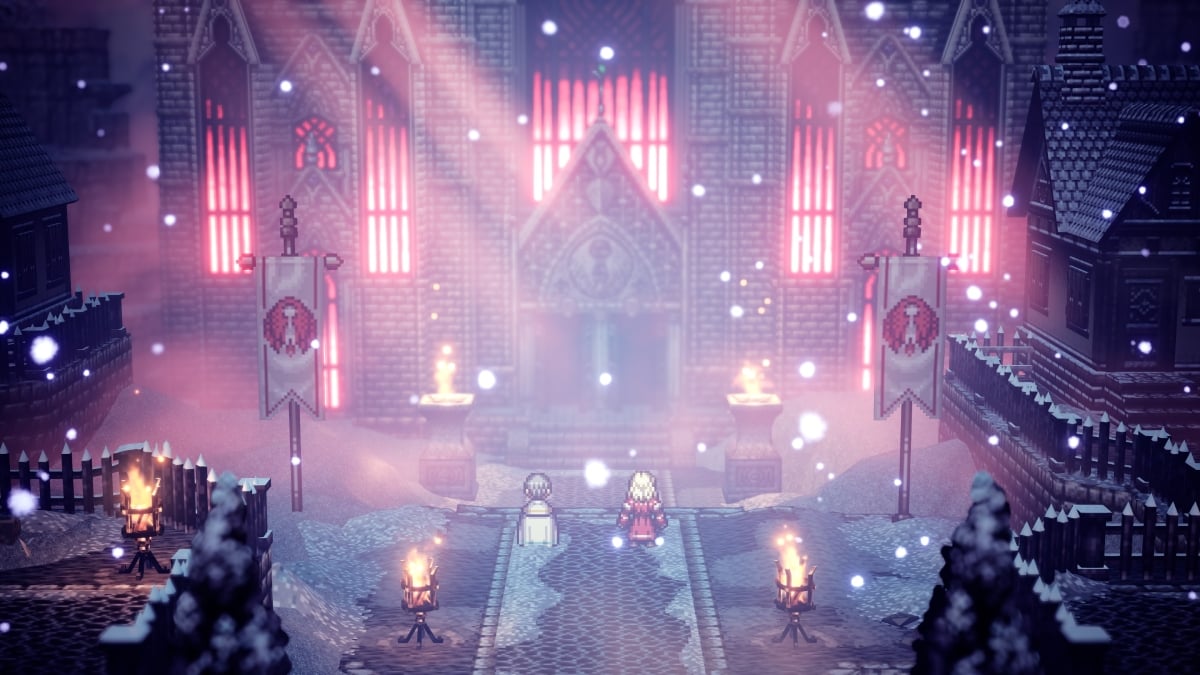
As I said during my preview, while I am familiar with Champions of the Continent, I have never completed the game or spent that many hours in it. Yet, that doesn’t mean I’m completely oblivious to the tale it is telling.
Octopath Traveler 0, which draws some of its narrative from the mobile experience, puts you in the shoes of the Ringbearer, a citizen from the colorful town of Wishvale. One fateful day, during the town’s festival, an army razes your village, killing several members in it, and forcing you and a few other friends to escape. After a mysterious figure helps you, you return to the now dilapidated Wishvale to rebuild it, but also to seek revenge against those who wronged you.
From there, the game touches upon those two topics: revenge and restoration, and it’s up to you to pick which path to follow. The game quickly presents you with three storylines: Master of Wealth, Power, and Fame. Each one features a villain who was involved in the attack on Wishvale. Running in parallel, you have the Kindlers of the Flame storyline, which focuses on the town-building system.
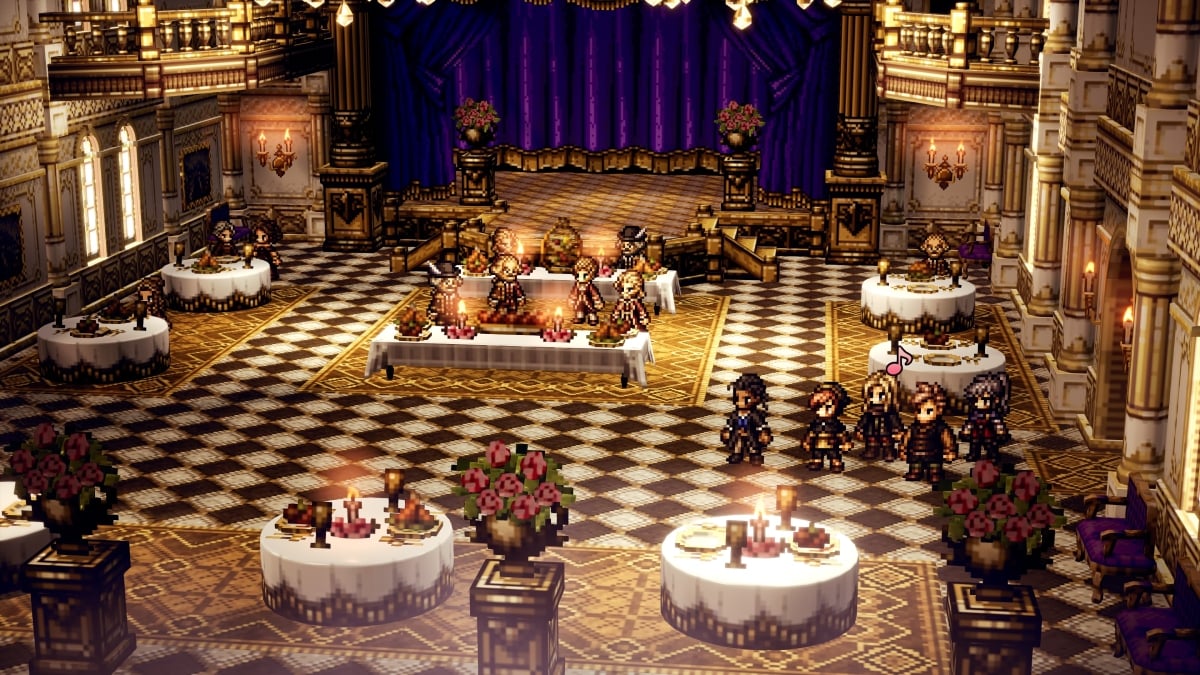
One thing I loved is how perfectly woven all the storylines are. Progressing through the restoration arc always leads you to places where the other three questlines take you, and vice versa. The same applies once you wrap up the first three arcs and start the new ones after that. Furthermore, the writing of each one is of the highest quality.
Initially, I was doubtful, as I’m used to Octopath Traveler games centering on the playable characters’ stories rather than the villains or the world itself. However, it was refreshing to have a silent protagonist travel across the continent and witness its world-building firsthand. The narrative is truly some of the best Square Enix has done, and even after wrapping up the first three questlines and starting the subsequent ones, I was hooked to every one of them, with my interest just growing as I wrapped one quest to start a new one. Octopath Traveler 0 has that Square Enix staple: grounded plots that eventually unfold into narratives of world-ending proportions, which is something I’ve always enjoyed.
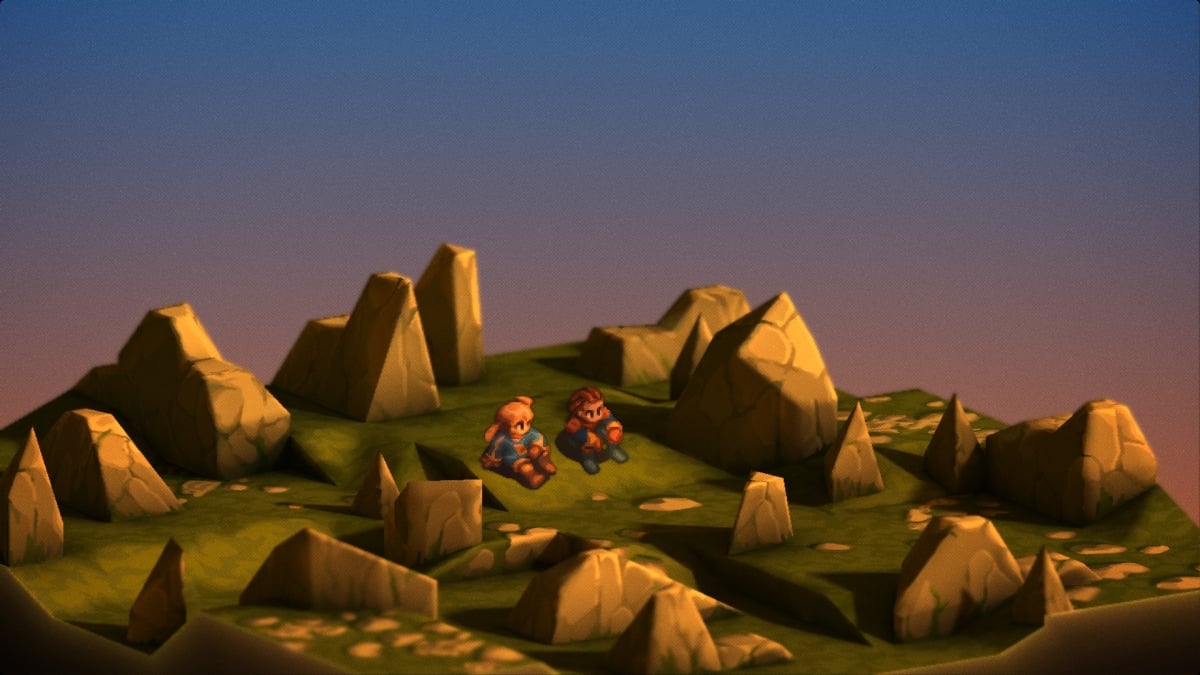
Another thing worth noting is just how unpredictable every tale is. Those of us who’ve played RPGs for years usually see a few plot twists coming here and there, but that never happened in Octopath Traveler 0. Every quest was surprise after surprise and tragedy after tragedy that kept me on the edge of my seat. The only thing that felt a bit repetitive was the actual quest structure, but not in a bad way, as it is expected from an RPG embracing that old-school feel of “go to point A, fight a tough enemy, go to point B, fight another tough enemy, finish the chapter, and repeat.”
Overall, the strongest point of Octopath Traveler 0 is its narrative, and it never falters regardless of how far you are into this 100-hour adventure. Its villains are just as memorable as some of the side characters and playable party members, and make up for one of the most unforgettable entries of the series.
The More the Merrier
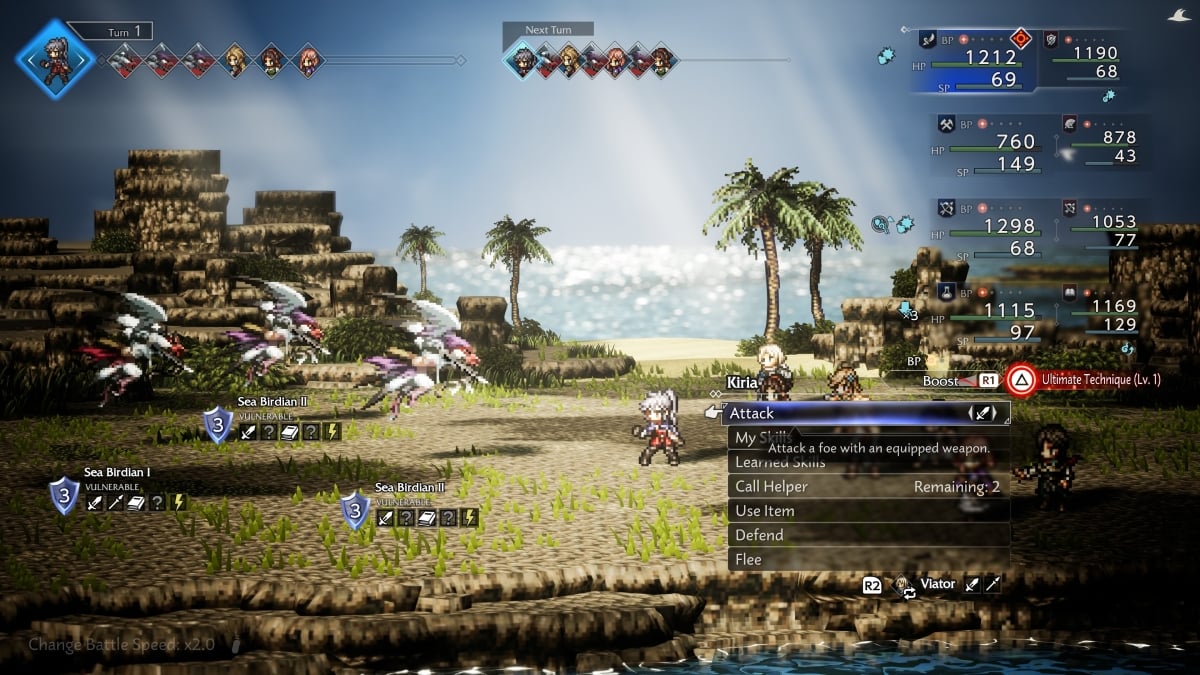
One of the most significant changes in Octopath Traveler 0, at least when it comes to combat, lies in its party composition. Now, you can have up to 8 active party members who follow you around and participate in fights.
When an encounter begins, you have your front row and your back row. You can swap characters from one row to another with the press of a button, which adds a surprising layer of strategy to every fight.
The combat of the series revolves around enemies having a shield of sorts and several weaknesses. You break the shield by hitting those weaknesses, which you uncover by using the right weapon or element, or by using a skill to analyze a foe. Once you take all shields down, the enemy loses a turn in the timeline, and you can wail on them to cause more damage, and eventually beat them.
The 8-party combat mechanic makes it even more interesting, as you’ll be swapping rows constantly to break enemies and prevent them from acting. Your sword and polearm user might not be able to break a shield, but the one in the back row with a dagger and a fan might be the ideal for the job.
Also, the Boost Points mechanic is back. Each turn, you get BPs that, as the name implies, you use these points to boost your moves. Each BP allows you to hit an extra time if using regular attacks. In the case of spells and skills, you increase their damage output.
Other moves you’ll unlock as part of the story or through the Training Grounds in Wishvale are Ultimates. The protagonist has several, while party members have one. Each of these moves grows after a set number of turns, with each level of the ultimate adding more effects to increase the potency.

Then, you have your jobs. Your protagonist can pick one after the prologue and obtain more as you unlock skills from your equipped job. Some playable characters have unique jobs with specific abilities, but most of them are those that have already appeared in the series, like Thief, Warrior, Scholar, Cleric, and so on.
In truth, while the combat is highly strategic, challenging, and pretty engaging, it lacked the individuality of previous Octopath Traveler games. Even the animations feel somewhat bland compared to other characters we’ve seen in the series. It isn’t a deal-breaker, but as someone who has played the first two entries extensively, I was expecting the same level of attention to detail across all playable characters. Then again, the roster is much larger this time, so I can let it slide.

Outside of combat, you also have your Path-like actions. Your protagonist can talk to NPCs and either entreat them for items, purchase their inventory, and even haggle the prices, fight against them to earn rewards, or even recruit them to call in as helpers during a fight. You also get the option to invite a few of them to Wishvale, but I’ll go over that later.
Beyond that, itemisation has always been a mixed bag for me. On the one hand, I love the fact that getting a new piece of equipment feels relevant. One new sword is a game-changer, and the game doesn’t hand them out like candy. On the other hand, the UI still needs a modern touch. While I understand the old-school approach, this is my least favorite part of the series. Scrolling through all your gear and items can be a bit of a hassle, and adding filtering options would significantly enhance the itemisation process.
A Wish Upon a Town
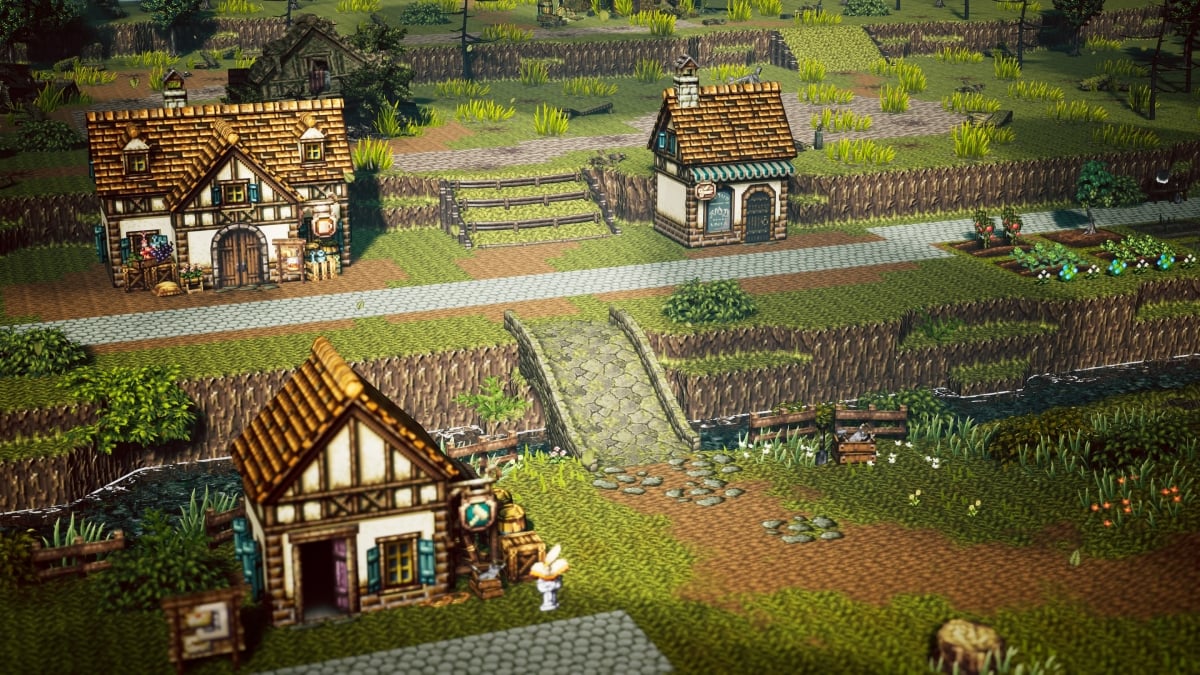
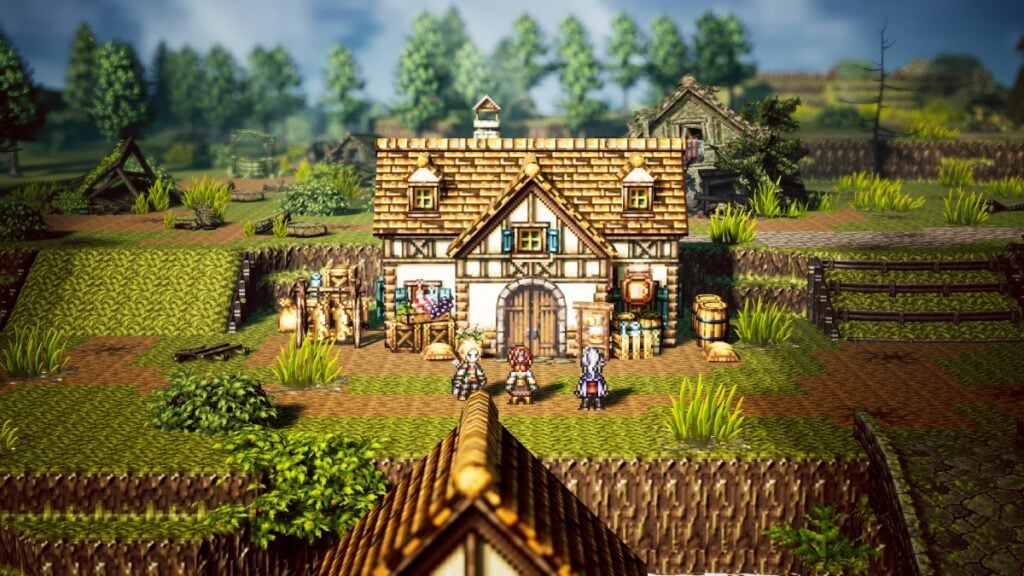
The next big gimmick of Octopath Traveler 0 is its town-building mechanic. As I said before, it is a crucial part of the story and unlocks a cozier gameplay element that also adds some usefulness to your exploration and combat encounters.
Like in other games that feature a town-building of sorts, you will be completing tasks to level up Wishvale. Once you level it up, a new part of the questline will unlock, usually bringing a new facility to your town, such as a store, a training area, or even a farm. All of these buildings will help you in and out of combat, such as the training grounds allowing you to level up benched characters, the farm giving you cooking ingredients, and so on.
Besides, you’re free to do almost everything around Wishvale in any way you want to. You can add different furniture, change the paths, adjust the style of your buildings, and more to make each town feel unique. Also, if you decide to face some of the game’s optional bosses, they will reward you with a currency that you can use to upgrade some of your buildings. Upgrading a building allows you to put more residents in it that provide different bonuses, such as giving you free materials or healing items, or in other cases, increasing the farming speed or making meals more effective.
To bring in people, you’ll either have to progress through the story, which is the one that unlocks the most important NPCs, such as the trader that lets you get some rare items or the farmer who lets you plant different seeds. A few others will require convincing or just asking whether they want to live in Wishvale. While you can invite as many as the game allows, you can only have a certain number of people active, which are the ones you’ll place inside houses or facilities.
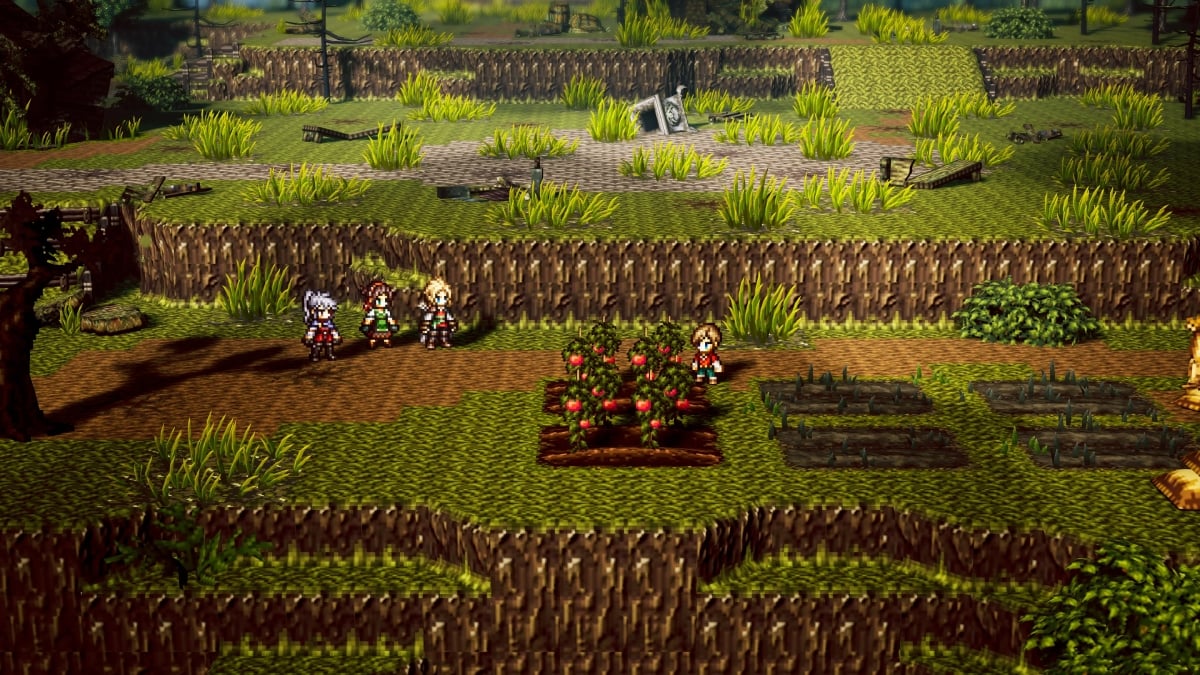
Overall, the town-building system is excellent and lets us experience the game’s iconic visual style in a more hands-on way. I liked the fact that the system is mandatory in a way, yet it doesn’t gatekeep you. You can ignore it and focus on the other storylines if you want, and only return if you truly want some better items, food, and see some of the party chats where your party members interact.
There are a few missions you need to complete before progressing with Wishvale’s questline, but it didn’t happen that often to feel like a restrictive thing. My only complaint is that the Wishvale storyline isn’t fully voiced like the main quest, and that is a bummer given the top-notch cast of voice actors the game has in English and Japanese.
Last but not least, the HD-2D style has become one of my favorites in many Square Enix titles. Be it the recent Dragon Quest remakes or Triangle Strategy, and Octopath Traveler 1 and 2, of course. Yet, Octopath Traveler 0 is the one that lacks a bit of the depth we’ve seen in the games mentioned above. Don’t get me wrong, it is still gorgeous and makes each location feel full of life and style. However, the lighting isn’t as great as in other Octopath Traveler games, and the 3DCG feels lacking in many parts of the map. While Octopath Traveler 0 clearly beats its predecessor in combat and storytelling, it drops the ball a bit on the visual part.
Another Quintessential RPG

Ultimately, Octopath Traveler 0 is an excellent addition to the series and one that feels more than just a port. It features some of the best storylines Square Enix has created, and its combat has the depth I’ve been waiting for since the first Octopath Traveler launched. Beyond that, it is the lengthiest of the now trilogy, and one that is brimming with quests, dungeons, secrets, and more things to discover, which is truly the dream of an RPG fan.
Even if it has some minor issues, like a UI that is often difficult to navigate and the combat system lacking the visual punch other games had, this entry is yet another quintessential RPG from Square Enix, and one that keeps showing just how impressive and memorable Octopath Traveler is. Hopefully, this will bring more games to this iconic series because I Orsterra is one continent I’ll never get tired of exploring.
Review copy provided by the publisher.
Octopath Traveler 0 (PS5 Reviewed)
Octopath Traveler 0 is an excellent addition to the series that redifines its combat system by adding more depth and strategic elements, and even throws in a cozy aspect to cater to different playstyles.
Pros
- The best combat system of the series
- Superb storytelling
- Excellent town-building mechanics
Cons
- The visuals aren't as impressive as those of its predecessors
- The UI can feel a bit hard to navigate at times