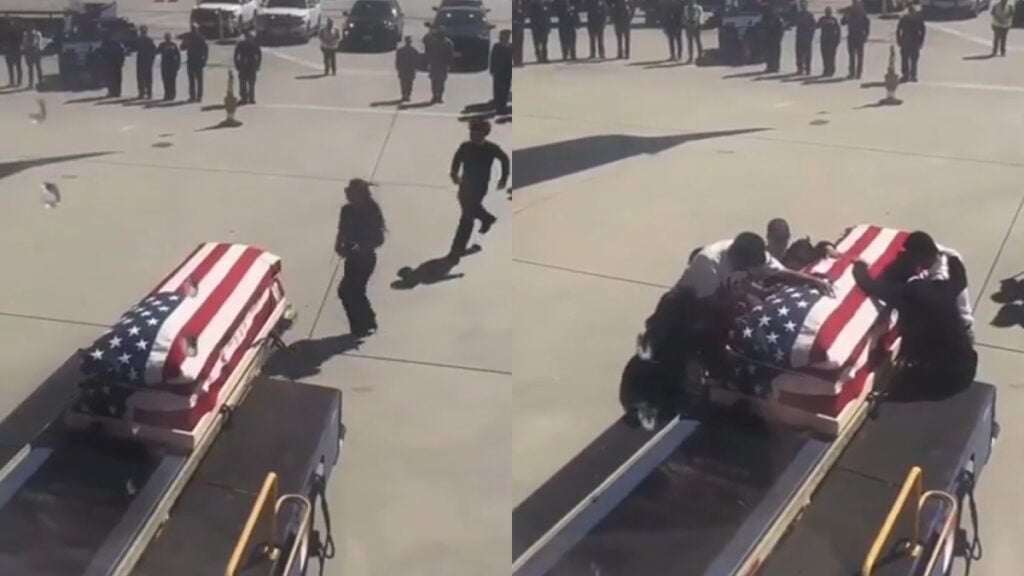
A plane passenger captured a deeply emotional moment at an airport as a California family gathered to receive the flag-draped coffin of a soldier who died in the Iran war. The footage shows the California family rushing toward the coffin as it was brought into view, the casket covered in the American flag. One by one, members of the California family embraced it, clinging to the coffin in visible grief. Though no words could be heard in the video, the scene conveyed a profound sense of loss. The California family remained close together, holding onto the casket as if unwilling to let go.
The passenger who recorded the scene later described the moment as heartbreaking, calling it a stark reminder of the human cost of the Iran war. She questioned why such losses continue to occur, expressing frustration over the circumstances that led to the soldier’s death. According to her account, witnessing the California family grieve in such an intimate and public setting left a lasting impression.
California Family’s Grief Sparks Intense Online Debate
The video has since drawn significant attention, with many viewers focusing on the emotional impact of the California family’s loss. The image of loved ones embracing a coffin at the airport resonated strongly and highlighted the personal toll behind broader geopolitical conflicts. For some, the scene underscored the reality that beyond headlines and policy debates, families are left to bear the consequences.
At the same time, the incident has sparked intense debate. Some commentators took a critical stance toward the soldier’s role in the Iran war, arguing that those who choose to serve in combat zones accept the risks that come with it. Others went further, expressing little sympathy and framing the situation within broader criticisms of military involvement overseas.
“It’s sad that people of color die for a country that hates them. I feel sorry for the mothers. But, they chose violence against our people, and the people defended themselves,” one commenter wrote.

In contrast, many defended the fallen soldier and emphasized compassion for the grieving California family. Several voices pointed out that military service is often shaped by economic and social pressures rather than simple personal choice. One commenter, identifying as a public high school teacher in a low-income area of Texas, described how military recruiters maintain a strong presence in underfunded schools, offering students financial incentives, education benefits, and pathways to stability.
According to that perspective, young recruits, many from immigrant or disadvantaged backgrounds, may see enlistment as one of the few viable options available to them. The commenter argued that while frustration over war and its consequences is understandable, responsibility should be directed toward political leaders and systemic factors rather than individual soldiers.