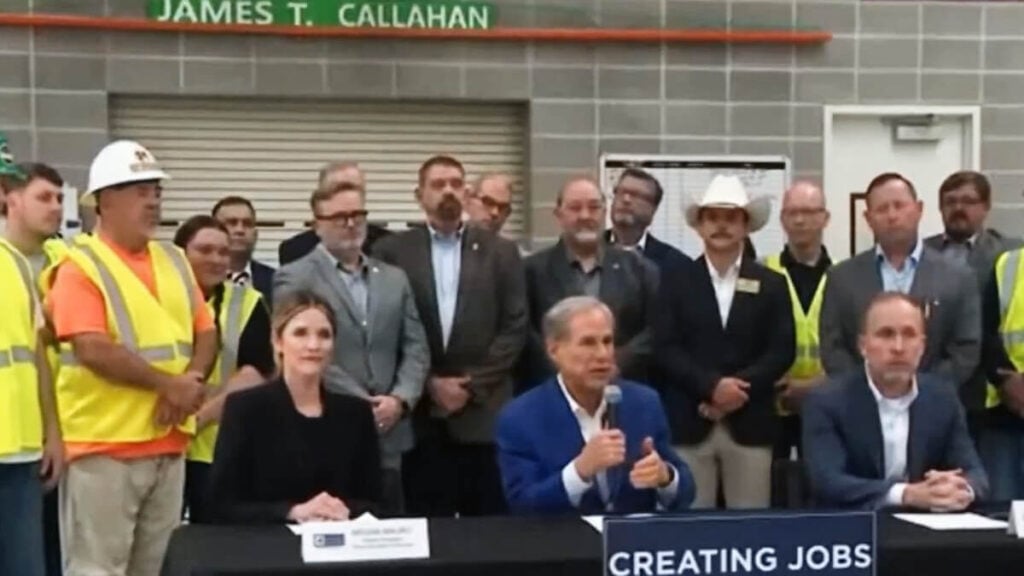
The largest Texas cities could lose up to $200 million in state funding as a growing standoff over immigration enforcement escalates between local leaders and Governor Greg Abbott. The situation has gained online attention following a clip shared on X, in which users reacted to potential funding cuts and the broader policy debate.
The video referenced in the post highlights the potential financial impact on major cities while summarizing the ongoing disagreement over immigration enforcement.
The threat follows recent moves by Texas cities like Houston, Dallas, and Austin to limit how local police cooperate with federal immigration authorities. In Houston, a newly passed ordinance requires officers to issue citations rather than detain individuals solely based on administrative ICE warrants.
State officials argue the policy violates agreements tied to public safety funding. Abbott responded by warning that cities refusing to comply with federal immigration enforcement risk losing millions in grants. Houston alone could lose more than $100 million, while Dallas and Austin also face significant cuts if policies remain unchanged.
The governor framed the move as a public safety issue, pointing to cases involving undocumented immigrants and arguing that cities should not obstruct federal enforcement efforts. State Attorney General Ken Paxton has also taken legal action, reinforcing the push to challenge local policies in court.
Local leaders, however, have pushed back. Officials in affected cities argue the policies are designed to avoid legal risks and maintain trust between law enforcement and immigrant communities. Some have also suggested the state’s response is political, rather than practical.
Online Reactions Split Over Who Pays the Price
The funding threat quickly sparked strong reactions online, with many focusing on who ultimately bears the cost of the standoff.
“Threatening that much money is just punishing the actual residents for a political standoff they didn’t even choose,” one user wrote, a sentiment echoed across discussions.
Others criticized the move as political pressure rather than policy enforcement. “Acting like the mafia,” one commenter said, while another described it as “a ploy for votes.”
Some users questioned whether the threat would even materialize. “There’s a huge difference between what Greg Abbott threatens and what he actually does,” one person wrote, reflecting skepticism about whether funding cuts would follow.
Supporters, however, backed the governor’s approach. “Good and this is how it’s done,” one user wrote, while another added, “About time,” framing the move as necessary to enforce immigration laws.
The divide highlights a broader tension between state authority and local control. As legal challenges unfold and city leaders weigh their next steps, the outcome could determine not only how immigration policies are enforced in Texas but also how far states can go in using funding to pressure local governments.
The situation continues to develop as city and state officials respond to the dispute.