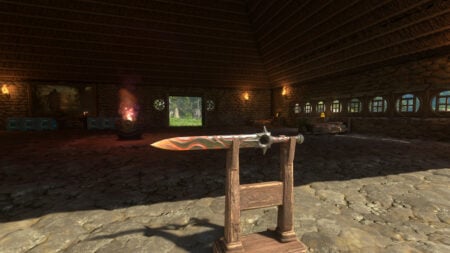

Like any other open-world RPG, The Blood of Dawnwalker can be a bit daunting. Besides having two distinct types of gameplay, a huge map to explore, a non-linear approach to its story, and leveled zones, you also have the 30-day mechanic, which just makes things a bit more overwhelming. Yet, it doesn’t have to be like that. Despite all the things, The Blood of Dawnwalker is an extremely addictive and enjoyable game, but if you’re still struggling with it, here’s a quick starter guide to help you take your first steps as a Dawnwalker.

The first thing you’ll want to do when firing up The Blood of Dawnwalker is picking your difficulty mode. There are four modes: Story, Fair, Challenging, and Duelist. Here’s the difference for each one:
- Story: An immersive story experience with less challenging combat. Enemies are weaker and slower. Coen has more stamina.
- Fair: A balanced experience with fair gameplay challenges. All of Coen’s and enemy statistics are at their default levels.
- Challenging: Realistic and deadly. Enemies are more aggressive, and they hit harder. Coen has less stamina.
- Duelist: No directional indicators. Enemies have less health, but they are far more aggressive and hit much harder. Coen has much less stamina.
As for what’s the best difficulty option in The Blood of Dawnwalker, that’s up to you, but for this guide, we picked Fair, as we thought it was the most balanced one. However, we also found out that Challenging was the most enjoyable, as it makes combat feel much more engaging, even after dozens of hours. We recommend Duelist for a second playthrough.
Regardless of what you pick, you also need to get the hang of combat, which, for the purposes of this guide, we’ll split into the Omni system and the Directional system.
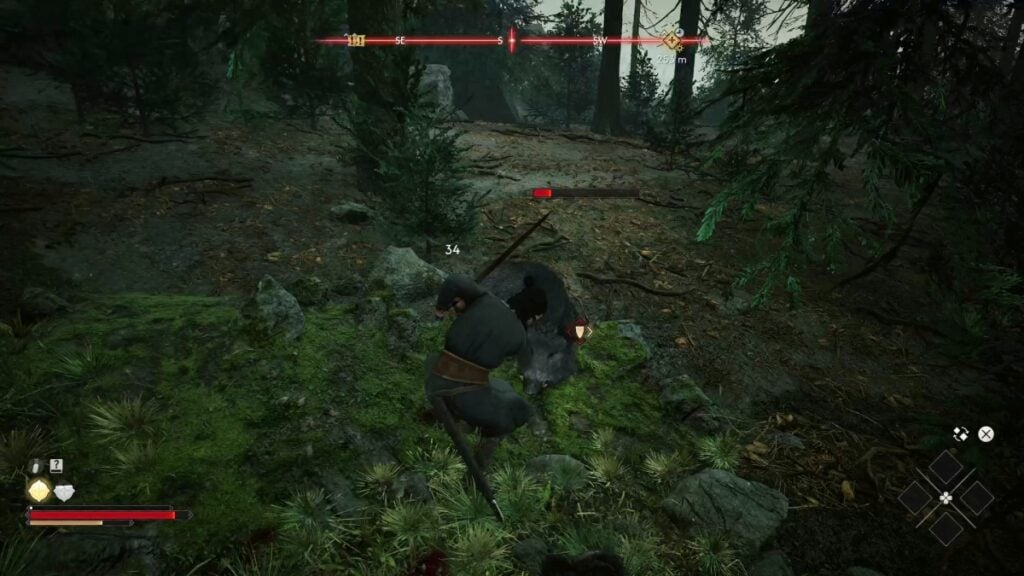
Contrary to other games, there is no need to swap the combat modes in the options menu or something of the sort. You can swap between both styles just by pressing a button.
For Omni combat, you just need to spam the attack button, and Coen will attack in any direction. The same applies to Omni block. Just press the button, and Coen will block all attacks. The only downside of the Omni system is that it uses up more stamina than intended.
Directional combat, on the other hand, shows an UI at an enemy, which indicates where they will attack. You can parry attacks when the Shield turns orange. Also, you can direct your attacks in whatever direction, meaning you can do more damage with it. The only downside is that it is a bit more difficult, but after a few encounters, we found the Directional system to be the best one for all fights.
After the tutorial, you’ll also unlock passive and active abilities. There are three skill trees: Witchcraft, Swordmastery, and Vampirism.
For the first two, you need to spend Perk Points and then get manuals to upgrade the abilities. For Vampirism, you need only Perk Points, plus specific corruption levels. To increase your corruption, drink as much blood as possible until you level it up. Certain vampire abilities require you to defeat specific enemies, which often appear during side quests and the critical path.
Understanding the 30-Day System

Another thing you’ll see as soon as you exit your house for the first time in The Blood of Dawnwalker is the time mechanic, which will practically guide all your actions in the game.
First, we need to understand the day and night parts of the game. Each one has eight segments, and certain actions will advance those segments. Usually, these are some of the examples of things in the game that pass the time:
- Main quests
- Side quests
- Certain exploration actions, such as investigating things in some missions
- Disrupting Brencis’ operations
- Learning skills
The segments will vary depending on the action, with some, like learning skills, using only one, and disrupting Brencis’ camps or patrols using up to three.
Once the segments of a day or night end, it will switch to the other. Keep in mind that some quests are only available at a given time and during a time limit. However, those have a watch-like icon next to them. Lastly, remember that Coen’s gameplay changes depending on whether you’re in the day or night. In the former, you’ll be able to use your Witchcraft abilities only, and your Vampirism ones in the latter. Swordmastery skills can be used in both.
Improving Coen
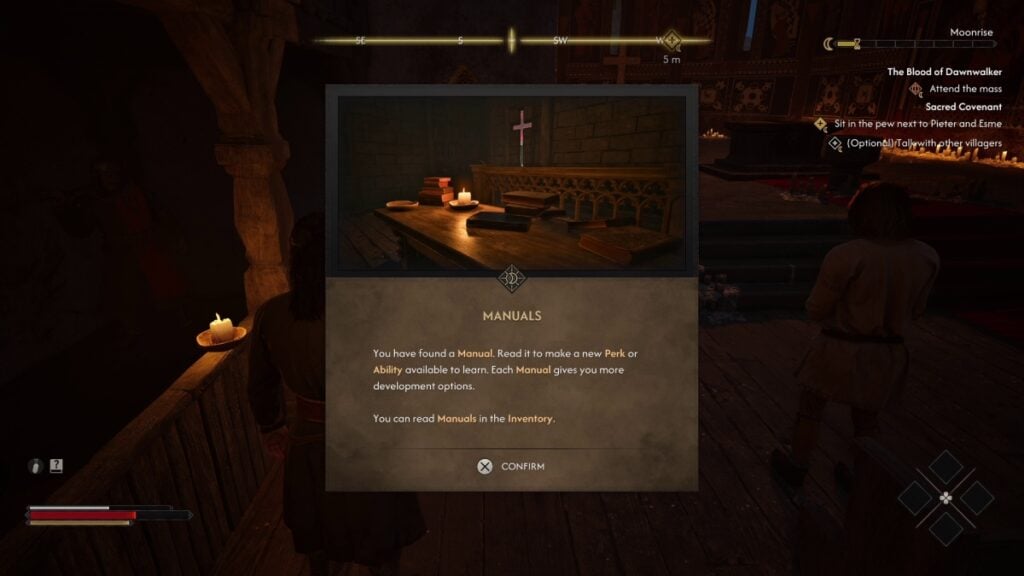
In terms of progression, and given that The Blood of Dawnwalker is an RPG, there are several ways to improve Coen.
For starters, leveling up. If you’re trying to power-level to reach some high-level areas, the best you can do is stick to quests or disrupting Brencis’ operations. Tackling most of them in an area should get you to the next level bracket on the map.
As for skills, that works a bit differently, as you’ll need to find manuals from enemy drops, chests, loot, or by purchasing them from merchants. Keep in mind that doing the latter will cost you a lot, so we recommend saving up your money for only the skills you want to get; not all of them are worth it.
Also, remember that you will need manuals to upgrade your skills. For example, if you want to equip medium armor, you can do so right away. Yet, you’ll have stat penalties until you upgrade that perk, and for that, you will need manuals.
As a general recommendation, you should focus on the skills that let you slot in more active and passive abilities. Even passive skills require a slot, so the more you have, the better your build can be. And lastly, while you can unlock every skill in the game, remember that learning them uses up time. So, be careful about the ones you want to unlock, as there’s no way to turn back time unless you reload a save.
Your First Quests
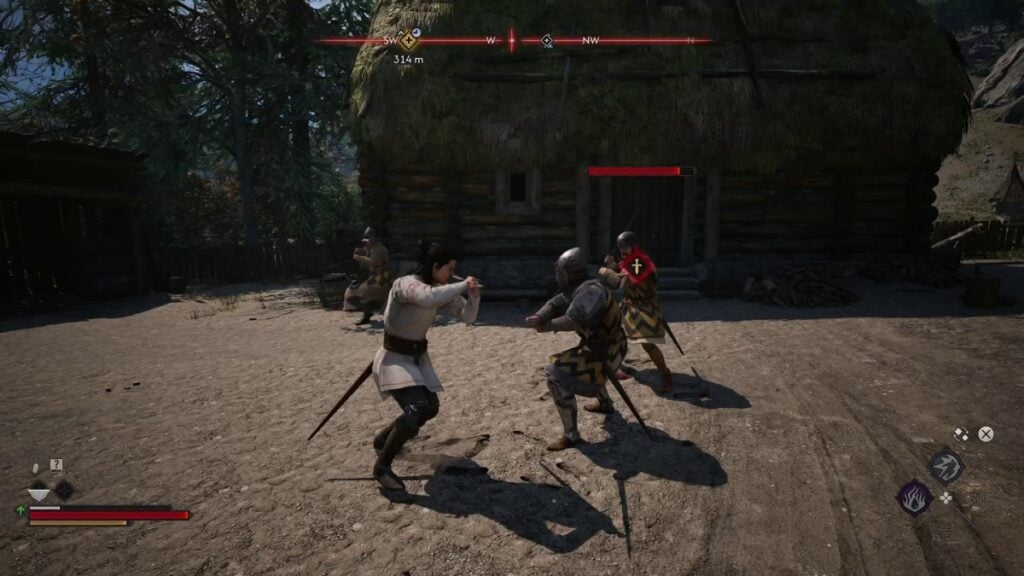
After the tutorial, your only quest will be The Blood of Dawnwalker, which has a 30-day limit to rescue your family. However, you’ll also get a few others that will set you on the critical path to do the above more easily.
We won’t put a list of all the quests you need to do to rescue your family, but here are a few recommendations of the ones you should focus on early in the game:
- Forge It Anew (Unlocks a powerful sword/ties in with the main story)
- A Monk and a Saint (Part of the critical path and it is required for the above quest as well as the main story)
- A Friend Like This (Unlocks a character who may help Coen)
- Echoes of Silenced Bells (Leads you to Svartrau)
- Any of the Brencis’ Court quests (Disrupt patrols, shipments, and clear camps. Extremely useful for loot and leveling up)
- The Firebrand (Teaches you the notoriety system and unlocks more potential allies for Coen)
Outside of the above, it is up to you which ones to pursue, but since most objectives use up a time segment, we recommend tackling the ones on the list, as they offer a lot of rewards that will help Coen, especially during the early game.
Conquering Vale Sangora
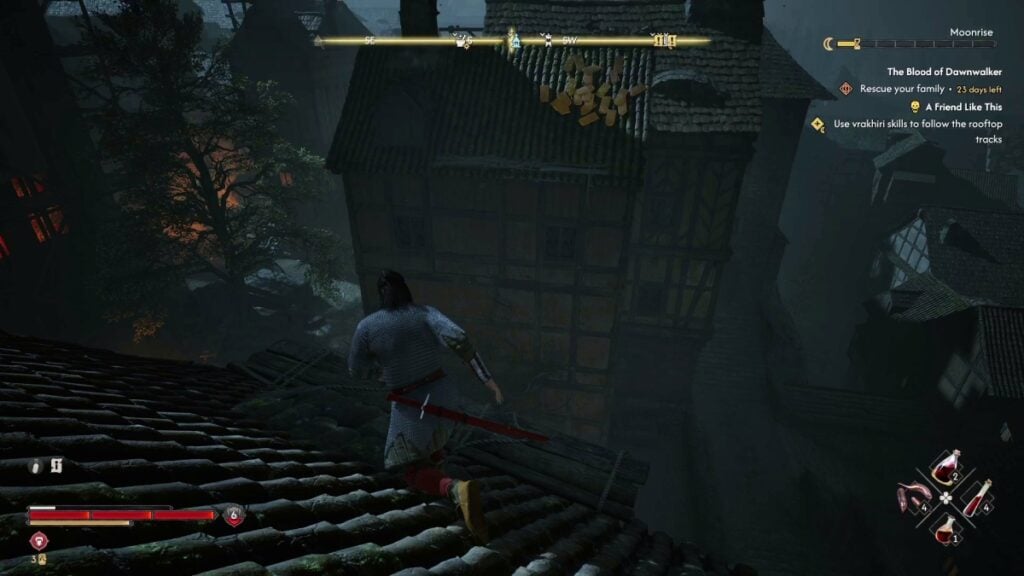
To wrap up this guide for The Blood of Dawnwalker, the best tip we can give you is: explore everything you want to. We know it might be a bit contradictory, especially after listing some quests and tips, but the truth is that the game is designed to be played more than once. You won’t be able to see everything or even save everyone. So, doing several playthroughs is the intended way to see all that The Blood of Dawnwalker has to offer.

Yet, if you want to do every single thing in one playthrough, save-scumming is always an option, but we don’t recommend it, as it is always better to be surprised by everything you do differently in a new playthrough. Plus, the main story quests often change a lot depending on what you do, so don’t be afraid of trying a different outcome whenever you play the game again.