
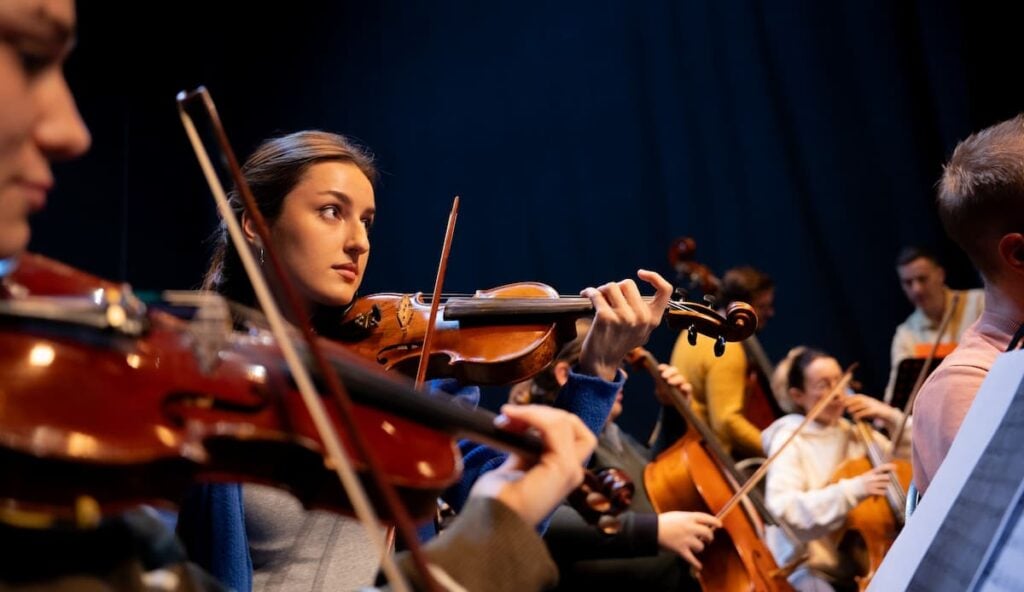
Nashville is often fondly revered as the Music City, but one of its most important musical institutions has just fallen silent.
The Nashville Symphony has declared a “financial emergency” and will suspend its 2026-27 season from Oct. 18 as it struggles with a $10 million operating budget deficit. The decision will furlough all 77 orchestra members alongside 27 full-time staff positions.
For locals reacting to the news online, the announcement was both heartbreaking and infuriating.
“This is so incredibly sad,” one commenter wrote in a Nashville Reddit discussion, adding that they hoped the orchestra would “come back with a bang next year.” Another called the development “incredibly depressing” and asked the question now hanging over the city: “Who let this happen?”
New Nashville Symphony President and CEO Mark Cantrell offered a stark explanation, as reported by WSMV. He said the institution had operated for years on an unsustainable financial foundation, with the generosity of one major donor effectively masking structural problems that were never properly addressed.
Cantrell said the organization has now exhausted its cash. The suspension means considerably more than losing another night out in downtown Nashville. One Reddit commenter, whose parents spent decades playing for the Houston Symphony, pointed to the disappearance of free community concerts and school performances as perhaps the saddest consequence.
“It’s a piece of our city that’s just gone now, and 100+ jobs along with it,” they wrote.
‘Music City?’ Locals Question Nashville’s Priorities
That sense of loss quickly turned into anger over what the suspension says about Nashville itself.
Several commenters questioned how a city internationally associated with music could allow its symphony to reach this point. Others criticized Nashville’s wealthy residents and music industry figures for not providing greater support, while another commenter contrasted the crisis with public money committed to the Tennessee Titans’ new stadium.
There was frustration in the other direction, too. One commenter argued that residents mourning the symphony should have supported it by attending performances, buying concessions and donating. Others pushed back, noting that people can value an institution even when their finances prevent them from regularly buying tickets.
For the musicians, there is no such abstraction. Their jobs are disappearing again after the disruption of the pandemic, and locals who attended recent performances described an orchestra still playing at an exceptionally high level.
Some independent productions and fundraising events will continue, including the Symphony Ball and Symphony Fashion Show. Ticket holders for suspended concerts can request credit toward a future performance or convert their purchase into a tax-deductible donation.

The Symphony’s leadership will now work with its board and musicians on restructuring, including broadening its donor base and developing a longer-term endowment strategy.
Nashville has built an identity, tourism industry, and global reputation around music. The uncomfortable question is whether Music City can sustain the institutions that make that name mean something when the spotlight is off.