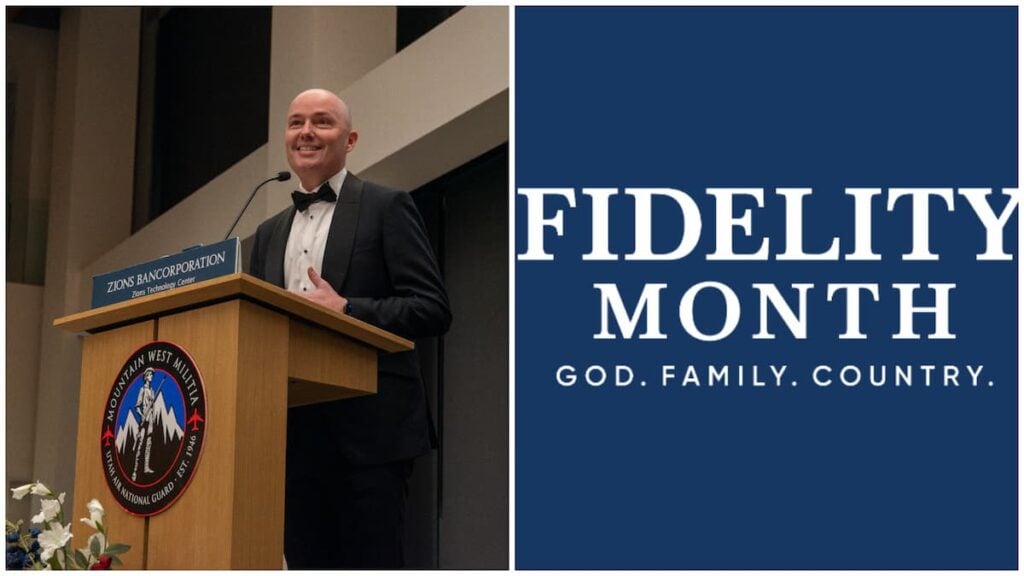
Utah Governor Spencer Cox is drawing strong reactions online after proclaiming June 2026 “Fidelity Month,” a statewide initiative encouraging residents to recommit themselves to values including faith, family, marriage, country, and community.
In the official proclamation, Cox described fidelity as a cornerstone of strong families and healthy communities, calling on Utah residents to renew their commitment to what he called America’s “core values.” The declaration was issued as June began and quickly attracted attention both inside and outside the state.
The proclamation argues that fidelity extends beyond marriage, describing it as a broader commitment to family, community service and civic responsibility.
According to the Deseret News, Utah is one of several Republican-led states that have introduced alternative June initiatives alongside Pride Month, helping fuel debate over the purpose and symbolism of such declarations.
The debate gained traction on Reddit, where users weighed in on everything from the role of government proclamations to whether the initiative sends a message about who is included in the state’s vision of family and community.
Utah Residents Debate What ‘Fidelity Month’ Represents
On Reddit, many commenters were critical of the proclamation, with some questioning whether politicians were the right people to be promoting a month centered on fidelity. One user joked, “Yeah, because politicians famously don’t have affairs,” while another took aim at the governor directly, writing, “Governor Cox should find a conservative alternative to his last name. Happy pride.”
Others focused on what they saw as the broader message behind the declaration, particularly given that it was announced during Pride Month. One commenter wrote, “‘The initiative urges Americans to rededicate themselves to principles of God, marriage, family, country and community.’ So, Mr. Cox, by doing this instead of Pride Month, are you implying that gay and trans people don’t believe in God, that their families aren’t legit, and that they don’t have a love of country and community?”
Some users also raised concerns about the role of religion in government-backed initiatives. “I find the state forcing god down our throats to be far more offensive than acknowledging gay people exist,” one person wrote.
Elsewhere in the discussion, several commenters argued that the proclamation reflected a broader trend among conservative politicians to create alternatives to cultural events they disagree with. As one user put it, “Republicans have become that goth kid in high school that only wears black and is against anything popular. Superbowl. Alternative kid rock show. July 4 celebration. Trump 1980s music celebration.”

While Cox’s proclamation frames Fidelity Month as a celebration of commitment, family and civic responsibility, the online reaction highlights how differently residents interpret such initiatives. As the discussion continues, the debate appears to extend beyond fidelity itself, touching on broader questions about faith, family, inclusion and the role state leaders should play in shaping cultural conversations.