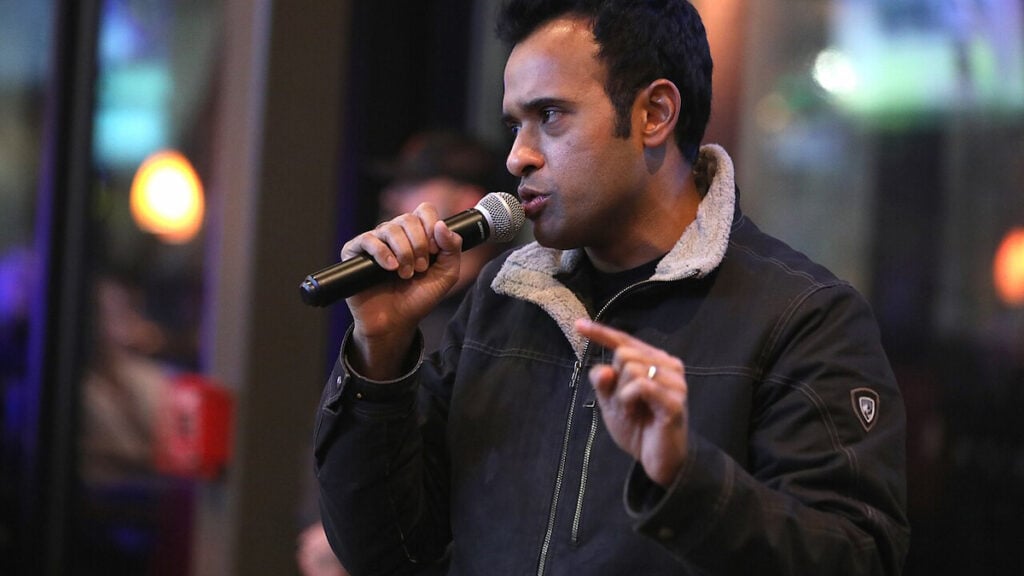
Ohio gubernatorial candidate Vivek Ramaswamy is promising free electricity and lower property taxes for residents living near new data centers, arguing that communities hosting the massive facilities should see their household costs go down rather than up.
Ramaswamy also wants new data centers to protect Ohio farmland, meet environmental standards, and generate enough energy to avoid driving up electricity costs for existing residents.
Ramaswamy shared a video of the exchange on X after an audience member raised concerns about electric rates. The Republican gubernatorial candidate first unveiled his “Ohioans-First” data center proposal in August, saying the rapid expansion of data centers has become one of the biggest concerns he hears from voters statewide.
Under Ramaswamy’s proposal, future data centers would not receive property tax abatements. Instead, they would pay their full property taxes, with some of that revenue used to fund property tax rebates for homeowners in surrounding communities.
“You’re gonna get free residential electricity,” Ramaswamy said. He said taxpayers would not fund the benefit. He argued it could instead be covered through excess power generated by data centers behind the meter.
His campaign proposal says data centers would be required to provide nearby families with electricity or compensation sufficient to eliminate their residential electricity costs.
Ramaswamy also proposed steering development away from fertile farmland and toward brownfields and abandoned industrial sites. His plan calls for strict air and water quality standards, water recycling and greater transparency during the approval process. Data centers failing to meet those conditions would not be built, he said.
The debate comes as Ohio officials grapple with how the rapid expansion of data centers could affect electricity customers. The state’s consumer advocate has warned that the massive facilities can require enormous amounts of power and potentially drive up costs for other customers, while regulators and lawmakers have been considering safeguards designed to prevent those expenses from being shifted onto Ohio households.
Critics Question Ramaswamy’s Free Electricity Promise
The proposal drew skepticism about whether Ramaswamy could deliver the promised benefits and how communities would handle future development. “You are a flip flop person who will say anything,” one user wrote. Another asked, “Is this just your pre election/win favor plan or your actual plan?”
Others questioned both the electricity promise and continued construction of data centers. “There’s no way in reality to achieve your plan,” one response stated.
Some users supported parts of the proposal despite the criticism. “I like what you said about using abandoned industrial lots instead of farmland,” one wrote. Another stated, “I have heard Vivek’s plan, and it is a good one.”

Ramaswamy says he wants the Ohio legislature to turn those conditions into law if he becomes governor. His campaign has laid out the broad framework for delivering free electricity and property tax relief, but making those promises reality would still require lawmakers, regulators, utilities and data center developers to work out the details. For Ohioans worried that the data center boom could make their bills more expensive, Ramaswamy is making a much bigger promise: If one comes to their community, he says their electricity bill should disappear instead.