In all my years as a gamer, if there’s one studio that always manages to make my ears perk up as soon as it announces a new game, it is Owlcat Games. Yes, we all know its games take a while to launch, but once the studio finishes cooking, we know it will be one heck of a dish. With that in mind, I couldn’t contain my excitement after I saw we’d get yet another Warhammer 40,000 experience, this time called Dark Heresy. And I was even more hyped when I got to play the alpha, because it showed me that it improves on many things from Rogue Trader and adds a few more interesting features.
Your Case, Your Story
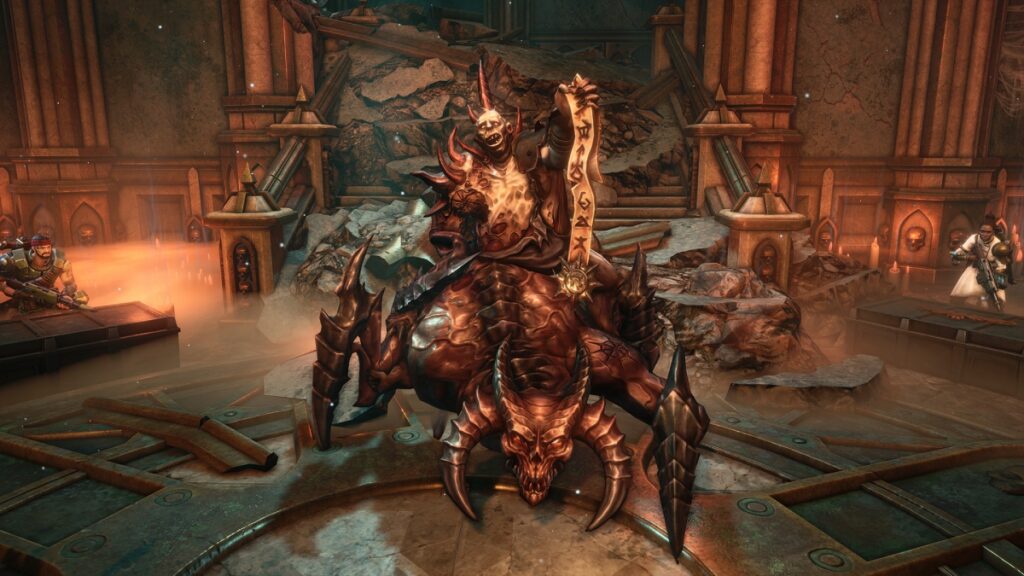
Like many lucky people out there, I also got the opportunity to try Warhammer 40,000: Dark Heresy in its alpha build. Before giving my full impressions, however, since this is an alpha version, some things are still a work in progress, and some systems might change as we approach release. That said, what I saw was more than enough to convince me that Owlcat Games has, once again, cooked.
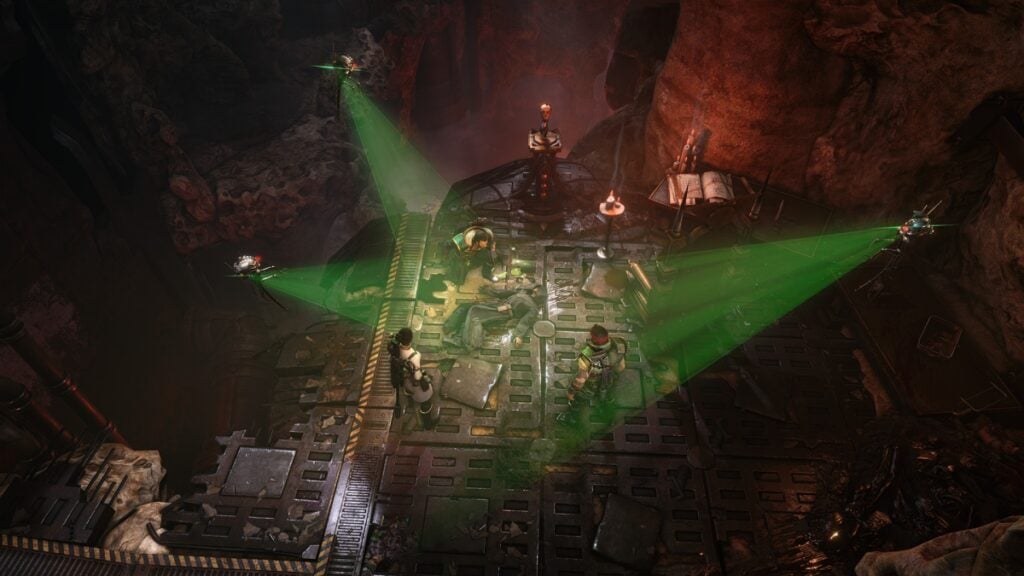
For Warhammer 40k: Dark Heresy, you take the role of an Inquisitor. I’m still not sure what background they have or how they got to the scenario I played because this build didn’t have character creation, but you’re basically one of the Emperor’s elite agents, tasked with investigating some of the most difficult cases out there. And so, the game dropped me into a portion of the game where I had to help a fellow Inquisitor and a Sister of Battle.
Right from the start, I noticed just how much Dark Heresy leans into the investigative side, which aligns with the immersion Owlcat Games always brings to its games. I’ve already felt like a commander and a Rogue Trader, and the studio also nailed the detective part here.
In any case, my two tasks were to investigate missing individuals and to help an Adepta Sororita. I started with the former because the clues led me to it organically, and I realized, little by little, how different Warhammer 40k: Dark Heresy is in its storytelling.
Since you’re an Inquisitor, your word is the law, in a way. You get to pursue these leads to hopefully solve a case correctly, and the final decision is literally yours: whether you doom an innocent person for doing a bad investigation or actually find the culprits. I even tried save-scumming at times, and never saw the game punishing me for closing a case early or actually digging as deep as possible to get all the information. If you do the former, however, you’ll miss out on a lot of the meaty features in the game.
While the alpha only included these two cases and a few other objectives, I am really liking this approach to the narrative, which gives the player all the agency and freedom they want. If this is just a taste of the cases in the full game, this might become the ultimate sleuthing Warhammer experience out there.
Sleuthing and Shooting
But now, let’s dive into the actual systems and how it feels to play Warhammer 40k: Dark Heresy. In short, it feels extremely similar to Rogue Trader. Movements and interactions are almost the same, with some new added UI elements and some streamlined menus, which I appreciated. Yet, it is what you do with these familiar systems that makes Dark Heresy feel vastly different.
For instance, Dark Heresy is all about investigating, and you’ll be clicking as many clues as you encounter to fill your Inquisitor’s journal. And yes, that journal actually exists in the form of a detective’s board that neatly organizes all clues.
Since you’re free to pursue leads in any order, each time you find something worth investigating, you’ll see that in your journal. From there, you can either read the clue, analyze it yourself, or have a companion do the analysis for you, and even give a verdict once you think you have enough information. When it comes to detective systems, it is one of the most elaborate and organized ones, and one I never thought I’d see in a cRPG.
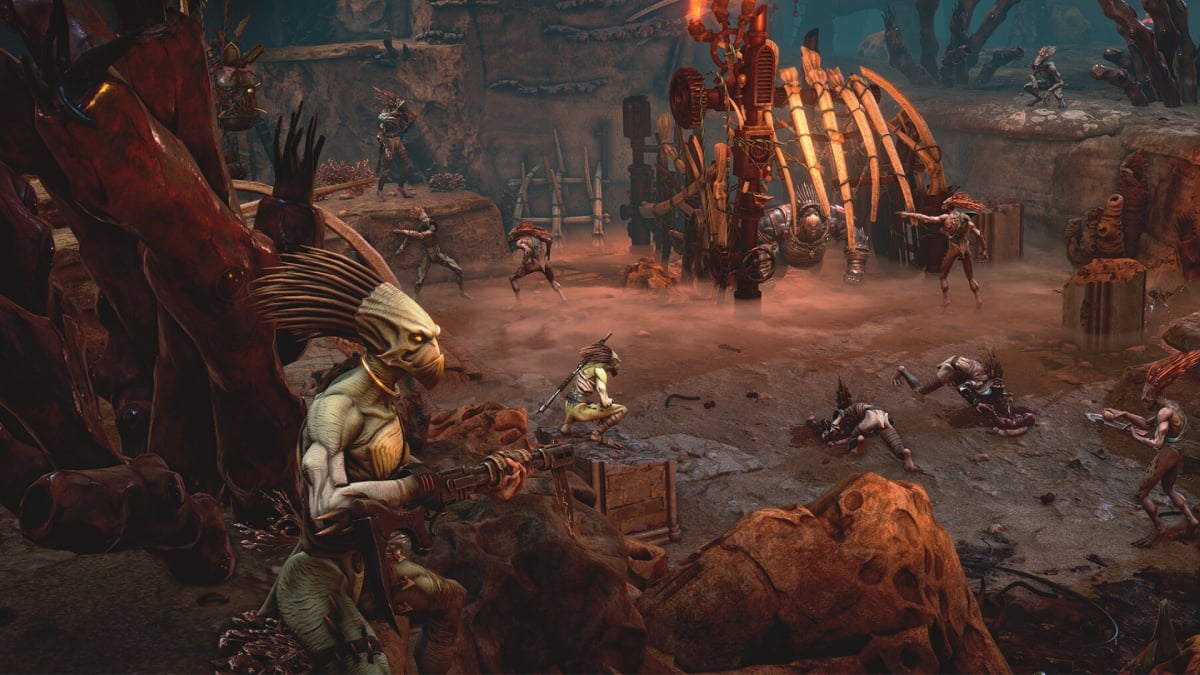
Combat, on the other hand, also has many improvements, especially in terms of cover mechanics and some actions you can perform with your party members. However, I didn’t delve too much into it, as I spent most of my time trying to be a peaceful Inquisitor. That said, I ended up defusing a hostage situation and blasted more bandits than I can recall—it’s all part of the job, though.
Again, since it is an alpha build, I won’t go into in-depth details about the combat system, as it’s likely to change. Yet, it was nice to see these new improvements that make combat encounters feel more accessible, but without removing the deep systems we all love from a cRPG.
For the Emperor
Overall, Warhammer 40,000: Dark Heresy is just as promising as its predecessor, if not more. As someone who’s always loved investigative aspects in video games, this installment is already a cut above the rest. My only gripe is that I will now have to wait for the next big build to solve more cases or frame the wrong suspect. But in all seriousness, I couldn’t be more excited for the next adventure under the mighty Emperor’s orders.