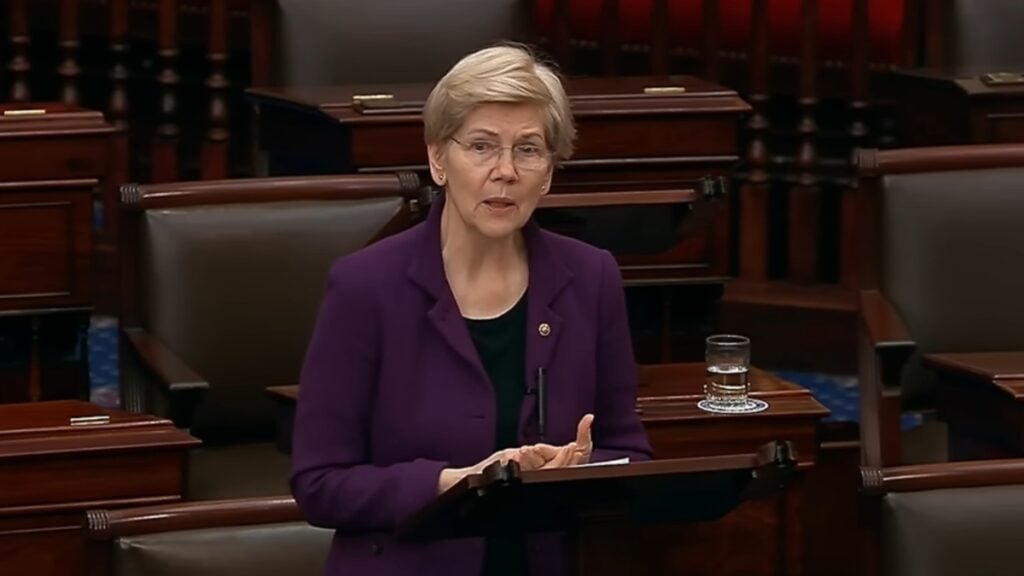
U.S. Senator Elizabeth Warren of Massachusetts stirred up debate on X by calling for a tax on AI. In her post, she said AI is built on human ideas and taxpayer-funded research, and that its success should benefit everyone through new taxes to help people. The post, which includes a link to a Time magazine article, quickly drew plenty of replies — many of them pushing back hard against the idea.
In the attached video, Warren speaks directly to the camera while seated in an office, gesturing as she addresses concerns about AI’s potential impact on society. She calls for regulating technology and outlines proposals to tax AI companies and high-net-worth individuals to fund universal health care, free college, apprenticeships, and a jobs guarantee.
Warren also argues that current tax policies unfairly benefit corporations that replace workers with AI and notes that the post links to a related Time magazine article.
Online Reactions to Sen. Warren’s AI Tax Proposal on X
A few users suggested that the success of AI was due mainly to private companies rather than to any work done by the government. Commenting on the issue, one user said, “AI’s success is mainly attributed to huge private investments and innovations, not the government. The history of taxation tells us that.”
Others questioned the focus on taxation as a solution. One replied, “She doesn’t understand the question, but she knows that the answer must be taxes. Government doesn’t need to be in the middle. Just distribute ownership to everyone.” Another asked, “Why are you so concerned with extracting more money instead of controlling government spending?”
Additional responses expressed broader frustration with the proposal. Comments included “JFC…Why is the answer to every challenge facing Americans is to ‘raise taxes’” and “Tax humans to death…now we are taxing computers/machines to make up for it? I think you have lost all of your marbles.”
This post adds to a growing trend in online discourse about the future of artificial intelligence and the government’s proper role in its development. The conversations surrounding Warren’s bill continue online on X as users weigh competing views on innovation, taxation, and public investment.