Unless you have been completely avoiding the news, you have likely already heard about the horrifying Minneapolis incident in which a Minnesota ICE agent fatally wounded a woman. The Minneapolis incident has shaken people across the country and ignited widespread outrage. Protests have erupted in cities nationwide, with demonstrators calling out ICE, the Department of Homeland Security, and the Trump administration over immigration enforcement practices and the use of force. The Minneapolis incident has become a symbol of growing fear and anger surrounding federal law enforcement actions.
Given the seriousness of the Minneapolis incident, many people expected Minnesota ICE agents and other federal officers to be especially careful with their language and behavior in public. After all, tensions are already high, and public trust has been deeply damaged. However, a recent video circulating online suggests that at least one Minnesota ICE agent failed to recognize the gravity of the moment.
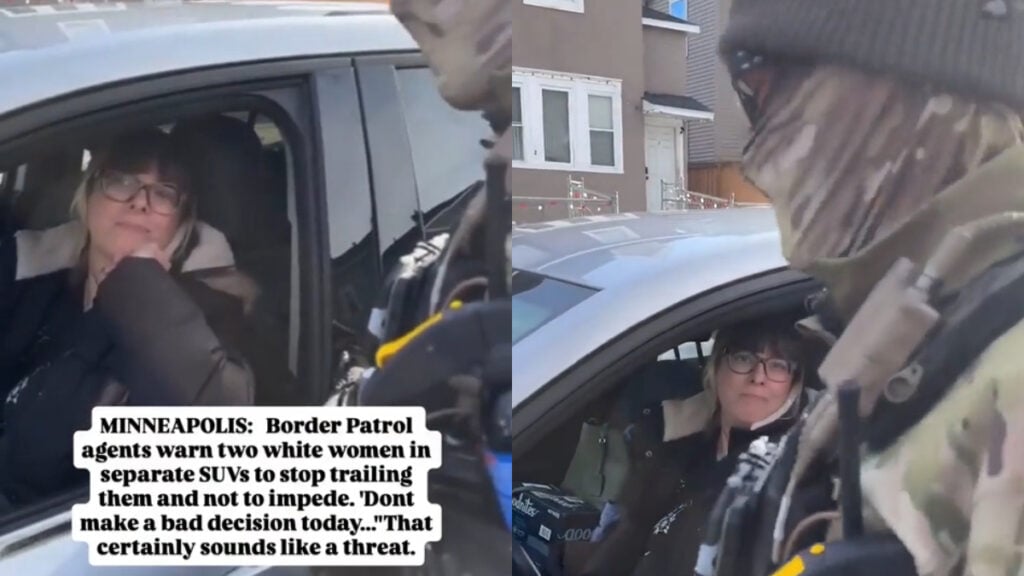
In the video, a Minnesota ICE agent is seen confronting two women and accusing them of following ICE vehicles and interfering with officers. The agent claims the women had been honking their horn and blocking ICE cars. During the exchange, he tells the women that they are “making a bad decision” and warns that they could be arrested. The tone of the interaction comes across as threatening rather than professional. Notably, the women do not appear intimidated and even seem amused by the accusations, openly questioning the agent’s claims.
After issuing the warning, the Minnesota ICE agent walks away to rejoin other agents. The person recording the video continues to follow him. As he heads toward his vehicle, the same Minnesota ICE agent stops again, this time to confront another woman. He tells her not to get in his way and warns that doing so would be a “very bad decision.” The repeated phrasing stands out, especially given the recent Minneapolis incident involving a fatal encounter with ICE.
Under different circumstances, comments like these might have been brushed off as empty threats or routine law enforcement bluster. However, in the aftermath of the Minneapolis incident, the words carry far more weight. For many viewers, the agent’s remarks sound less like casual warnings and more like implicit threats of force. Considering what happened to Renee Good not long ago, some people interpret the language as a reminder of how quickly encounters with Minnesota ICE agents can escalate.
Online reactions to the video were swift and overwhelmingly negative. Many internet users described the behavior of the Minnesota ICE agent as inappropriate and unacceptable, particularly toward unarmed civilians. One commenter wrote, “ICE really thinks they can intimidate all of us and execute our people in the streets. They are uneducated brutes, and we need to remind them that we outnumber them.”
Others focused on the broader political implications, arguing that the actions of Minnesota ICE agents reflect a troubling shift toward authoritarian tactics. One user shared a longer reflection, saying, “I was in high school during Obama’s first term and in college during his second. I remember how much the right wing warned that the government would start rounding people up, putting cities under martial law, and deploying federal agents to pacify people. It turns out they were describing what they planned to do. The irony would be easier to stomach if it were not actually happening.”