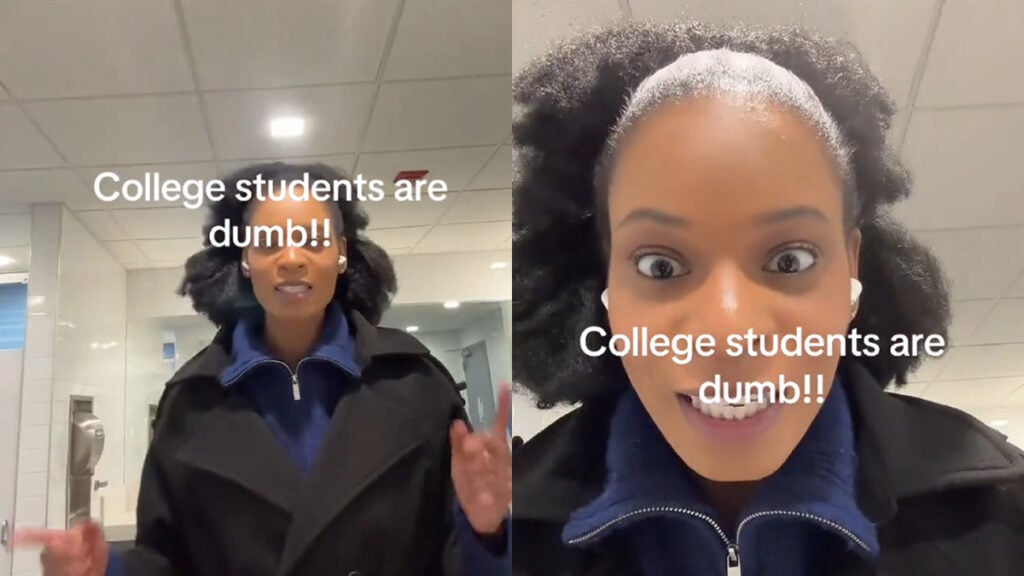
In a widely circulated video, a New York TikToker claimed that many college students today struggle with basic reading, writing, and math skills. Sahirah Abdur, who works with Tandem Models in New York, said she recently returned to college and found herself sharing classes with younger students. In one video, she described an interaction during a speech class that she said highlighted what she sees as a broader issue. According to Abdur, a fellow student appeared surprised that she was taking notes during class, a reaction that caught her off guard.
Abdur said the same student later revealed she had already failed the course twice and was taking it for a third time. The TikToker expressed disbelief at the situation, describing the class as relatively easy to pass and using the anecdote to support her broader claim about declining academic preparedness among students.
In a separate video, Abdur attributed what she described as widespread academic struggles to systemic issues in the education system, specifically pointing to the No Child Left Behind Act. She argued that policies like this have contributed to students advancing through school without mastering fundamental skills.
Mixed Reactions Online to New York TikToker’s Claims
The videos quickly gained traction online, prompting a wave of responses from viewers who shared their own experiences in classrooms and workplaces. Some commenters said they had observed similar issues when returning to school later in life, describing classmates who appeared unprepared for assignments or unsure how to complete basic coursework.
One user, who identified themselves as a 30-year-old returning student, wrote that group projects often revealed major gaps in effort and understanding. “They not only didn’t start, they had no idea what we were supposed to do,” the commenter said, adding that they had encountered similar situations repeatedly.
Other responses focused on concerns about long-term consequences, with some users expressing unease about students entering professional fields without strong academic or critical thinking skills. “It’s kind of sad and terrifying,” one commenter wrote, questioning how such trends might affect industries that rely on rigorous training and competence.
However, not all reactions supported Abdur’s assessment. Some commenters, including individuals who said they work in higher education, pushed back on the idea that students themselves are to blame. One self-identified professor argued that many students are capable but come from underfunded school systems that have failed to adequately prepare them.
The commenter pointed to factors such as low teacher pay, administrative pressures, and a lack of institutional support as contributing to declining educational outcomes. They also raised concerns about conditions in higher education, noting that many instructors are adjunct faculty with low pay and limited resources, which can impact the quality of instruction.