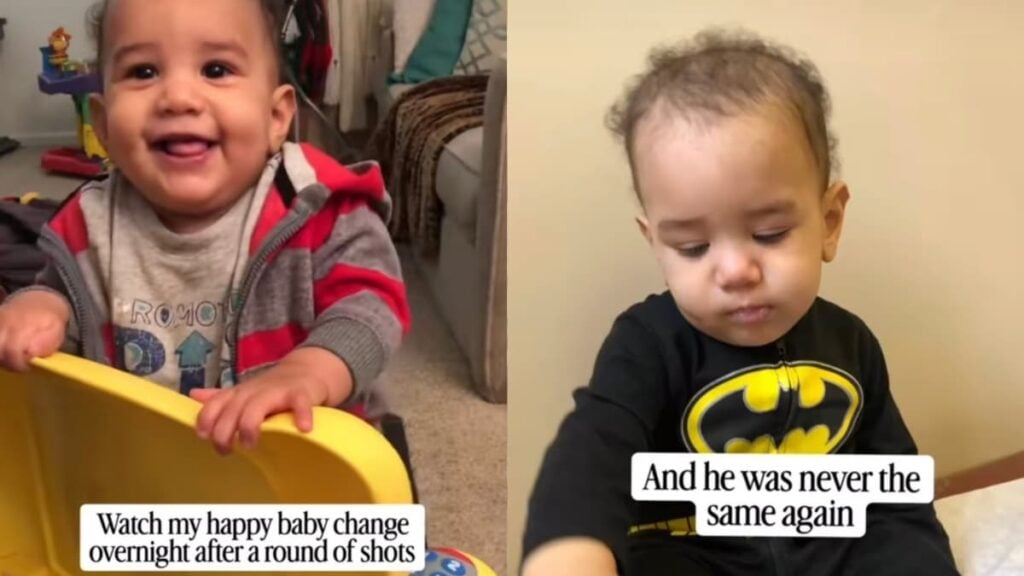
A mother in Connecticut sparked debate after posting a controversial video in which she claimed that her son developed autism following six vaccinations.
In the video, the mother described her son as always happy and smiling, often seeking out playtime and laughter with his family. She claimed that after receiving his vaccinations, his behavior allegedly changed significantly.
The mother highlighted what she described as a complete change in her son’s behavior following his vaccinations, claiming they led to him developing autism. In her caption, she stated that he received six vaccines in a single day: DTaP, Hep B, Hib (PRP-T), Influenza, Pneumococcal Conjugate (PCV 13), and Rotavirus. She further wrote that the vaccines “triggered a high fever, then severe anemia, and after he got iron infusion for his anemia, he started showing more signs of autism.”
The mother asserted that she would not be dismissed or gaslit, expressing her conviction that the vaccines caused her son’s autism. She wrote, “I have looked into it and came to the conclusion that my son’s autism was not genetic and I will not be bullied into staying silent on this and to whoever decides to get in the comments attacking me, I demand respect for me child’s experience. We all have different experiences and that’s okay.”
The video posted by the mother sparked debate over whether vaccines can cause harm in children. While some viewers told her that her son’s autism was unlikely to be linked to vaccines, many expressed agreement with her perspective. Some mothers shared that they had experienced similar situations with their own children, while a few others noted that they had never vaccinated their children and reported no negative health effects.
People Reacting to the Connecticut Mom’s Claims About Vaccines and Autism
The video sparked reactions online. Many women expressed agreement with the Connecticut mother, with some sharing that they had experienced similar situations. One wrote, “This same thing happened to my son now he has autism.” This prompted another person to respond, “Autism doesn’t come from vaccines, if that was the case then every single vaccinated child would be autistic.” Conversely, another woman, identifying herself as a social worker for children with autism, commented, “I’m a social worker for kids with autism and I have heard the exact same stories from hundreds of parents. It opened my eyes.”
More people expressed support for the Connecticut mother’s claims. One woman wrote, “my son is 4 and has had none, no regrets.” However, others strongly disagreed with the claim or were alarmed by how many seemed to believe it. One commenter said, “the amount of medical misinformation in this comment section is astounding.” The video also sparked concern among expectant parents. One mother shared, “my son will be born soon and im so so scared of this. I want him to be protected but im so scared of this. I feel so lost at what to do.”
The video is undoubtedly controversial and has sparked significant debate. However, medical claims, especially those regarding vaccines and autism, should be supported by research conducted by qualified scientists and verified through established scientific methods.