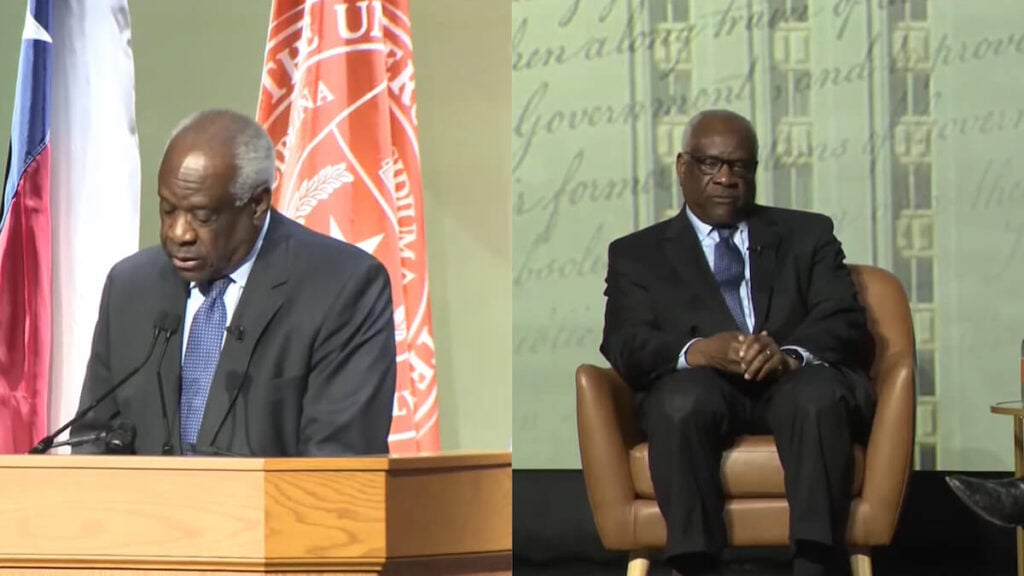
Supreme Court Justice Clarence Thomas is drawing attention online after urging Americans to take greater responsibility for shaping the country during remarks at the University of Texas at Austin.
Speaking to students, Thomas emphasized the importance of civic participation, arguing that people should not “sit on the sidelines” if they are dissatisfied with how institutions are run. He encouraged individuals to get involved directly, whether through public service or by entering professions they believe need change.
The comments quickly gained traction on social media, where users weighed in on both the message and the messenger.
What People Online Are Saying
Some users expressed strong support for Thomas’s remarks, praising his emphasis on personal responsibility and civic engagement. “I admire, respect, and appreciate this man,” one commenter wrote. Another described him as “a national treasure,” while others echoed his call to take action rather than complain.
Others, however, pushed back on the message, questioning whether Thomas is in a position to deliver it. “Coming from a corrupt SCJ, I’ll pass,” one user wrote, reflecting a broader sentiment among critics who pointed to past controversies surrounding the justice.
Several commenters also challenged the broader premise of his remarks. “Take control of what? Republicans control all three branches of government,” one user asked, while another argued that calls for participation overlook deeper structural issues within politics and the courts.

There were also more measured responses that focused on the current political climate. One commenter noted that division within the country remains a significant obstacle, writing that “one side obstructs the other even if there is a proposal that would benefit both.”
The range of reactions highlights the divide in how Thomas’s message is being received. While some see it as a straightforward call to civic responsibility, others view it through the lens of ongoing debates about power, accountability, and trust in public institutions.