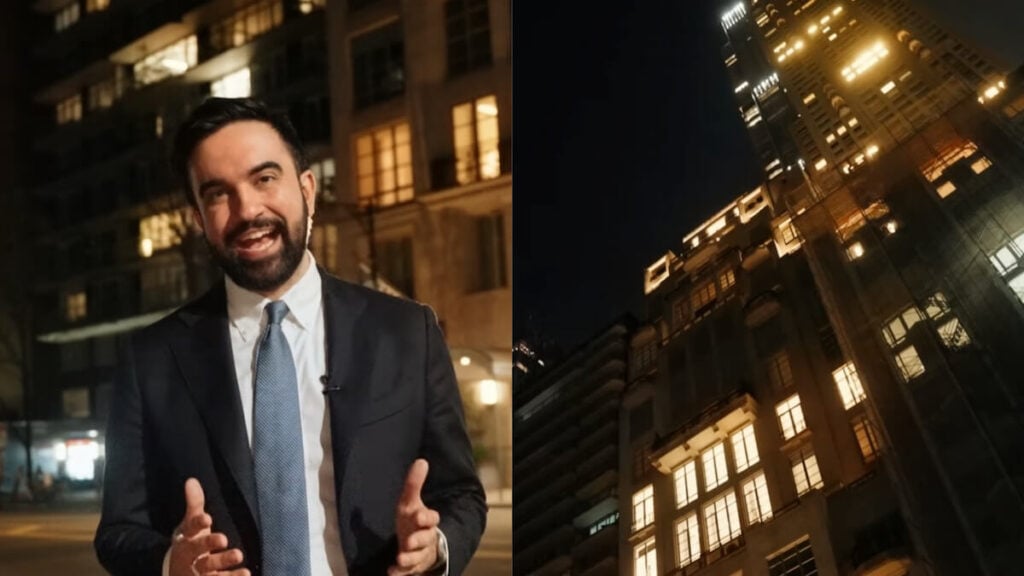
New York City residents are voicing support online after Mayor Zohran Mamdani introduced a new tax targeting high-value properties owned by non-residents.
The proposal, announced on Tax Day, would apply to luxury properties worth more than $5 million whose owners do not live in the city full-time. The policy is designed to target so-called pied-à-terre units, which are often left vacant while increasing in value.
The announcement gained traction online as debates around housing affordability and wealth inequality continue across major U.S. cities.
Mamdani said the tax could raise at least $500 million annually, with funds expected to go toward public services such as childcare, sanitation, and public safety.
What Residents Are Saying Online
Online, many users expressed support for the policy, framing it as a long-overdue step toward addressing inequality. “When people ask who is going to pay for that… this is the answer,” one commenter wrote.
Others argued the tax targets a specific issue in housing markets. “This is specifically targeting rich people who own property but don’t even live in NYC,” one user said, adding that in a worst-case scenario, “they sell their property and bring down prices for everyone else.”
Some commenters also pushed back against a common criticism that wealthy residents might leave the city. “They’ve been saying ‘the rich are fleeing New York’ in every comment section,” one user wrote, while another added that if that were to happen, “it would open up inventory that is not being used.”
Support for the measure also came with broader frustration about how housing is used in major cities. One commenter argued that empty luxury properties can impact local communities, saying they affect everything from housing availability to neighborhood businesses that rely on full-time residents.

There was also a more celebratory tone among some users. “Billionaires move out, hard working regular people move in. A win-win,” one commenter wrote, while another said, “Great news for New York, hopefully other cities follow suit.”
The reactions highlight a wider conversation about who should bear the financial burden in large cities, particularly as housing costs continue to rise and demand for space remains high.