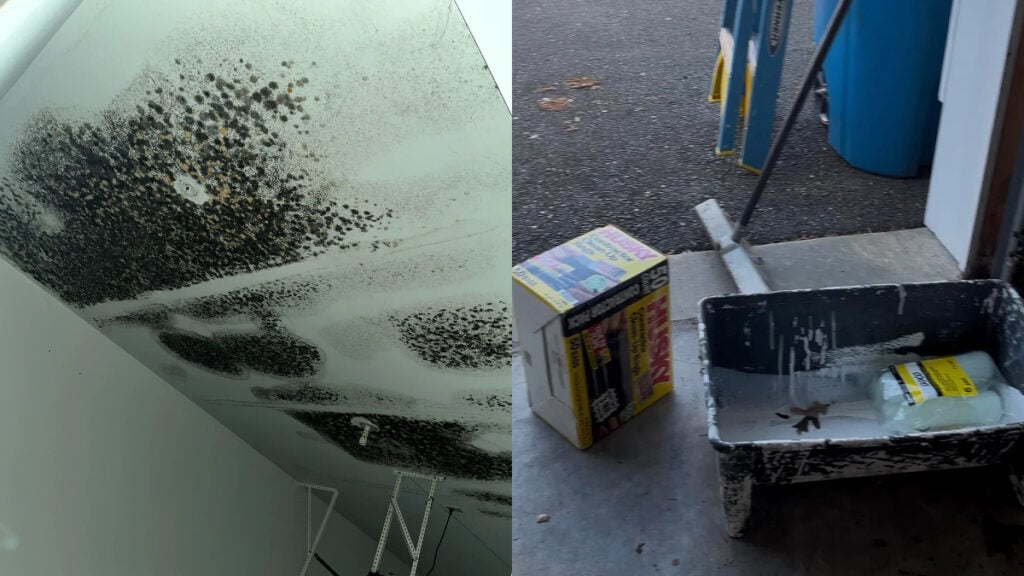
A New Jersey tenant expresses their worry about how a large mold problem in their garage is being handled, after seeing what looked like prep work for a surface treatment instead of full removal. The tenant said the landlord briefly left during the process without explanation, raising concerns about whether the issue is being properly addressed and whether it could pose a health risk.
The situation was shared on Reddit, where it was posted to r/mildlyinfuriating and gained more than 1,000 upvotes along with dozens of comments. The post drew attention from users who said the images and description suggested a serious mold issue that might require more than a temporary fix.
According to the tenant, a maintenance worker later returned and clarified that the mixture being used was meant to treat or kill the mold. However, the worker reportedly said that if it were his own home, he would remove the affected materials entirely rather than rely on a coating or surface solution. The tenant said the worker made it clear he was following instructions and that responsibility for the situation fell on the landlord.
The tenant also said a neighbor came outside during the work and questioned the approach, suggesting they would contact the board of health if it were their own property. The maintenance worker reportedly agreed with that view. For now, the worker placed fans in the garage and advised the tenant to keep the area open while the mold is treated, though no long-term plan has been confirmed.
It remains unclear how extensive the mold is or whether additional remediation will be done. The tenant said they are considering contacting the board of health to have the situation reviewed. Concerns were also raised by a past incident, where the same maintenance worker entered the garage briefly for repairs and later said he was sick for about a week. While there is no confirmed link, the tenant said the experience adds to worries about possible health effects.
Online Reaction to New Jersey Mold Concerns
Online reactions were largely supportive of the tenant’s concerns. “That is a health hazard,” one user wrote. Others questioned the landlord’s approach, arguing that a surface treatment would not address the root of the problem. Many said the extent of the mold suggested more severe damage that would likely require full removal.
One user shared their own experience, writing, “My apartment was covered in mold. They removed the drywall and insulation and rebuilt the walls. Four weeks later, the mold grew back. When I told them, they said ‘that’s not possible,’ and after inspection moved us into a new building. I haven’t stopped coughing since. I’m pretty sure the mold has infiltrated my body, and I’m a walking mold spore at this point.”

The New Jersey tenant says they are weighing next steps as concerns about the mold and how it is being handled continue.