
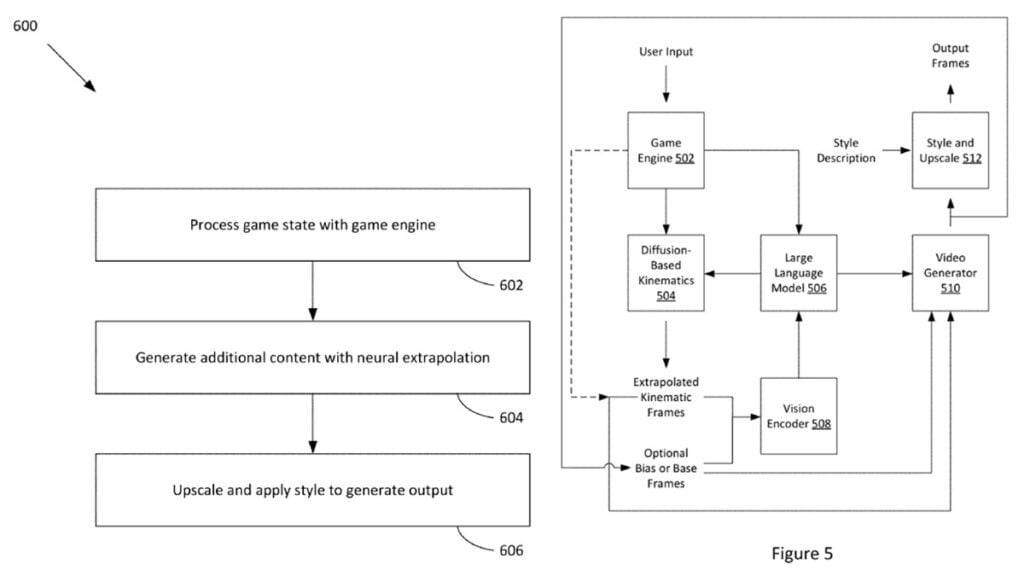
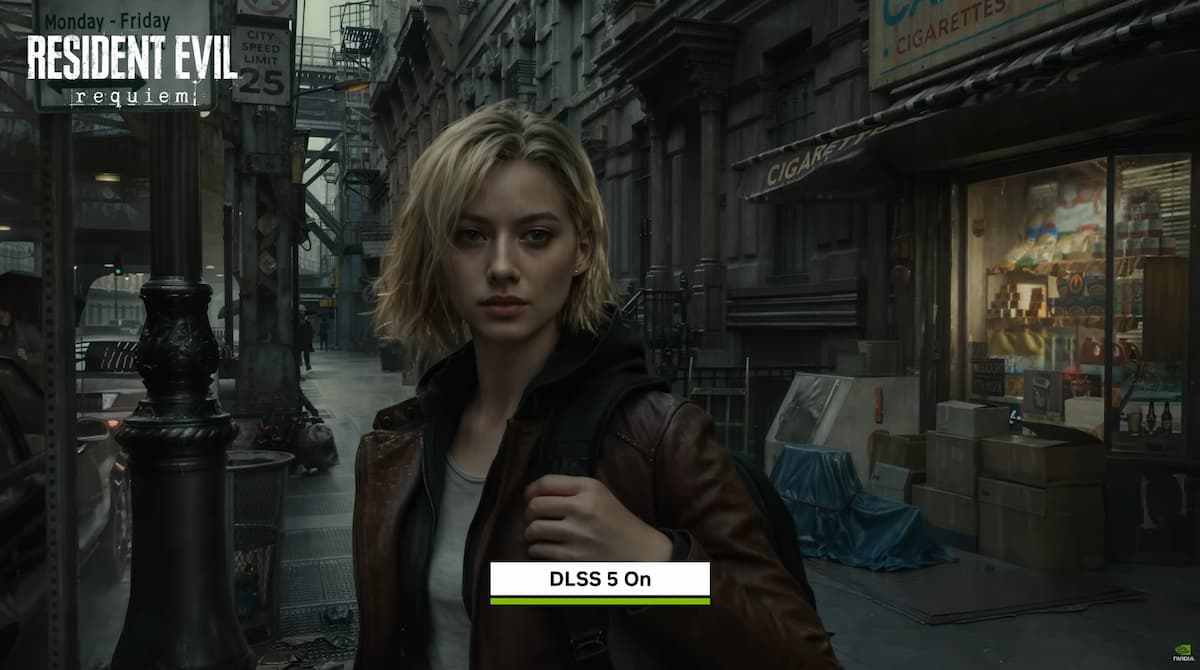
Just weeks after the whole NVIDIA DLSS5 AI filter debacle, it seems its rival company is ready to throw even more slop into the mix. AMD has filed a patent for an AI-Based Game and Rendering Engine, one that sounds like frame generation — but potentially on steroids. The company claims that its ‘diffusion-based kinematics’ and large language model components will be able to create detailed output images even from ‘stick-figure’ objects.
According to the Patent US20260115594’s description, the engine will be able to analyze and extrapolate additional ‘content and frames’ from low-fidelity visuals. That includes graphics rendered at low resolution, low polygon counts, or scenes with minimal detail. Sounds familiar?
AMD calls it an ‘analytical’ game engine, and it would be able to perform normal functions of ‘traditional’ game engines, such as Epic‘s Unreal and Unity.
“The AI rendering engine supplements and/or substitutes for a traditional rendering and/or video game engine,” the description reads. “More specifically, the AI rendering engine includes an ‘analytical’ game engine as well as an AI-based component that performs some of the processing that a traditional game engine would perform.”
AMD argues that an AI game engine idea is needed because today’s high-performance rendering systems, like those in Unreal Engine 5, are becoming increasingly demanding. Rendering high-framerate physics and high-resolution games would need intense calculation in a short time. As such, techniques to improve performance are being developed to make engines less expensive and resource-intensive.
Of course, what AMD is proposing for an AI game engine here is still only a patent. Meaning there is no guarantee it will ever turn into a commercial product. Still, as the use of generative AI tools becomes more common in game development, it would not be surprising if the concept catches on anytime soon.
We previously reported that gaming companies, including Sony, EA — and unsurprisingly NVIDIA — filed 49 generative AI-related patents in late 2025 alone. Many focused on systems to assist or outright replace player input, such as Sony’s Ghost Player patent, which claims to be capable of playing games on behalf of its users. Still, whether gamers actually want AI to take over gaming development and experience is a different question altogether.