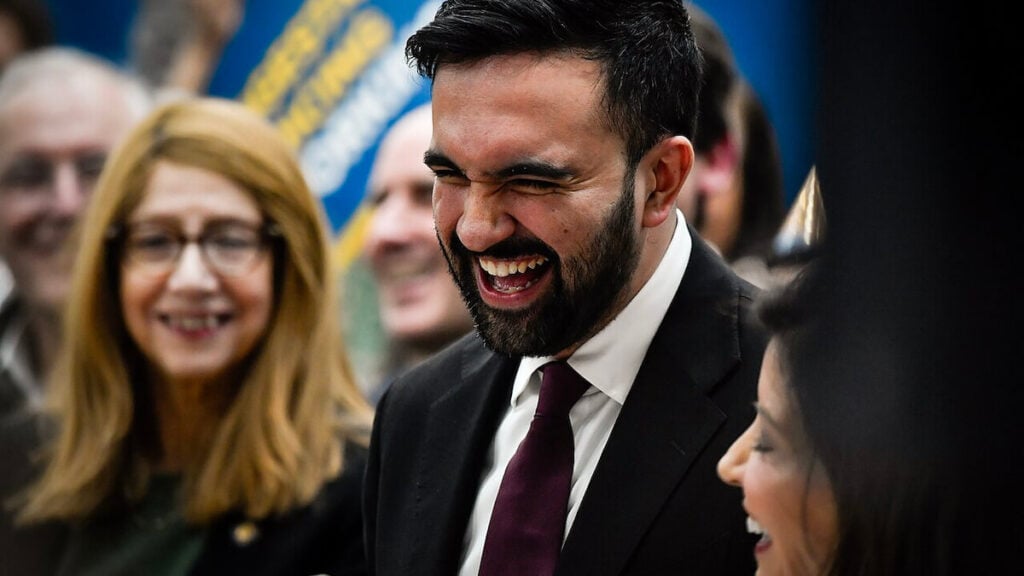
New York City Mayor Zohran Mamdani defended his criticism of the American Israel Public Affairs Committee on Monday after Jewish leaders accused him of antisemitism during a City Hall press conference. Speaking at a Brooklyn rally Thursday, Mamdani accused the pro-Israel lobbying group of using political spending to preserve its influence in Democratic congressional primaries. He also criticized organizations he said fund advertising campaigns aimed at shaping key races.
American Jewish Committee CEO Ted Deutch and Democratic Rep. Josh Gottheimer condemned the remarks. Gottheimer argued the mayor’s rhetoric echoed antisemitic conspiracy theories, while Deutch called the language dangerous.
Mamdani rejected those accusations and said he was quoting the Italian Communist Party founder, Antonio Gramsci, when he used the term “monsters.” He said the criticism was directed broadly at super PACs and political spending, not solely at AIPAC.
Federal Election Commission filings show AIPAC’s super PAC, United Democracy Project, contributed more than $600,000 to a group supporting Rep. Adriano Espaillat, whose race against Mamdani-backed challenger Darializa Avila Chevalier has drawn increased attention ahead of Tuesday’s Democratic primary.
Public Reaction to Mamdani’s Defense of AIPAC Remarks
Mamdani’s rejection of antisemitism accusations generated extensive discussion among people following the controversy.
One user wrote, “Nothing he said was remotely antisemitic. He was just spitting facts!” Another argued, “Being against AIPAC doesn’t make you anti semtic.”
Others praised the mayor’s response to criticism. “I love that he not only doubled down on his position,” one commenter wrote. Another added, “Can’t believe the reporter tried to hit him with the ol’ ‘anti-semitic tropes’. He doubled the [expletive] down.”
Not all reactions focused on Mamdani’s defense. One user questioned the criticism itself, writing, “Umm, but he didn’t do that,” while another stated, “That argument makes no sense and just inflames the issue.”
The debate over Mamdani’s remarks continues as supporters and critics remain divided over whether his comments targeted a political lobbying organization or crossed into antisemitic rhetoric.