A video on X shows New York Rep. Alexandria Ocasio-Cortez saying the U.S. Senate was “founded on, on, uhh, on, Jim Crow.” The clip is getting a lot of attention online, with people pointing out that Jim Crow laws came nearly a century after the Senate started in 1789. The original post says the remark has people talking about the history behind it.
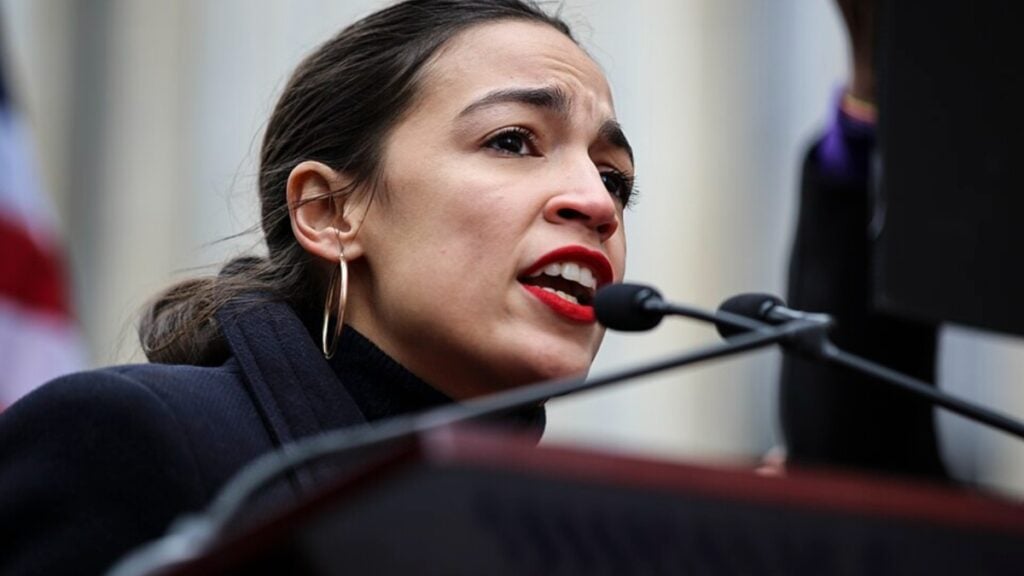
The video clip features a segment from a Newsmax interview conducted outdoors. The footage shows Rep. Alexandria Ocasio-Cortez of New York speaking with a female reporter. The reporter references calls to abolish the U.S. Senate and presses the congresswoman on whether she supports the institution. AOC responds that she does not support the filibuster and does not support “elements of this institution that we know were founded on Jim Crow.”
According to the post sharing the video, Jim Crow laws came into being almost a century later when the Senate was formed as an institution. What other information is given about the matter cannot be determined from the clip.
Viewer Responses to AOC’s Remarks on the Senate’s Origins
Some commenters focused on the congresswoman’s intelligence and background. One wrote, “AOC is dumb AF.” Another stated, “She’s really a total *expletive*!” A third described her as the “Dumbest elected official in history,” while a fourth added, “What a no-nothing bartender. Sad this is in US Congress…”
Others emphasized historical context around the Senate and Jim Crow. One user posted in full: “News Flash: The Senate was established by the founders in the Constitution. This predated the Democrat Party by almost a century. Democrats were the ones who drafted ‘Jim Crow’ laws to ‘keep blacks in their place’ after the Republicans freed them. Hey… It’s just history, folks.”
Another simply noted, “Jim Crow laws were created by Democrats.”

A few responses addressed her political support and future, including “She is blessed to have so many uneducated lemmings support and fawn over her” and “And yet she’ll be re-elected.”
The clip has become part of broader online discussions about historical references in congressional remarks. Such exchanges continue to highlight differing interpretations of Senate history and institutional origins.