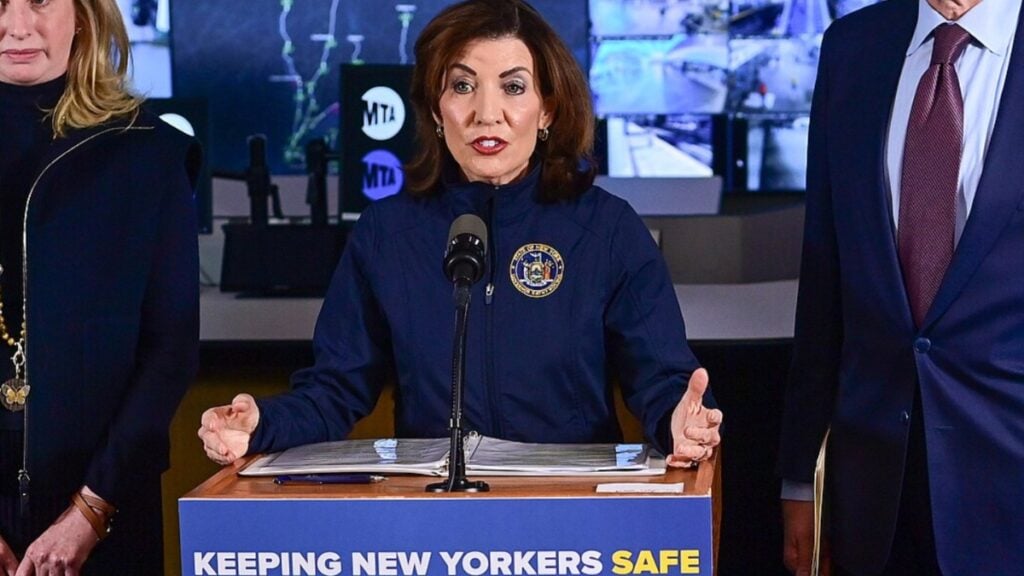
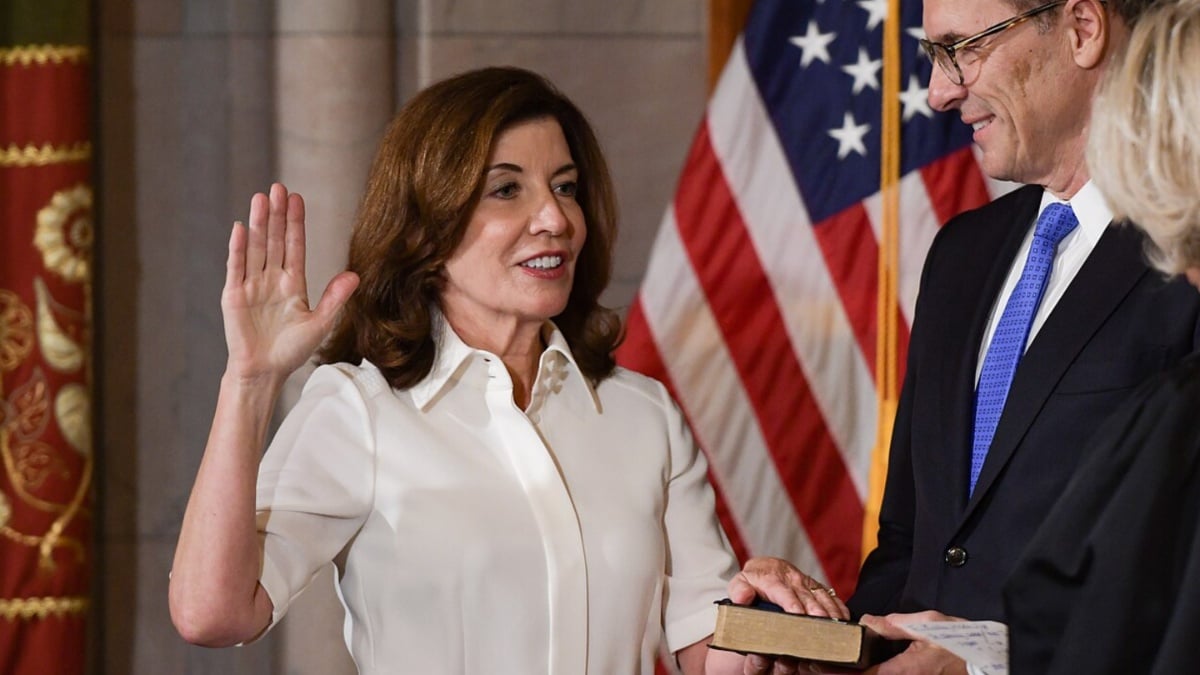
Gov. Kathy Hochul posted on X that 8.2 million New York households will start getting energy rebate checks of up to $200 next week through a $1 billion state program. She said the money is meant to help with high energy bills. A lot of people online weren’t buying it. They asked why the checks are coming so close to the election, and whether $200 even makes a dent.
The clip appears to show Hochul speaking into a mailbox camera while placing an envelope inside. In the footage, she asks if costs are “leaving you shocked,” then says, “Failed policies from Washington are just driving up our costs.” She adds, “You deserve some relief,” and, “That’s why we’re sending $1 billion” to people “who are struggling,” before telling viewers to “look for your energy rebate check in the mail this fall.” The video does not show checks being mailed or confirm what any household will receive.
According to the accompanying post and a state release, the $1 billion Protecting Our Wallets Energy Rebate program was included in this year’s budget. Joint filers earning under $150,000 are slated to receive $200; joint filers earning $150,000 to $300,000 are slated to receive $150; and single filers earning under $150,000 are slated to receive $100, based on 2024 tax returns and with no application required. Mailings are scheduled to begin Sept. 21 and continue through December.
Responses to the New York Rebate Announcement
Supporters described the checks as short-term help with high bills. Assemblymember Didi Barrett said New Yorkers “need real relief” and thanked Hochul for “helping get these rebate checks out the door.”
Tax Commissioner Amanda Hiller called them “another meaningful way that Governor Hochul is trying to help people during challenging economic times.” Bill Ferris, a ratepayer advocate, separately said, “This is a welcome check to help individuals out – especially older persons who live on fixed incomes.”
Others questioned the amount and the timing. Assembly Minority Leader Ed Ra said mailing checks “less than two months before the election is an obvious maneuver to score political points instead of addressing the actual problem.”
Some focused on energy policy and the size of the check. One commenter wrote, “maybe shutting down a nuclear power plant wasn’t the best idea,” then added, “Now you’re wasting $1 billion in taxpayer money to buy votes.”
On X, one widely liked reply wrote, “That’s not even enough for one month of my bill!!!”
The checks are scheduled to start arriving next week and continue through December. How much relief they provide, and how they are received before the November election, is likely to remain part of the state’s affordability debate.