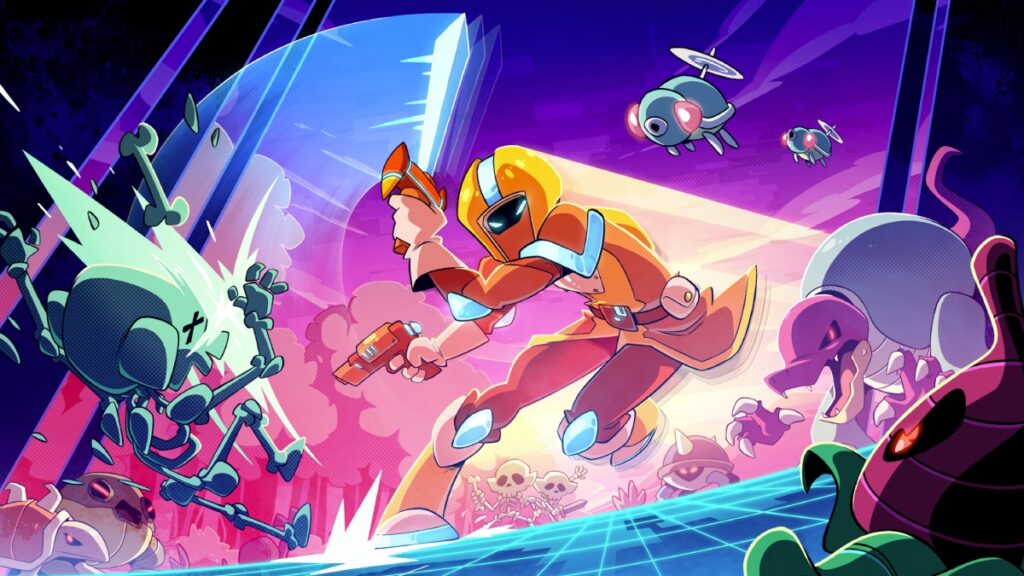
Time and time again, studios surprise us with new takes on the roguelike genre, creating brand-new experiences with fantastic ideas that become extremely addictive—which is what Chivalware is. Instead of another top-down adventure or deck-builder, it combines tile-matching and disk-collecting seamlessly to create a cohesive, highly customizable gameplay loop. Even if I think a few of the systems can be a bit convoluted for more casual players, Chivalware is another fantastic surprise in the genre, and one I recommend for everyone looking for a pick-up-and-play roguelike title.
The Disk Knights Rise
While many roguelikes do offer some in-depth narratives or world-building of sorts, Chivalware drops you right into the hectic pixelated action, which I really appreciate. That’s not to say there isn’t any story, yet it serves more as background flavor than the main focus. You play as a Disk Knight tasked with defeating a power-hungry king, although strange glitches along the way suggest there’s more to the story than meets the eye.
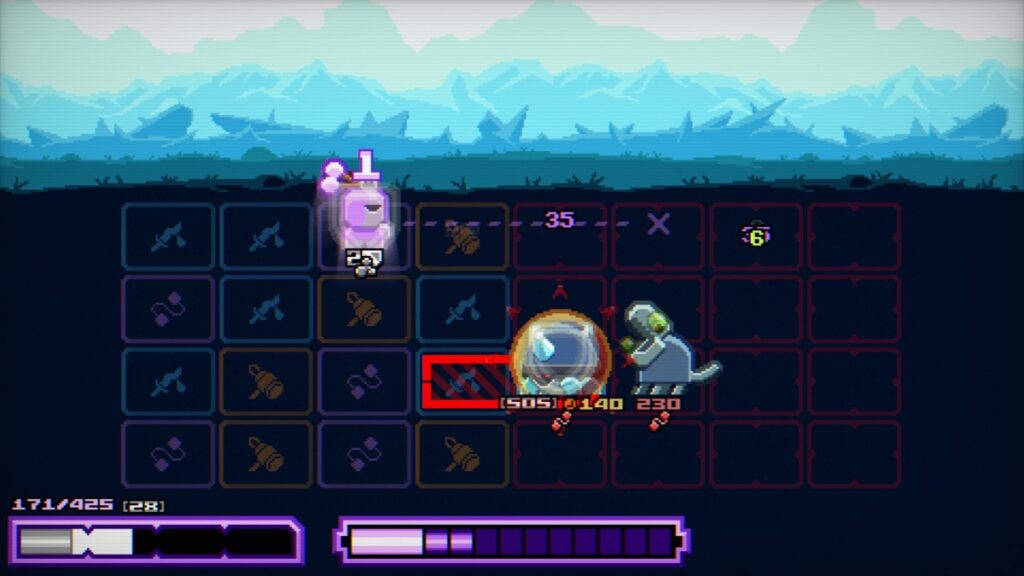
With that in mind, the bread and butter of Chivalware is its unique approach to combat, which is all about matching tiles and installing disks on your character.
When you begin a run, you’ll be able to pick one Disk Knight (with more becoming available as you climb the leaderboard), each of them with specific disks. Each disk corresponds to different abilities and colors. If you want to trigger that skill, you need to match tiles on the board to gain energy, and with enough energy, you can start walloping your enemies.
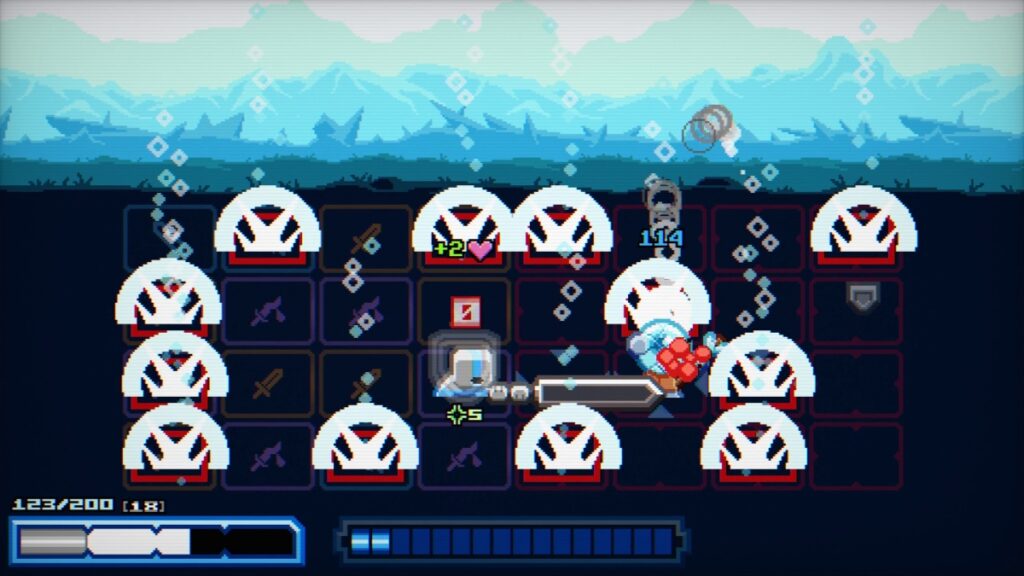
The truth is that this tile-matching mechanic, beyond its uniqueness, is quite addictive. While it may seem like all you need to do is stand on the colored tiles and start blasting foes, there’s more depth to it than that. See, some skills have different energy requirements. For instance, a disk with a poisoned dagger skill might only require two energy blocks for four hits. On the other hand, a powerful hammer skill might require four energy blocks for one hit only.
This is where the gameplay loop started to click for me. At first, I was just matching tiles for the sake of doing so. Then, I realized just how strategically I had to play. I would often gather energy for my low-energy abilities and continue matching until I was able to perform two or three hits of my heavy damage disks.
Combat gets even deeper when you realize that enemies have different attack patterns, armor, and even colored shields that block specific skills. At times, you may have a powerful ability slotted in your orange disk. But in true roguelike fashion, RNG may play against you and give you enemies full of orange shields. All you can do now is use your other disks to defeat them, which really makes you think outside the box and look for different disks that adapt to all situations.
My only complaint is that, for some casual players, some of these systems may be a bit hard to pick up. While it isn’t the most challenging roguelike out there, it has many mechanics we don’t see often in the genre, so Chivalware could definitely benefit from a practice level or area of sorts, as combat can get really fast-paced, especially after moving through the game’s different areas. Still, once you get the hang of it, you’ll be dashing through tiles, matching colors, and blasting poisoned rockets at your foes, which is just as satisfying as it sounds.
Pixelated Depth
Just like with several other roguelikes I’ve played, I approached Chivalware with a “whatever I get as a reward” mentality. In other words, I wasn’t particularly focused on builds at first. Instead, I simply picked disks that looked fun to use, such as a charged boxing glove, an explosive fist, or a Guts-like greatsword. However, I quickly realized I wasn’t making the most of the combat system.
For instance, one of the passive bonuses I got during my run increased the duration of status effects on enemies, including poison. So, I eventually grabbed a low-energy-cost poisoned dagger skill, and I was just watching enemies perish from my DoT. In another run, I got a passive that increased damage to frozen enemies, and guess what? I had a hammer that applied the frozen status to foes. It all started to come together nicely. These are just two build examples, of course, but there are just dozens of options that can turn your Disk Knights into rocket-launching machines or professional 2D boxers. In short, there’s plenty of room to experiment.
In terms of the actual roguelike experience, it is like many other titles in the genre, albeit with its unique gimmicks. You still transition through phases after combat encounters, and can even choose a path to follow at times. Sometimes, you’ll face a fight followed by an area that gives you a new Disk. In other cases, you may come across an event where you get several rewards at the cost of receiving a permanent curse.
Chivalware nails that high-risk, high-reward aspect of the genre, and it does so in such a cohesive way that ties perfectly with its combat mechanics. Often, I stick to following the combat stages, as I just enjoy putting my builds to the test, but here, I liked going for random events, as some of them were extremely rewarding and quite unexpected.
Lastly, for the permanent progression part, there’s a leaderboard that you climb after every doomed or successful run. The higher your rank, the more rewards you get. Some ranks give you disks, others a brand-new Disk Knight, and so on. While I did feel the progress was too slow at first, I didn’t mind it after a while, as the roguelike loop is so solid that you won’t really mind doing one run after another, even if the same boss defeats you every single time.
An Outstanding Addition to the Genre
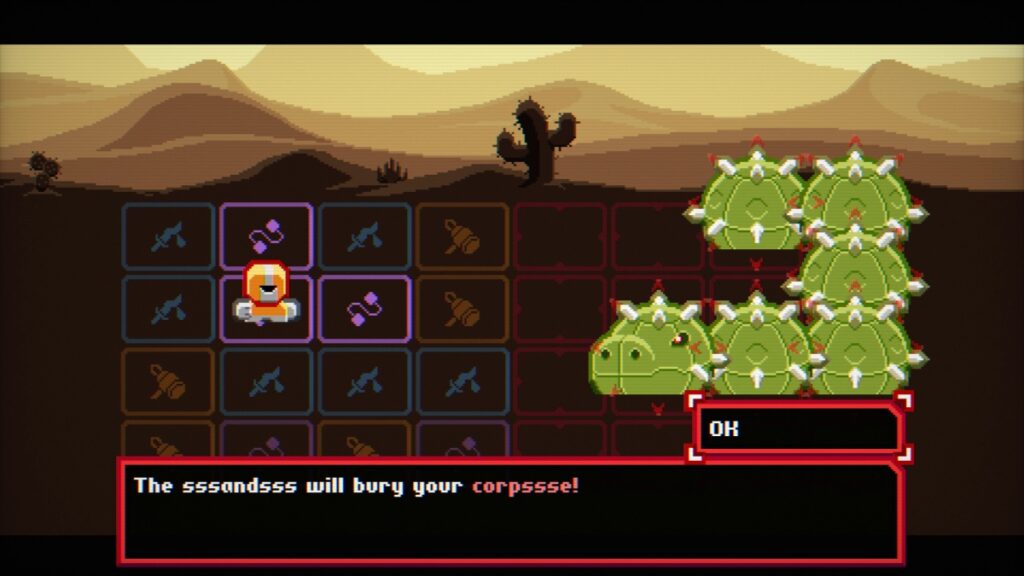
Despite feeling a bit overwhelming during the first few runs, Chivalware is an outstanding roguelike with a unique gameplay loop, interesting combat systems, and a gorgeous art style. And even if the genre has felt a bit crowded lately, I think Imperfect Games and The Arcade Crew have done a superb job creating one of the most memorable roguelikes I’ve played this year. In a genre packed with competition, Chivalware manages to stand out from the crowd.
Review copy provided by the publisher.
Chivalware (PC Reviewed)
With its addictive gameplay loop, surprisingly deep systems, and refreshing take on the genre, Chivalware stands out as one of the year's most unique and compelling roguelikes.
Pros
- A clever and addictive gameplay loop
- Plenty of depth when building your Disk Knight
- Gorgeous art style
Cons
- Steep initial learning curve