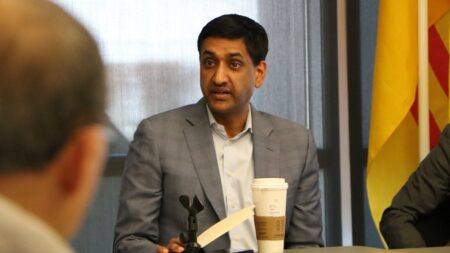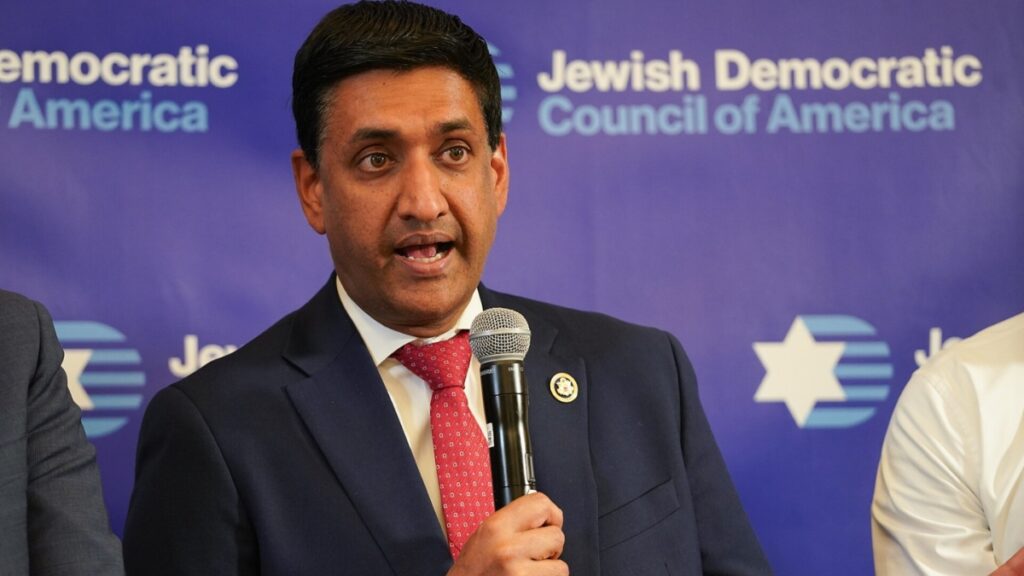
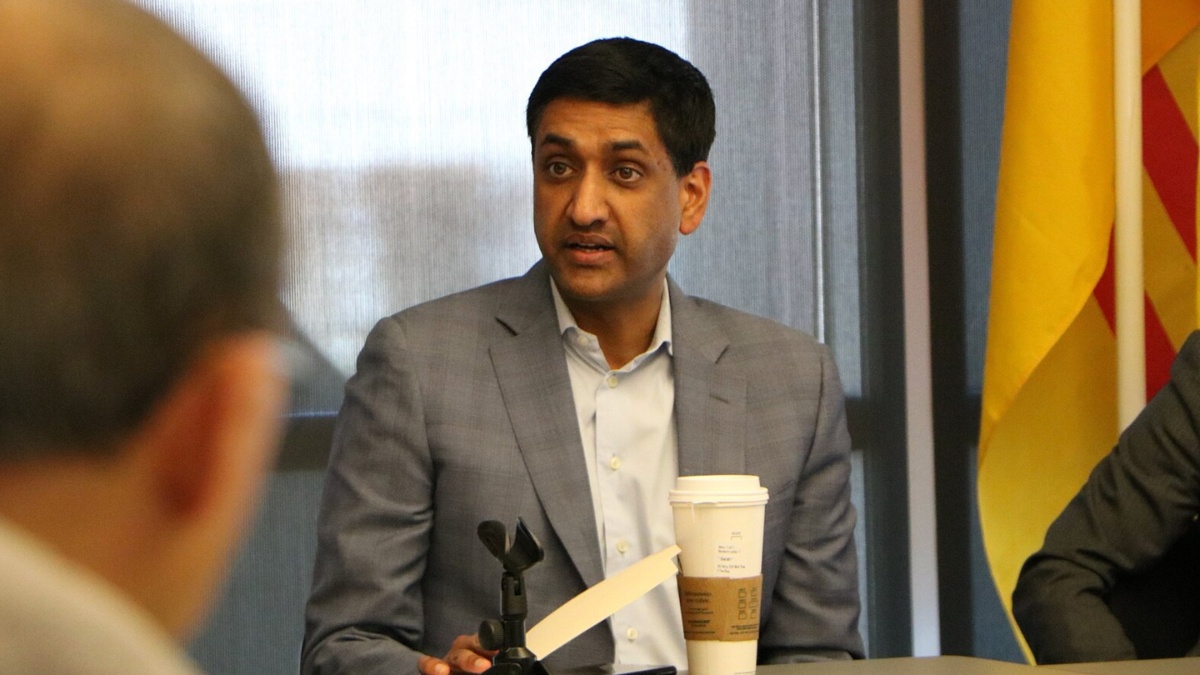
A video posted by California Representative Ro Khanna on X shows him asking how a nation can survive when one district holds one-third of its wealth, with historian Timothy Snyder responding that it cannot. Shared from the congressman’s account, the clip has drawn online attention, with users questioning Khanna’s reported wealth and urging him to lead by example. The exchange references the Silicon Valley area he represents.
In the clip, which shows a split-screen conversation with historian Timothy Snyder, Khanna states, “How can a nation survive when one-third of its wealth is concentrated in a single area within a 50-mile radius?” Snyder answers, “She cannot do that. Sorry to interrupt, but she really can’t. I mean, seriously, this is not a rhetorical question. The United States cannot continue in this situation for much longer.”
Khanna then discusses extreme wealth concentration and a proposed tax, stating, “You’ve got 989 billionaires who are worth 22% of the economy, 19 billionaire families are worth 12% of the economy,” and noting that economist Gabriel Zucman has shown this is “three times the concentration of the Gilded Age.”
He adds that a 5% tax on their wealth “would raise $4 trillion,” enough to “fully fund free childcare, free college, and the IB for public schools,” but says the similar California proposal failed “because Sergey Brin was [against] 5%.” The footage shows both men speaking in office settings, with bookshelves visible behind them.
According to the post text, the remarks concern the concentration of wealth in Khanna’s California district. Khanna has previously described the area as holding a large share of national stock-market value, including multiple companies with trillion-dollar market caps, and has linked such concentration to broader questions of economic fairness and public services. The clip does not independently verify those figures or show related policy proposals.
How Viewers Are Responding to the Exchange
Some commenters focused on Khanna’s own reported wealth and questioned whether he should lead by example, with one writing, “Speaking of wealth, you’re worth how many tens of millions of dollars?” and another asking, “Ro, how much money do you have???”
Others directed attention toward Democratic Party leadership, including one who stated, “How can the Democrats survive with people like Jeffries and Schumer being leaders and being supported by you!?” and another who said, “Go vote for Jeffries and Schumer so nothing will change. Oh, and you’ll be primaried.”
A number of replies engaged more directly with the substance of wealth concentration. One asked, “Who should have that wealth?” while another noted, “Why is it that when wealth is talked about, the share of millionaires is not in the conversation?”
A further commenter wrote, “Agree. We need to increase federal taxes on California. Thank you.”
The exchange adds one more moment to the ongoing debate over wealth concentration and its implications for the country. Whether the conversation shifts policy or remains focused on individual figures is still unfolding online.