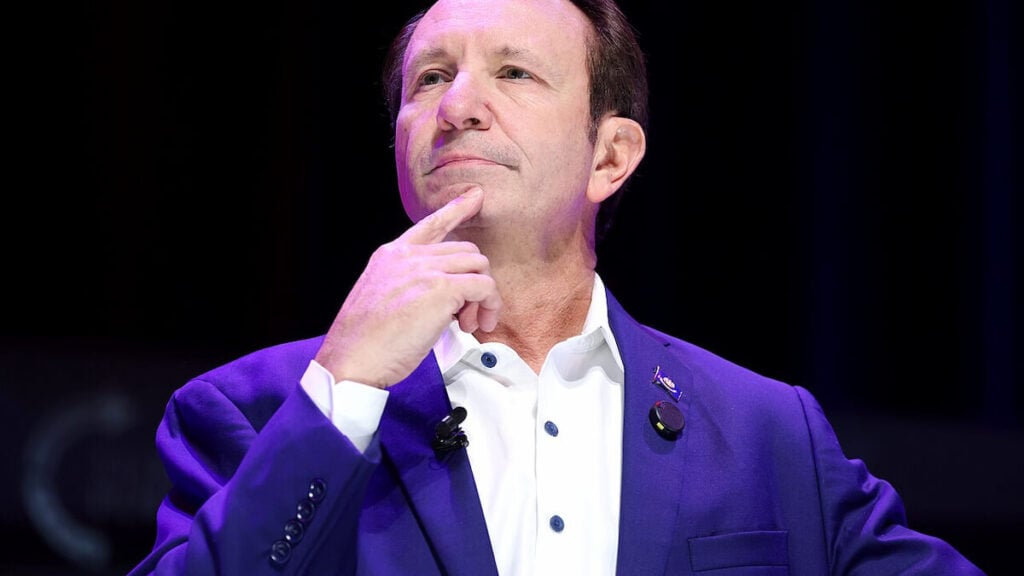
Louisiana Governor Jeff Landry enacted legislation imposing up to a year of jail time for individuals caught smoking marijuana near educational facilities across the state. The statutory change targets university environments and elementary school zones alike.
The measure actively reverses previous statewide reforms that removed incarceration penalties for minor possession, Marijuana Moment reported. Lawmakers structured the updated framework to establish observable offenses that allow police officers to bypass standard possession thresholds. The newly defined geographical restrictions apply to any location within 2,000 feet of an active school or bus.
Representative Gabe Firment argued the legislation provides prosecutors with necessary mechanisms to secure convictions by ensuring that campus violations carry “real, enforceable consequences”. Marijuana Policy Project legislative manager Kevin Caldwell condemned the governor for aggressively lobbying lawmakers to pass the “deeply flawed” policy. Caldwell warned that historical arrest data clearly indicates who will ultimately absorb the impact of this enforcement shift.
The updated statute explicitly authorizes officers to make arrests for usage occurring anywhere within 2,000 feet of university grounds.
Critics tie marijuana law to prison profits
The expansive two-thousand-foot enforcement radius directed online scrutiny toward the economic motives behind expanding the state’s incarcerated population.
Evaluating the administration’s reliance on incarceration, one commenter argued that “The entire state of Louisiana is a for profit prison.” A second participant echoed that institutional cynicism, writing, “We have to continue to support the for profit prison CEOs!”
“In Louisiana, incarcerated people are slave labor for farms and food services, especially,” an observer evaluated. The same individual outlined the financial mechanics of this system, arguing that such “Slave labor is essentially paid for by tax dollars.”
Others focused on the immediate impact on higher education, with one user characterizing the legislation as a manual on “How to reduce out of state enrollment in 1 easy step.” Anticipating the long-term consequences for local universities, another resident imagined future administrators asking, “Hey how come no one wants to come here anymore?”
Analyzing the geographical restrictions, a community member noted, “Where I live if I was in Louisiana I would no longer be allowed to smoke at my house, and I don’t feel anywhere near the school in relation to where I am.” Another critic framed the broad enforcement zones as politically motivated, suggesting the statute “just seems like a way to go after a specific demographic of people (college educated voters).”
The looming enforcement of these extended zones now tests whether the state’s university system can maintain its out-of-state appeal under the threat of incarceration.