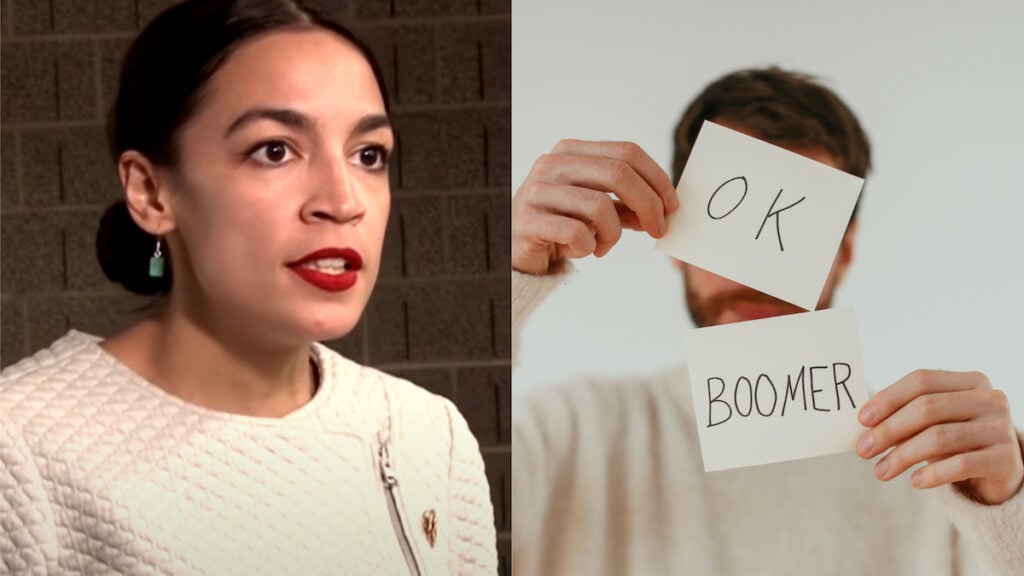
New York Rep. Alexandria Ocasio-Cortez argued that tuition-free public college is achievable because earlier generations had it. She said baby boomers benefited from tuition-free public colleges during the 1960s and 1970s. The Congresswoman also said public colleges began losing funding as they became racially integrated.
The video centers on her case for tuition-free public colleges and universities nationwide. She rejected criticism that the proposal amounts to an unrealistic or expensive progressive wish list. “This is literally what baby boomers gave themselves,” she said.
She added that public colleges were tuition-free during the 1960s and 1970s. From there, Ocasio-Cortez connected declining public funding to racial integration. She argued that institutions began losing funding “when they started to get integrated, racially integrated.”
The Congresswoman presented that history as evidence that tuition-free public higher education is not unrealistic. Her claim has some historical basis, although the reality was more complicated.
Tuition-free public college wasn’t universal nationwide. Some major public systems offered residents tuition-free or nearly tuition-free education then. California’s public colleges, for example, emphasized tuition-free education for residents, while CUNY maintained free tuition for many undergraduate students until 1976. Other public colleges charged tuition, meaning baby boomers’ experiences varied considerably depending on where they lived and attended school.
Historical evidence also links expanded access to political battles over public higher education, including at CUNY, where open admissions brought significantly more working-class students and students of color into the system. However, the decline of tuition-free public higher education also coincided with major fiscal and economic pressures during the 1970s, making AOC’s broader cause-and-effect argument more complicated.
AOC’s Tuition-Free College Claim Draws Pushback From Boomers
The comments quickly became a generational dispute over who actually paid tuition and how widespread tuition-free public college was.
“Where was college free? Boomer here, first wave,” one user asked. “I went to the cheapest state college but I paid a fair amount to do it.”
Another response challenged AOC’s wording more directly: “My public college was NOT free.”
“I’m a boomer and college was not free, it was more affordable though,” another user wrote. A separate response was even more blunt: “I’m a baby boomer and I can tell you this is not true.”
Others said their experiences supported AOC’s broader point. “She’s correct. In Ohio, state government tax dollars covered 67% of my tuition & my three siblings’ tuition,” one user wrote. The same response added, “All 4 of us graduated from a state university tuition free.”

Another argued, “She was right! Public higher education was dramatically cheaper—and in some major systems effectively tuition-free for residents—during the era when many baby boomers attended college.”
The disagreement ultimately comes down to just how broadly AOC’s description applies. Tuition-free public college wasn’t something every baby boomer experienced, as several commenters pointed out. But it wasn’t imaginary either. Some of the country’s largest public higher education systems offered residents tuition-free or extremely low-cost education when states covered a much larger share of the bill.