Outrage erupted online after a Minnesota sheriff was seen with an anti-George Floyd sticker on their car, claiming that Floyd died from an overdose.
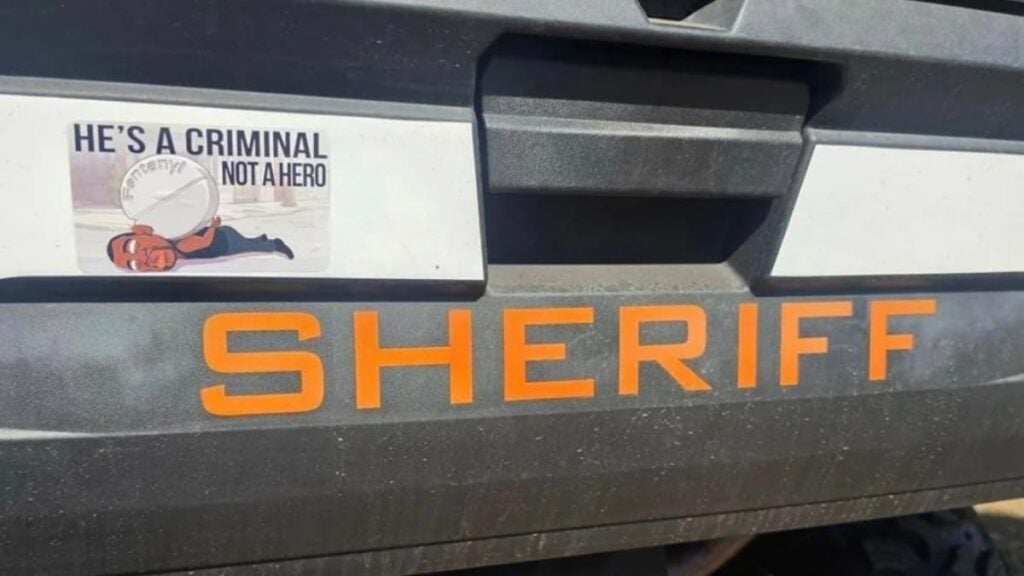
A picture of the sheriff’s vehicle was taken outside the state fair, showing the controversial bumper sticker. Someone later shared a photo of the vehicle and sticker online to bring attention to the incident. “Wondering why this incredibly offensive sticker is on a Sheriff vehicle at the MN State Fair right next to the Hennepin County Sheriff Stand? Unbelievable,” they wrote.
The picture circulating online showed the bumper of the sheriff’s vehicle, including a sticker depicting a cartoon version of George Floyd lying on the ground while handcuffed. A large pill labeled “fentanyl” was placed over Floyd’s neck, implying that he died from an overdose. The sticker also included the statement, “He’s a criminal not a hero.”
At first, viewers online believed that the sheriff who owned the vehicle had intentionally placed the shocking sticker on it. However, that claim was later denied. Hennepin County Sheriff Dawanna Witt responded to the accusation, saying that the sticker had been placed on the vehicle by someone attending the fair rather than a sheriff’s office employee. “This sickening sticker was placed on our vehicle by a Fair attendee without our knowledge. Our staff immediately removed it upon discovering it,” she wrote. It remains unclear whether the sheriff’s office plans to identify the person responsible for placing the sticker.
The Context Behind the Sticker
The sticker reflects a controversial theory surrounding George Floyd’s death that claims he died from an overdose rather than as a result of the police restraint that preceded his death. Supporters of the theory argue that the circumstances surrounding Floyd’s death have been misrepresented and that the officers involved were unfairly blamed for what they consider to have been primarily a drug-related incident. The claim remains highly contentious, however, as it challenges the widely accepted account of the circumstances surrounding Floyd’s death.
Critics argue that promoting the overdose theory minimizes the significance of the video showing former Minneapolis police officer Derek Chauvin kneeling on Floyd’s neck and can be perceived as an attempt to shift responsibility away from the officers involved. As a result, discussions surrounding the theory have frequently provoked anger and outrage, particularly among people who view it as dismissive of Floyd’s death and the broader social movement that followed.
Viewers Outraged Over Sticker Found on Minnesota Sheriff’s Vehicle
The video sparked reactions online. Many viewers were outraged by the controversial sticker found on the Minnesota sheriff’s vehicle, describing it as both offensive and disturbing. “That’s exceptionally inappropriate,” one person wrote. Another person said, “It’s beyond inappropriate, it’s repulsive.”

Before it was revealed that the sheriff’s office was unaware of the sticker, many people criticized the authority figure they believed was responsible for it. “Cops shouldn’t be allowed to have bumper stickers, or anything political on their vehicles or uniforms,” one person wrote. Another person said, “I agree. This is completely unprofessional among so many other things. Civil servants need to keep their biases concealed.” Someone else added, “Wow. That’s crazy! I can’t wait to hear their excuse.”
The picture raised broader questions about the circumstances surrounding George Floyd’s death and the competing claims over what caused it. Rather than treating the overdose theory as established fact, the discussion highlighted the importance of considering the documented events surrounding his death and distinguishing verified information from disputed claims.