
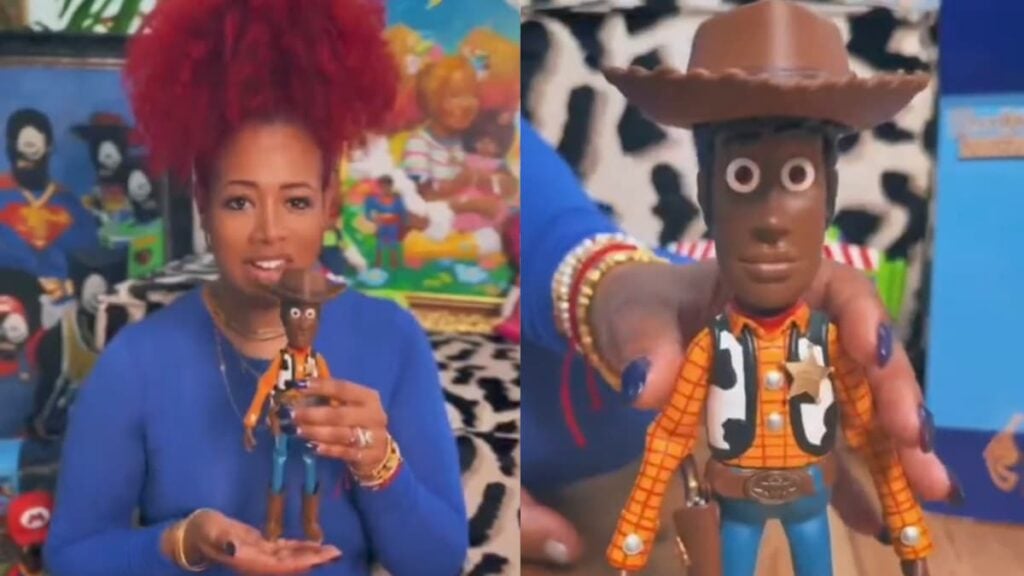
Internet users online are criticizing New York singer Kelis after she shared a Black version of Woody from Toy Story. Kelis is the owner of MaKe iT BrOwN, a toy and collectibles company that creates brown or Black-inspired versions of popular toys in an effort to provide more representation for children.
In a viral video, Kelis was showing off the Black version of Woody created by MaKe iT BrOwN. The camera then moved in for a close-up shot of the toy as Kelis explained that a lot of time was spent designing the details. The figure included a hat, a belt, and a removable toy pistol that could be placed in its hand.
The video then showed several more toys and plushies that had been redesigned into Black-inspired versions by MaKe iT BrOwN. At the end of the clip, the modified version of Woody was shown once again. While many people in the Black community praised the idea and said they appreciated the added representation, others online criticized the concept and disagreed with altering established characters in that way.
Viewers Outraged Over New York Singer’s Black Woody Toy
The video sparked reactions online. Many viewers criticized the New York singer over the Black version of Woody. “White erasure continues. Blacks and other POC are taught they are oppressed by toys and even stories that don’t contain someone that looks like their skin color. This should be a crime. Instead promoting hatred of any other races is common practice and encouraged,” one person wrote. Another person said, “The whole idea that people can only care and feel represented by people that are the same race as them is wrong and destructive.”

More people expressed their outrage as one person wrote, “This is 100% illegal. Disney and Nintendo would have both sued already had it been a white toymaker doing this. But they seem to be letting this slide. Black privilege is real.” Another person said, “That’s no longer Woody. If they want a black character, make a new one.”
The video sparked discussion about whether it is appropriate to modify well-known characters like Woody to better represent certain communities. It also led to broader conversations about how some viewers feel strongly attached to childhood characters and may resist changes to their original designs for any reason.