
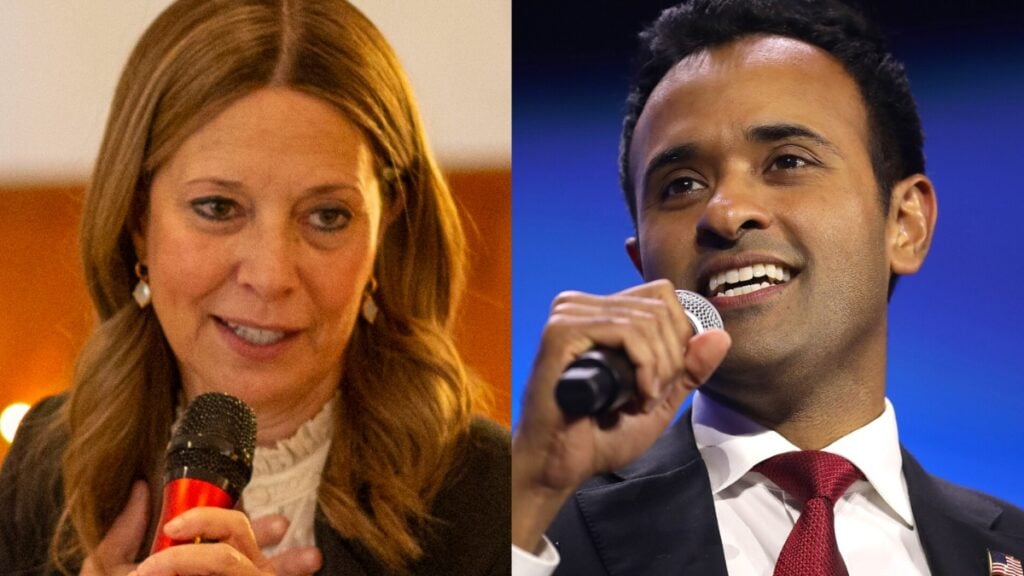
Amy Acton has suddenly thrown her support behind a statewide ban on Flock cameras, and some Ohio voters could hardly be happier about it.
The Democratic candidate for governor announced this week that she would back bipartisan legislation banning the controversial license plate-reading technology across Ohio, arguing that mounting reports of misuse have made the privacy risks impossible to ignore.
“Keeping Ohioans safe will always be my top priority, and public safety should never come at the expense of our rights,” Acton said.
It is a much stronger position than the one she held only weeks ago.
Acton had previously called for a comprehensive review of law-enforcement technology, including Flock cameras, but stopped short of supporting an outright ban. Now, amid growing backlash against the cameras and a fiercely competitive governor’s race, she has moved decisively onto much tougher ground.
The timing is difficult to ignore. Republican rival Vivek Ramaswamy has already spent months warning about the dangers of mass surveillance, saying in July that unchecked technology could eventually create a “Chinese-style surveillance state.” He has not committed to a full statewide ban, but his campaign wasted little time attacking Acton for changing course.
Spokesman Evan Machan accused her of constantly changing positions and questioned whether voters could trust her.
Ohio Liberals Say Acton Must Follow Through
For plenty of liberal Ohioans discussing the move over on Reddit, however, the political calculation appears secondary to the policy itself.
One user summed up the reaction bluntly: “That alone gets my vote. She better follow through.”
Another called opposition to Flock “the easiest political W I’ve seen in a long time,” while another argued Acton “could run on this alone and probably win.”
That enthusiasm comes with caveats. Several users warned that banning Flock specifically would achieve little if police departments simply switched to another company offering the same technology.
“Ban the practice of license plate data collection. Not just a specific company,” one user wrote.
That distinction matters because the controversy is no longer simply about one brand. Recent allegations of officers using automated license plate databases to track people for personal reasons have turned a useful policing tool into a much broader argument about how much surveillance citizens should accept before suspicion of a crime even enters the equation.

Acton’s reversal may well help her politically. Given Ramaswamy’s own warnings, taking the harder position also gives her a clean way to outflank him on an issue attracting unusually broad frustration.
But changing position is the easy part. If Acton wins in November, Ohioans cheering today have already made clear what they expect next: not another review, not another promise, but action.