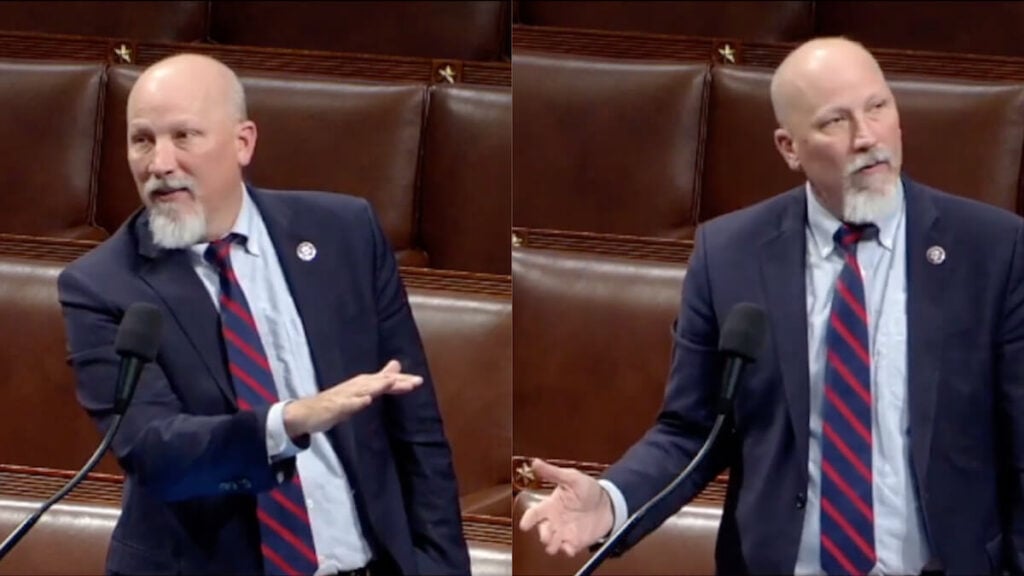
A proposed bill in Texas targeting individuals tied to socialist, communist, Islamist, and related ideologies is drawing backlash, with critics arguing it crosses a constitutional line. Introduced by Chip Roy, the legislation known as the “Mamdani Act” would allow for the deportation and denaturalization of non-citizens who advocate for or are affiliated with certain political or ideological movements. It would also block entry and citizenship for individuals linked to those ideologies and limit judicial review of enforcement decisions.
Roy framed the bill as a response to what he described as growing ideological threats, arguing the United States should not admit individuals who “seek to undermine the Constitution” or promote ideas opposed to American values.
The proposal has intensified debate over immigration and national security, but much of the reaction has focused on whether it crosses the line into regulating political beliefs.
Locals Reacts To Texas ‘Mamdani Act’
Many users framed the proposal as an attack on free expression rather than a policy measure.“It would be hard to draw up another bill that’s a clearer violation of the First Amendment. Viewpoint discrimination is not a legal thing,” one commenter wrote.
“The party of free speech for racists only,” one Reddit user wrote, reflecting concerns that the bill selectively targets certain viewpoints.
Others pointed to broader inconsistencies in how political ideologies are defined and applied. “Both the GOP and Democrats advocate policies that can easily be categorized as Socialist or Communist,” one user argued.
Some dismissed the bill outright. “It’s political theater in the sense the bill isn’t going anywhere,” one commenter wrote, while another added, “It’s election season and most politicians are just manipulating you.”
Others compared the proposal to historical crackdowns on dissent. “They declared communists illegal and then removed political rivals,” one commenter wrote, arguing the bill could set a broader precedent.
Still, there were voices supporting the idea in principle. “It won’t pass, but it’s a great plan,” one comment read, while another described it as “common sense.”
The reaction centers on a core question. Whether targeting ideology is a legitimate security measure or a direct challenge to free speech protections.