
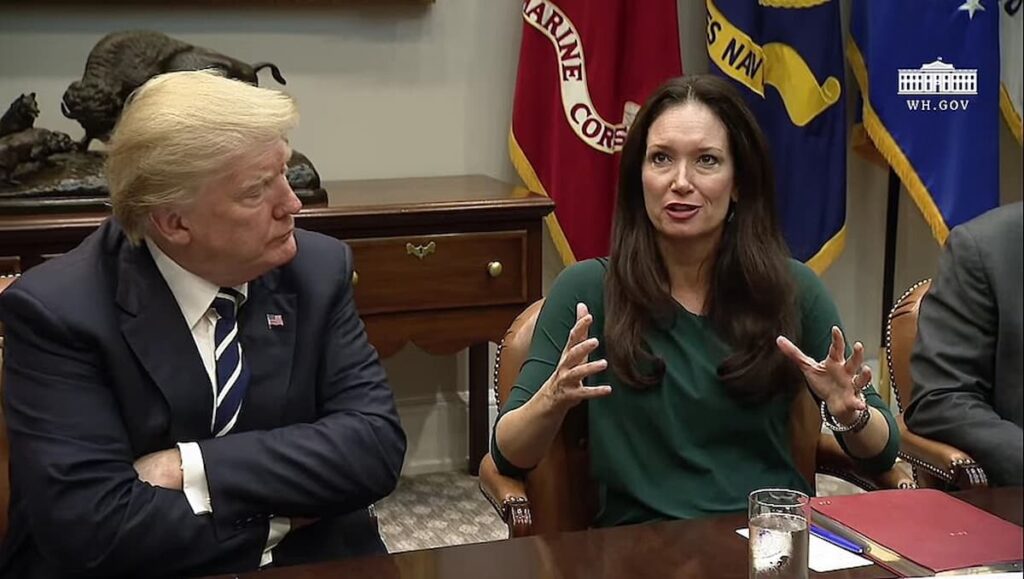
Texas-born Agriculture Secretary Brooke Rollins is getting ripped online after celebrating rising agricultural prices as evidence that life is improving for America’s farmers.
Her timing could hardly have been worse. Rollins, who grew up in Glen Rose and studied agricultural development at Texas A&M, argued that President Donald Trump’s policies had helped agriculture “turn the corner,” pointing to higher prices for wheat, soybeans, cotton and rice.
“Good news today, we now have 20 new trade deals, we’ve cut that deficit in half, but also prices are up,” Rollins said.
She argued that the administration was simultaneously opening markets and lowering farmers’ costs by reshoring fertilizer and seed production.
The problem is that plenty of farmers have spent much of 2026 complaining about precisely the opposite pressure: input costs swallowing their margins even when commodity prices improve.
That contradiction did not escape viewers online. One Reddit user who identified themselves as a farmer responded simply: “Farmer here. It very much does not.” Another mocked the sales pitch with: “Let me esplain why these bad things are really good….”
Rollins’ Victory Lap Comes After A Rural Republican Warning
Rollins’ comments are particularly striking after Tuesday’s midterm results. Republican margins fell significantly across rural America, while Democrats scored unexpected victories in traditionally Republican territory including Iowa, Kansas and Texas. Farm Progress reported that high costs, tariffs and the Iran war were among the major concerns cited by voters.
That matters because the economic squeeze farmers have described is more complicated than whether the headline price of wheat or soybeans has ticked upward.
The Washington Post reported earlier this year that farmers were being squeezed between low selling prices and high operating costs, with fuel, fertilizer, trade disruption and rising debt all contributing to growing frustration. More than 300 farms filed for bankruptcy in 2025, according to figures cited by the paper, while USDA projected farm-sector debt would hit a record $624.7 billion in 2026.

That is the backdrop Rollins was speaking into when she declared agriculture had finally turned a corner. Higher commodity prices can obviously benefit producers. But they are not proof, by themselves, that farmers are suddenly thriving, particularly when diesel, fertilizer, financing and other expenses remain painful.
For a Texas Agriculture Secretary watching rural voters send Republicans a warning at the ballot box, “prices are up” was always going to be a difficult victory lap to sell.