
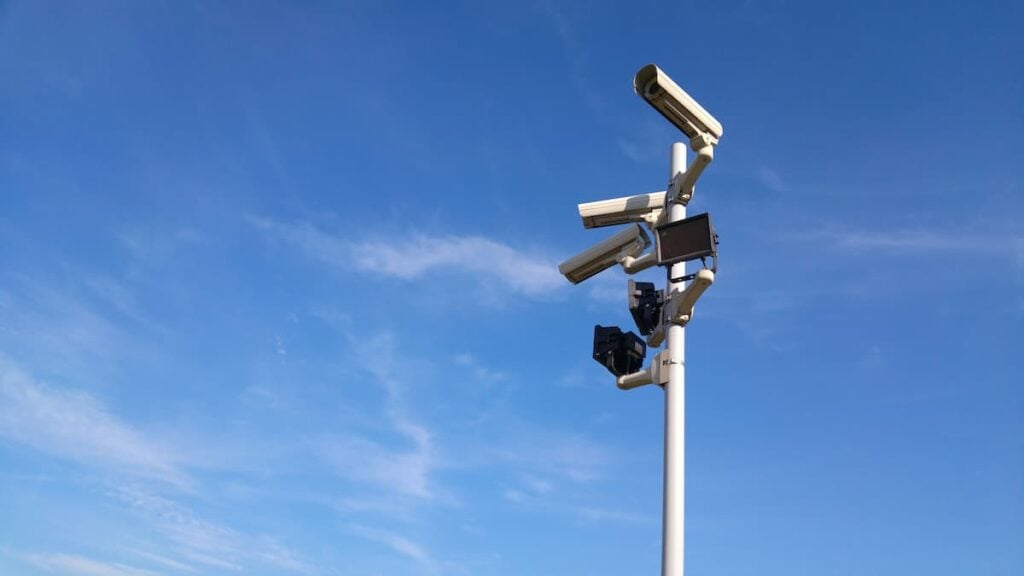
Lakepointe Church in Rockwall, Texas, is facing fierce criticism after a report revealed its sprawling campus is equipped with more than 400 AI-powered surveillance cameras, prompting locals to question why a Christian megachurch needs that level of monitoring and where donation money is going.
The system, supplied by Coram AI, can reportedly monitor staff, recognize license plates and detect firearms. According to the original report from Friendly Atheist, cameras have also been installed in staff offices and other sensitive areas, with former staff raising concerns about transparency and privacy. Pastor Josh Howerton has defended the system as necessary to “keep our people safe.”
That explanation has not convinced many Texans discussing the story online.
One commenter on the Texas subreddit summed up the anger bluntly: “Imagine instead of spending all that money on AI but on the needy.” Another wrote: “These churches keep coming up with creative ways to not help the poor.”
Others focused on the sheer scale.
“Yeah like a couple cameras in public areas, the parking lot, reasonable. 400 cameras? What are they even trying to accomplish?” one person asked. Another questioned why worshippers would tolerate donations being used this way, writing that they would be furious if church contributions were spent on such a system.
The Anger Goes Beyond Cameras
The reaction is particularly combustible because critics are not viewing the surveillance system in isolation.
The original report points to previous controversies involving Howerton and Lakepointe, including criticism over a wedding-night sermon, a later apology that was accused of plagiarism, and allegations involving manipulated traffic data. The church has also faced scrutiny over how it handles accountability and internal power.
That history has colored the Reddit response, where commenters repeatedly raised the broader record of abuse scandals associated with churches and religious institutions. Some made sweeping claims that were challenged by others in the thread, with one commenter arguing that abuse is not uniquely a church problem even while acknowledging that some churches have concealed it.
There was also some pushback against the pile-on. One participant noted that Lakepointe runs a substantial outreach program benefiting people in need, arguing that an organization can simultaneously do genuine good and still deserve scrutiny for serious failures.

But the surveillance question remains difficult to shake. A church asking members for money while building a system capable of tracking movements, plates and staff activity was always going to provoke suspicion. When the same institution already carries baggage around accountability, 400 cameras do not simply look like security.
To many critics in Texas, they look like an expensive new symbol of the very trust problem those cameras were supposedly meant to solve.