
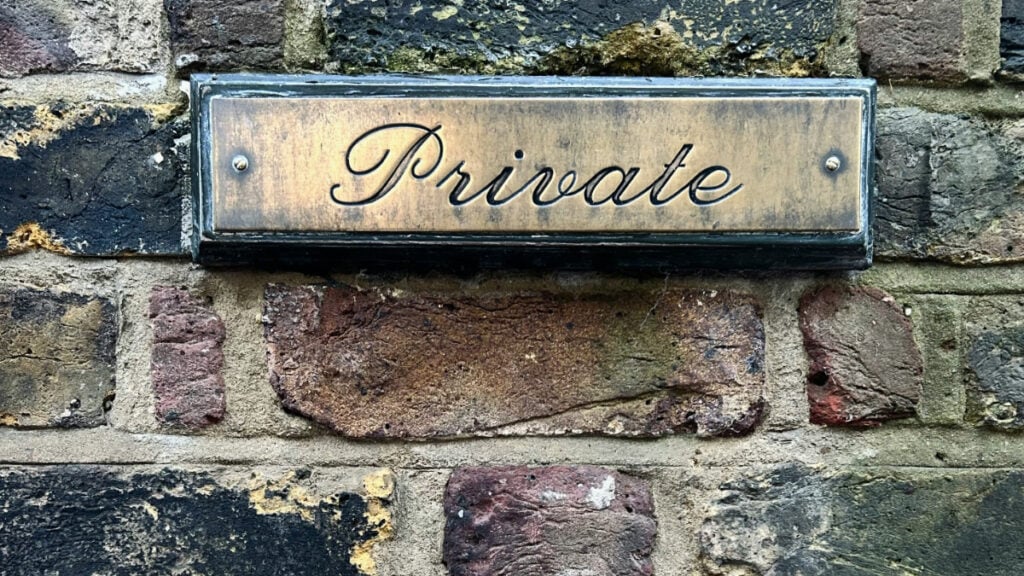
Finding a bit of the past in one’s home could be a delight for history-loving homeowners, but one property owner in Vermont was less thrilled when his city got involved, without permission. MantisViolinist shared his story on r/legal, explaining how he owns a two-story commercial building inside a historic district from the 1920s. Since it’s his private property, it’s understandable why he’d be upset to suddenly find a bronze historical plaque drilled into the entrance.
Mantis says four holes had been drilled into the old brick, and the plaque pointed to a former business that owned the property years ago. “I had never been contacted about this,” he protested and said he confronted town hall about this unauthorized addition to his property. What the staff told him was concerning.
The clerk who answered Mantis’s call claims that a series of plaques were pre-approved for specific buildings in the historic district. The property owners have all been allegedly notified, but Mantis’s account says otherwise. “The commission chair later told me that approval from individual owners was not necessary because the plaques serve a public educational purpose and are consistent with the historic district,” he wrote.
The City Warned The Property Owner from Removing the Plaque
Needless to say, Mantis demanded the plaque be removed and the brick wall repaired, to which the city apparently refused, only offering to change its position. “They also warned me not to remove it myself because it is municipal property,” he added. Mantis concluded that he has no issue with the plaque or its history; it’s the fact that the city drilled holes in his property and told him nothing.
“Definitely put up a fuss. And it will probably require representation,” suggested a commenter. “You are owed just compensation,” demanded another. A third pointed out that the city probably does have the right to install a plaque on someone’s historical property, but with a catch. “You are owed just compensation,” they wrote.
According to the Vermont Agency of Commerce and Community Development, “it is up to individual property owners to order and install a plaque if they are interested in having one.” In other words, nothing is illegal about the government installing a plaque on someone’s property. What is wrong, as Mantis claims, is city officials doing it without permission or compensation, then threatening him if he removes it.

For now, Mantis says he’s taken photos and requested copies of the meeting minutes, installation approval, and other ordinances for this plaque installation. Truly, the city is fortunate to have such an owner of historical property to be this civil over a rather infuriating incident. OP has yet to update his post regarding how officials have responded.