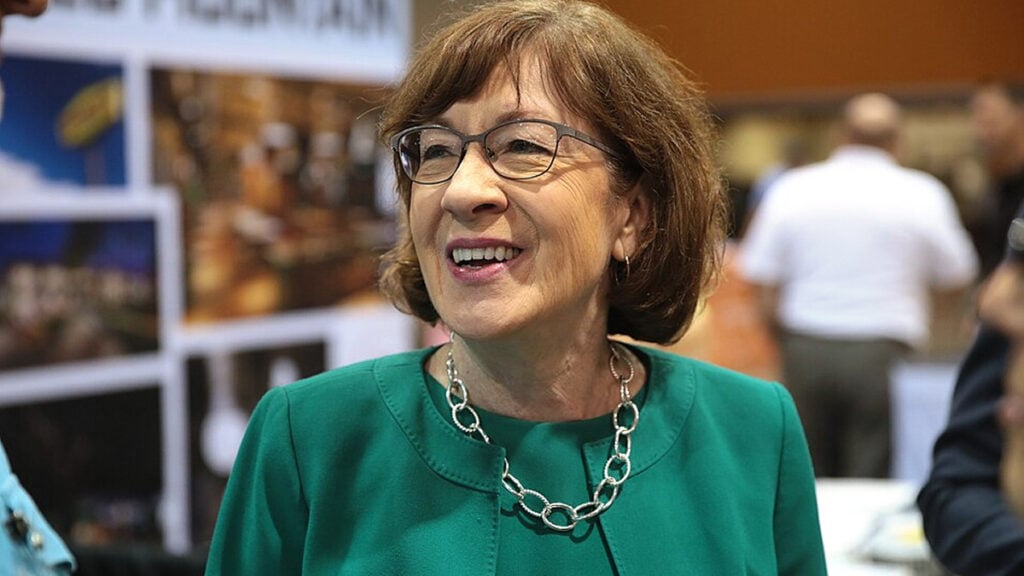
A Republican campaign ad intended for voters in Maine accidentally reached audiences in Oregon after a media-buying mistake sent advertisements supporting Sen. Susan Collins to the wrong Portland. The ads promoted Collins’s reelection bid while attacking her Democratic challenger, Troy Jackson, with the slogan “taxin’ Troy Jackson.” The error resulted in more than one million impressions in a state where voters cannot decide the outcome of Maine’s Senate race.
According to The New Republic, data from Google’s Ads Transparency Center showed that the advertisements ran in Oregon for four days before being removed. The mistake involved Cross Screen Media, the firm responsible for purchasing the ad placements, and Defending Main Street, the Republican super PAC that funded the campaign.
Cross Screen Media accepted responsibility for the error and refunded $25,909.61 to the super PAC. The company also began placing the advertisements in the intended Maine market. The incident drew criticism from Sarah Chamberlain, president and CEO of the Republican Main Street Partnership, which is affiliated with the super PAC.
Collins is seeking a sixth term in the Senate against Jackson, a former president of the Maine Senate. With the November election approaching, the race is part of the wider contest between Republicans and Democrats for control of the chamber. The misplaced advertisements raised questions about how campaign money is spent and how effectively political ads reach their intended voters.
Oregon Residents Mock Susan Collins Ads
Online discussions about the incident quickly turned critical, with commenters mocking the mistake as an example of poor campaign management and wasted money. Some questioned why a political campaign would spend thousands of dollars showing attack ads to people who could not vote in the election. “I was in Portland last week. They hate her there,” one user wrote.
Other commenters shared stories of receiving political advertisements intended for voters in different states, including YouTube ads and campaign mailers. Their accounts suggested that misdirected political messages were not unheard of, although they did not establish how common such errors are.

Some discussions moved beyond the advertising mistake to criticize the influence of wealthy donors and political action committees in American elections. Commenters argued that large campaign budgets and substantial financial contributions give wealthy individuals too much influence over political messaging. Others used the incident to criticize Republicans and Collins, while some Oregon residents said they had seen the advertisements and initially found them confusing.
The fact that both cities are named Portland also became a source of jokes. Commenters compared the mistake to other political blunders involving the wrong locations, while some speculated that inaccurate IP address data, virtual private networks, or limitations in digital advertising technology might explain how the ads reached Oregon. However, none of those explanations was confirmed as the cause of this particular error.
Ultimately, the incident turned a campaign intended to influence voters in Maine into an unexpected talking point in Oregon. Instead of reaching the right Portland from the start, the advertisements spent four days reaching the wrong audience, leaving the campaign with a refund, a costly mistake, and plenty of online ridicule.