
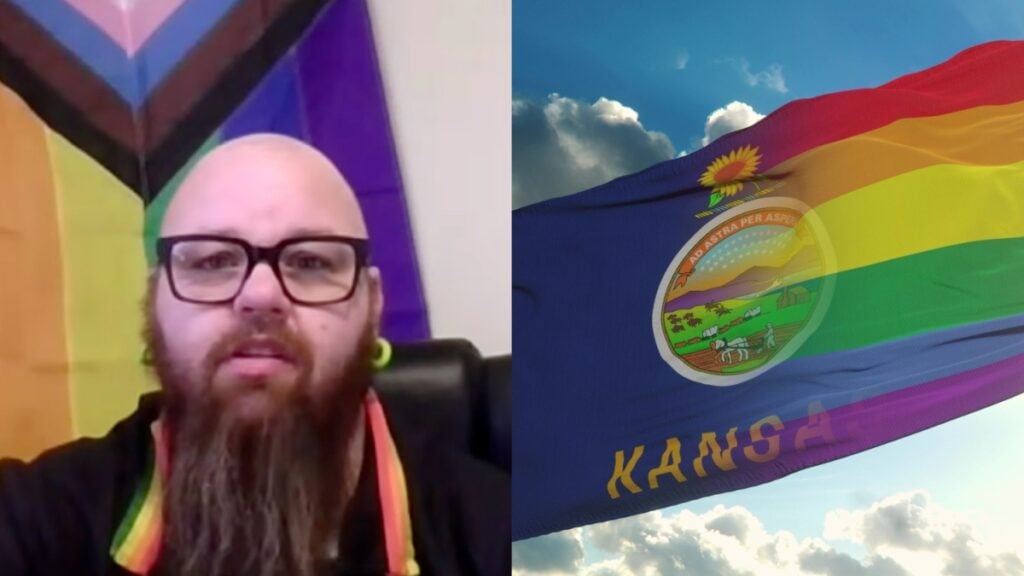
A wave of emotional reactions is sweeping across Kansas after the state enacted Senate Bill 244, a law requiring government-issued IDs to reflect a person’s sex assigned at birth, effectively invalidating previously updated driver’s licenses and birth certificates for transgender residents.
The law took effect late last week, and for many Kansans, the impact felt immediate.
Some residents described confusion and fear over what it means for everyday life. Transgender Kansans say they’re now faced with replacing documents, explaining discrepancies on identification, and worrying about how routine activities, from driving to job applications, could be affected.

“It feels like we woke up and our IDs just stopped being valid,” one Kansas City resident said at a small gathering outside the Statehouse. “That’s not a minor inconvenience. That’s our lives.”
Others expressed concern over the law’s bathroom provisions, which restrict access to public restrooms and locker rooms based on sex assigned at birth. Critics argue it places transgender residents in uncomfortable and potentially unsafe situations.
We Love This State, But This Hurts
At community meetings and rallies in Topeka and Wichita, residents held signs reading “Kansas Is For Everyone” and “Dignity Matters.” Some attendees said they felt torn between their love for their home state and frustration with state leadership.
“I was born and raised here,” one protester said. “I don’t want to leave Kansas. But laws like this make people wonder if they have a future here.”
On the other side, supporters of the law say it provides clarity in state records and protects privacy in sex-segregated spaces. Several residents interviewed locally said they believe the measure aligns with their understanding of biological definitions and public safety standards.

Still, the conversation has become deeply personal for many families. Parents of transgender children have voiced worry about how the law may affect their kids socially and emotionally.
Legal challenges are already underway, and advocacy groups are preparing for a court battle that could determine whether the measure stands. For now, every day, Kansans are left debating what the law means, not just politically, but personally.
As one resident put it: “This isn’t just policy. It’s people.”