

Death Stranding 2 is finally launched on PC on March 19, 2026, and almost immediately, it reminded everyone what ‘next-gen visuals’ are supposed to feel like. Critics and fans have championed how Kojima Productions pushed the Decima Engine to produce something borderline absurd in visual fidelity. Even on base PS5, it flexes on many other AAA games. Which is exactly why Death Stranding 2‘s PC debut collided so hard with the current Nvidia DLSS 5 discourse.
First shared by @TheGameVerse on X, the viral comparison highlights the contrast between Death Stranding 2‘s in-engine character model and a DLSS 5-‘enhanced’ example.
@WrestleDemon commented, “Realistic lighting vs slop garbage ‘where is the light even coming from’ lighting.”
@froyo824 added that the extremely realistic Norman Reedus screenshot was even achieved by older hardware, “All on the PS5 by the way, not needing two 5090s like the one on the right…”
@DXFromYT didn’t hold back, calling the upscaling and frame gen tech straight-up ‘disgusting,’ “Destroying a game’s art direction after not actually working on the game is peak AI mentality. Do nothing, ruin things for everyone, celebrate. This is nothing to be proud of, it is a disgrace and one’s inability to recognize that points to severe delusion. Disgusting.”
Not everyone is piling on, however; DLSS 5 defenders were quick to point out that the comparison itself isn’t exactly fair. Many noted that the Death Stranding 2 screenshot is pulled from a pre-rendered cutscene, while the Resident Evil Requiem example is running in real-time gameplay.
@TryhardFan replied, “One is from a cutscene and the other is actual in-game gameplay.”
Industry reporter Dean Takahashi stepped in to argue on behalf of Nvidia’s official statement. Saying that it preserves the 3D artist’s intent by keeping the ‘same polygon mesh’ but with AI-enhanced lighting that ‘pops’ the art.
JP Kellams, former PlatinumGames staff and now an Epic Games producer, defended the tech even more strongly. Saying that the lighting and shading improvements are ‘bonkers’ and critics are ‘absolutely insane.’
“If that was shown as a next-gen hardware reveal and not ‘AI’ you guys would be going nuts like the Watch Dogs demo,” he wrote.
But that’s exactly where the disconnect between the PR pitch and the actual output starts to show.
Because as our managing editor Alex Gibson previously argued, DLSS 5 basically crosses a line that previous frame generation tech never did. Instead of reconstructing what’s already there, it starts reinterpreting it. And perhaps, not always in ways the original artists intended.
In the Resident Evil Requiem example above, Grace’s face doesn’t just look enhanced — it looks straight-up altered. Her lipstick appears thicker, with even her cheekbones and jawline reshaped so slightly. Her skin also looks smoother but flatter, almost as if she were using Instagram’s beauty filter for a selfie.
“Why prioritize a distinct art style if it’s going to be filtered into something more generic anyway?” as Gibson put it.
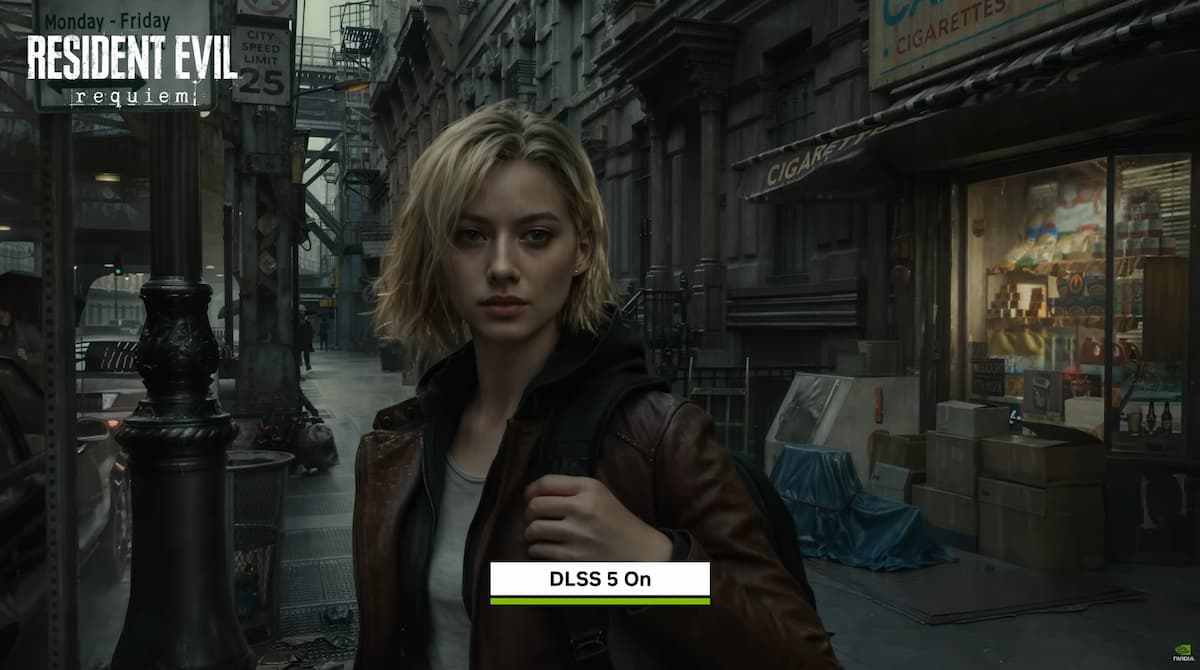
@frenziedflame20 also summed up the frustration neatly, “DLSS5 would have been acceptable if it took the level of quality reserved for real-time cutscenes and applied that to gameplay scenarios…”
“But we never see her face look like that. It’s entirely made up.”
That really is the crux of the debate — DLSS 5 isn’t simply being judged on raw technical gains. It’s being judged on trust. When a tool meant to enhance starts quietly remaking what your eyes are supposed to see, people will notice. Then put it side-by-side with something driven by deliberate artistic choices, well, the flaw should be crystal clear.