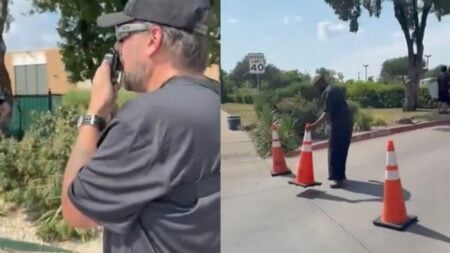
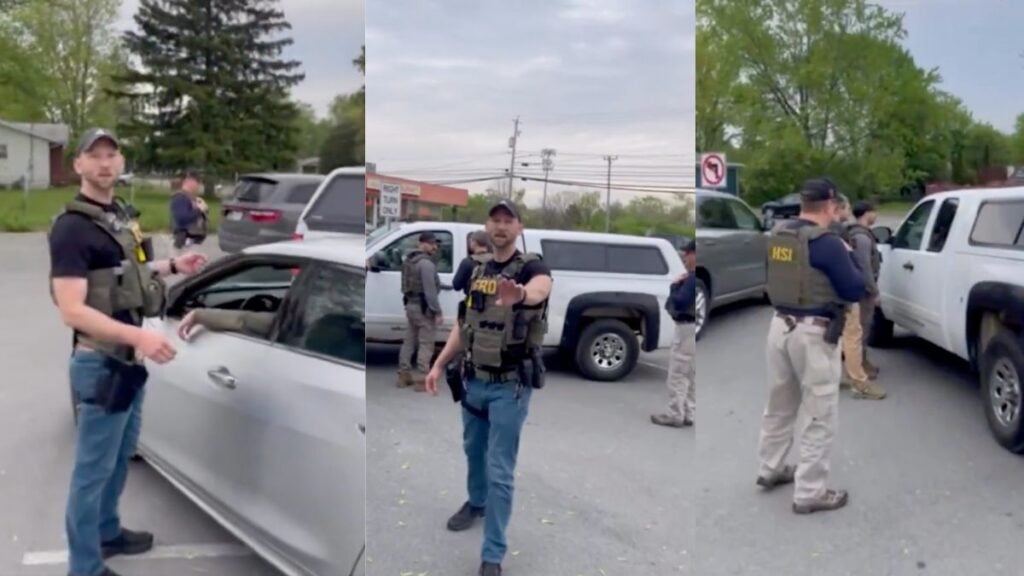
ICE agents are out on the streets, ramping up their enforcement. Lately, it has gotten intense as they have started swarming cars and demanding that people inside show proof of citizenship. Lots of communities aren’t having it, and they are starting to push back. The latest viral incident happened in New York, and it brings up the question that always shows up at these stops: Where’s the warrant?
The video making the rounds on social media shows ICE agents surrounding parked cars in New York. People from the neighborhood rushed over, refusing to just watch quietly. The video doesn’t just show the confrontation; it captures the moment the community stands up.
Folks showed up and asked the agents if they had a warrant. The agents said they did, but when people asked to see it, the agents wouldn’t show anything. Instead, they told everyone to keep their distance.
The person filming the incident can be heard clarifying that they were not requesting to see the warrant for themselves, but informing the individuals inside the vehicles that they had the right to remain in place until proper documentation was provided. The footage continues to roll as agents do not appear to produce a warrant during the encounter.
However, the person recording the video made sure to help. He started shouting their rights to them, such as “you have the right to remain silent.”
This touches on a legal detail that often causes confusion. ICE does not always require a judge-issued warrant to detain someone, as officers can also use an administrative warrant signed within the agency. While these documents may appear official, they are not the same as a judicial warrant, and the distinction is important in situations involving stops or detentions.
Without a judge’s warrant, people – citizens or not – don’t have to agree to a search. ICE can’t just search a car because they think someone inside is undocumented.
Internet Reacts to New York ICE Warrant Confrontation
The clip drew thousands of responses, and the comment section became a collision of legal debate, community pride, and deep frustration with how these stops go down.
Some pushed back on the bystanders’ approach. One person drew a firm legal line: “Though I will say this: when you’re dealing with federal agents, and people demand to see a warrant, especially if it doesn’t concern you, they don’t have to show you. I know it’s not what you want to hear, but just want to point that out.” Another doubled down on that same point, adding a warning: “Law enforcement has no obligation in showing you the bystander a warrant. Every stop they make is legal. If you get in their face and your not the subject, you are obstructing.”
Others shifted the focus to tactics and scale. One commenter raised a question about the sheer number of agents deployed for a single stop: “Why does ICE require so many people per stop? If city and county LEO can successfully work in pairs, why can’t ICE?”
The thread also surfaced deeper suspicions about what’s driving the enforcement surge. One person pointed to the frequency of these stops as evidence of a financial motive: “The fact that this happens so often support the premise that the so-called ICE agents are being compensated on a per person detained basis.” Another was more direct, writing: “There is no reason to assume that ICE agents are abiding the law. ICE agents are bounty hunters. Nothing more, nothing less.”
And amid the outrage and the legal debate, one reply brought the conversation back to something more fundamental: “And this is also why your community is important. Get out of social media and talk with real people.”

Videos like this mark a shift in how neighborhoods respond when federal agents show up. Immigrant rights groups say there has been a big increase in community monitoring, and people are organizing rapid-response teams to document ICE stops. The distinction between judges’ warrants and administrative ones has become one of the most widely shared “know your rights” lessons in immigrant communities.