A TikTok video has resurfaced online after gaining traction on Reddit, sparking heated debate about race, cultural differences, and the experiences of foreigners living in South Korea. In the clip, the California creator claims he noticed what he described as “Asian on Asian” racism during his time in the country, a remark that quickly divided viewers in the comments section.
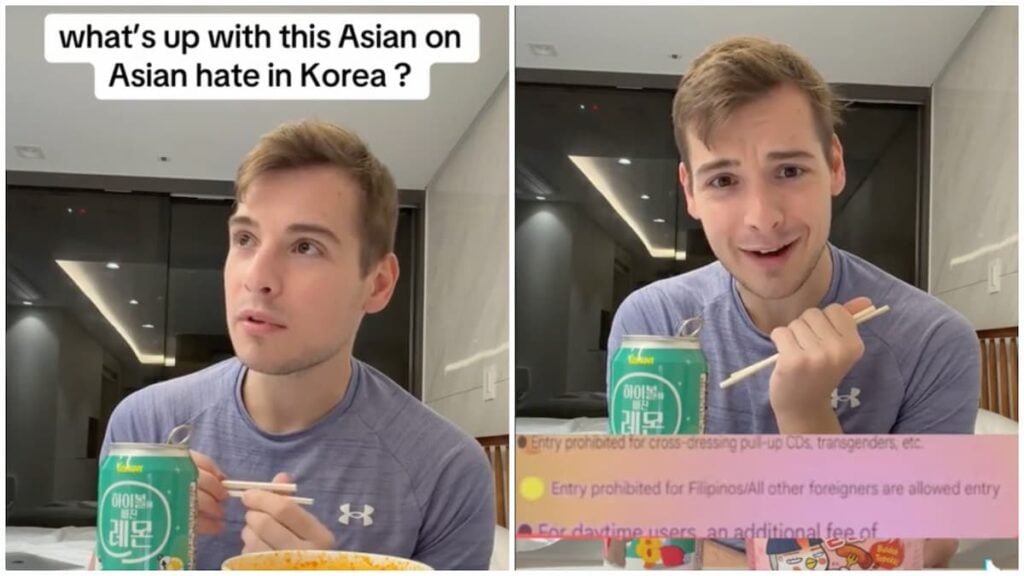
The video comes from California-based TikTok creator Call Me Belly, who is known for posting lifestyle, travel, and food-focused content on the platform. In the clip, the creator shares his observations while speaking directly to the camera, saying: “So, I’m in Korea, right? And I’ve been noticing a lot of racism here. Asian on Asian discrimination, which I’ve never seen before. And I’ve been to Korea before, but I don’t remember this from last time.”
The content creator then shares a brief anecdote about visiting a location where he claims he saw a sign reading, “No Filipinos allowed.” To support his claim, the man shares a screenshot of what he says is the sign in the video.
The California influencer then describes visiting another location where he says there was a sign listing which nationalities were allowed inside. He claims it read, “USA, okay. European, okay. Korean, okay. Japanese, okay. Taiwanese, okay,” before adding, “And that was it. Like, they weren’t letting Filipino, or like Chinese people, or Vietnamese people into this party thing.”
The content creator then speculates it may be related to “gay culture,” while saying he remains confused by the cultural differences. He asks viewers if anyone can explain what he describes as “Asian on Asian” discrimination and whether it is common, noting it is all new to him, as he eats ramen noodles on camera.
He then says the situation feels “weird” and very different compared to the United States, adding that if a store in the U.S. displayed a similar sign, it would likely be met with strong backlash. He also claims he has seen similar cases in Japan, though he describes them as more vague, typically stating “No tourists” or “No foreigners.” He concludes the video by expressing disbelief and asks viewers in the comments to explain the situation to him.
Social Media Reacts to the Viral Video
The video quickly went viral, with social media users sharing mixed reactions and opinions on the creator’s claims. On Reddit, some users reflected on their own experiences living in South Korea and broader cultural attitudes in the region. One user wrote, “I spent 2 years stationed in South Korea as a soldier. I left in late 2011, so their country has probably changed some since then. Sri Lankans in Korea mostly did factory work. Filipinos were mostly women who worked in clubs and were called juicy girls. Sri Lankans & Filipinos were seen as lower class by many South Koreans, & were discriminated against for mostly that reason.”
A second commenter pointed to perceived beauty standards and colorism, adding, “I think it’s also a skin tone thing. Filipinos and Sri Lankans and Vietnamese are often very tan while Japanese and South Koreans are very obsessed with light-to-transparant skin tones, seeing paleness as the height of beauty.”
Meanwhile, over on TikTok, reactions were similarly divided, with some users expressing sadness over the claims while others emphasized more general views on treating people fairly. One netizen wrote, “As a Filipino, that makes me really sad. Especially considering how badly I’ve wanted to visit Korea 😢😢” while another chimed in, “People love to hate lately. For me, nationality doesn’t matter. If you’re a good person to me and those around you, I’ll always show you kindness.”
The clip, while brief, has clearly struck a nerve online, sparking wider conversations about race, perception, and the experiences of foreigners in different parts of the world. While social media reactions vary, the discussion underscores how quickly cultural observations — whether firsthand or interpreted through a personal lens — can evolve into broader debates about discrimination and bias. Ultimately, the renewed attention serves as a reminder of the importance of approaching cultural differences with respect, nuance, and empathy, and of rejecting racism in all its forms.