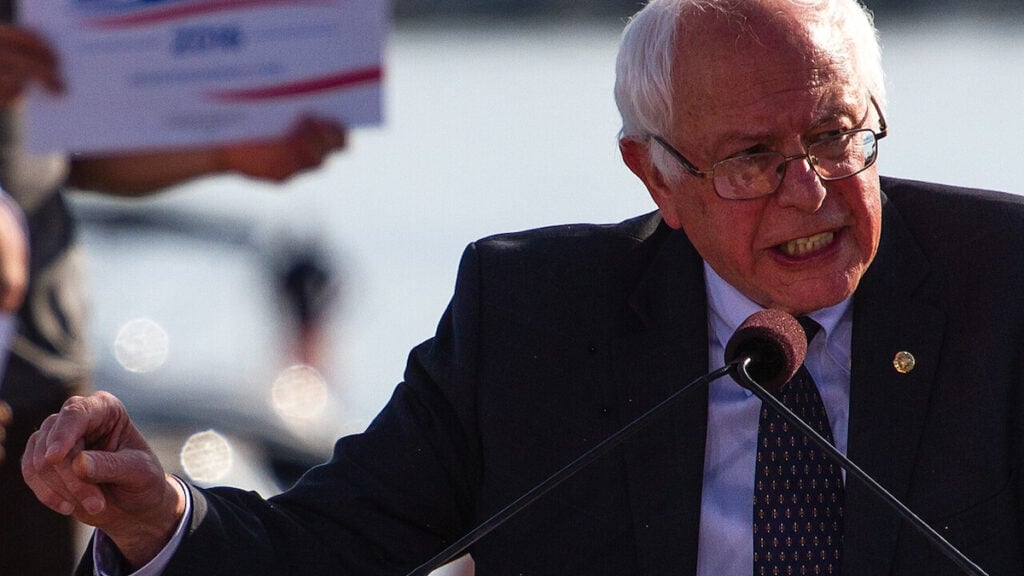
Vermont Senator Bernie Sanders announced plans to introduce legislation targeting the ownership structure of major artificial intelligence companies. The proposal would require the largest American AI firms to transfer 50% of their stock into a public sovereign wealth fund.
According to Tom’s Hardware, the fund would give the federal government direct ownership stakes in leading AI companies. Sanders said the proposal would allow the public to influence how those companies operate.
Sanders argued artificial intelligence systems rely on collective public knowledge accumulated across generations. “Since AI is built on the collective knowledge of humanity, the wealth it generated must benefit humanity,” Sanders stated.
The senator also cited comments from technology executives supporting public wealth-sharing mechanisms tied to artificial intelligence growth. OpenAI previously proposed a public wealth fund, while Elon Musk publicly supported government income payments tied to AI-driven unemployment.
Sanders compared the proposal to sovereign wealth systems operating in Norway and Alaska. Norway’s Government Pension Fund Global currently exceeds $2 trillion in assets, while Alaska’s Permanent Fund distributes annual payments to residents.
The proposal would also require artificial intelligence firms to surrender half of their ownership to the public through the federal government. Sanders previously called for a temporary halt on new artificial intelligence data center construction to allow “democracy a chance to catch up.”
AI Ownership Proposal Triggers Fierce Public Debate
Bernie Sanders’ artificial intelligence ownership proposal quickly divided online communities debating corporate power, taxpayer risk, and public access to technology profits.
One supporter defended public ownership by arguing artificial intelligence firms built their products using uncompensated public knowledge. “They siphoned, without permission human knowledge and even copyrighted works,” the commenter wrote while questioning why Sanders proposed only a 50% public stake.
Another user argued technology profits should not remain private if communities absorb the long-term infrastructure costs tied to artificial intelligence expansion. “No socialized cost without socialized profits,” the commenter stated.
Several participants also focused on how technology companies monetize public data and online activity. “Your data and you were never compensated,” one commenter wrote while supporting public ownership stakes in AI firms.
Others compared Sanders’ proposal to state investment systems already tied to public natural resources. “It makes sense to treat this like the Alaska permanent fund,” one user argued while discussing public dividend payments.
Not every reaction supported the proposal. One critic rejected the plan outright, responding simply, “How about no.”

Another skeptical commenter questioned whether the proposal would create genuine public ownership at all. “The word ‘public’ is being grossly waterboarded here,” the commenter wrote while criticizing the structure of the proposed fund.
The debate unfolded as lawmakers, investors, and technology companies continue clashing over who should benefit financially from the rapid growth of artificial intelligence systems.