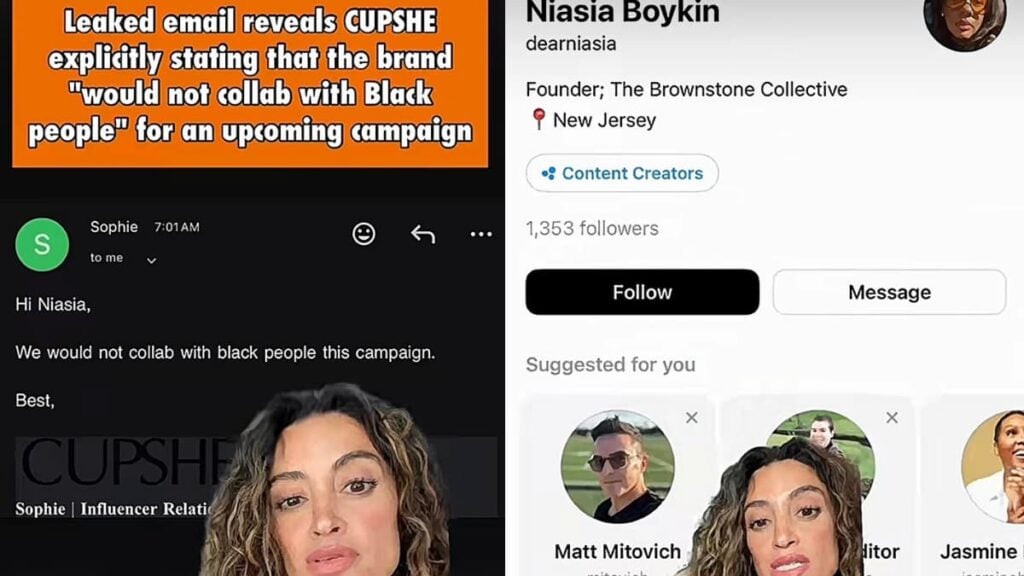
A woman in New Jersey has accused fashion brand Cupshe, known for its swimwear, of racial discrimination after sharing what she said was an email from a company representative regarding a marketing campaign.
The woman said on Threads that she runs a talent agency and had pitched a collaboration to Cupshe on behalf of her creators. She alleged that she received a response from someone using a company email address stating that the campaign would not collaborate with Black creators. She shared what she said was an email that read, “We would not collab with black people this campaign.” The authenticity of the email and the circumstances surrounding it have not been independently verified.
The response led the woman to write, “This is racial discrimination. It is illegal. And it happens in influencer marketing more than anyone wants to admit, usually just more quietly than this.” The woman characterized the message as racial discrimination. No legal findings regarding the matter have been reported.
She also addressed claims from users who suggested the email may have been fake or not sent by the company, stating that the email address used contained the company’s domain.
Cupshe later sent the woman an email expressing concern over the message she initially received. “The message you received is not reflective of Cupshe, our values, or the way we partner with our creators. We cherish our relationships with our creators and we sincerely apologize for the experience and any harm or frustration it may have caused,” they wrote.
The company also stated that it had taken action regarding the employee it said was responsible for the message. “As a result, the employee responsible is no longer with the company.” It added, “We have taken immediate action internally and are reviewing our processes to ensure our standards are upheld moving forward.”
Fashion Brand Faces Backlash After Alleged Email Goes Viral
The video sparked reactions online. Many viewers expressed concern over Cupshe’s response to the New Jersey woman. Some users said the initial email reflected discriminatory behavior. “This is exhausting,” one person wrote. Another person said, “An employee would not write that unless the company actually say that internally!!!” This prompted another user to respond, “right. How many people and deals was this singular person handling? Employees don’t do things like this unless they’re explicitly told to. They are just the middle men.”
Other users argued that the actions of a single employee should not automatically be viewed as representative of an entire company, pointing to Cupshe’s public response and statement that the employee involved was no longer employed by the brand.

Several viewers also stated that they would no longer purchase from the brand. “Thank you for letting me know, I was interested in purchasing from there but no longer will,” one person wrote. Another person said, “When people/companies tell you who they are, believe them. No more money to Cupshe.”
The video prompted online discussion about brand collaboration practices and diversity in influencer marketing. It also sparked debate about how companies handle allegations of discrimination and whether the actions of individual employees should be viewed as representative of a brand as a whole.