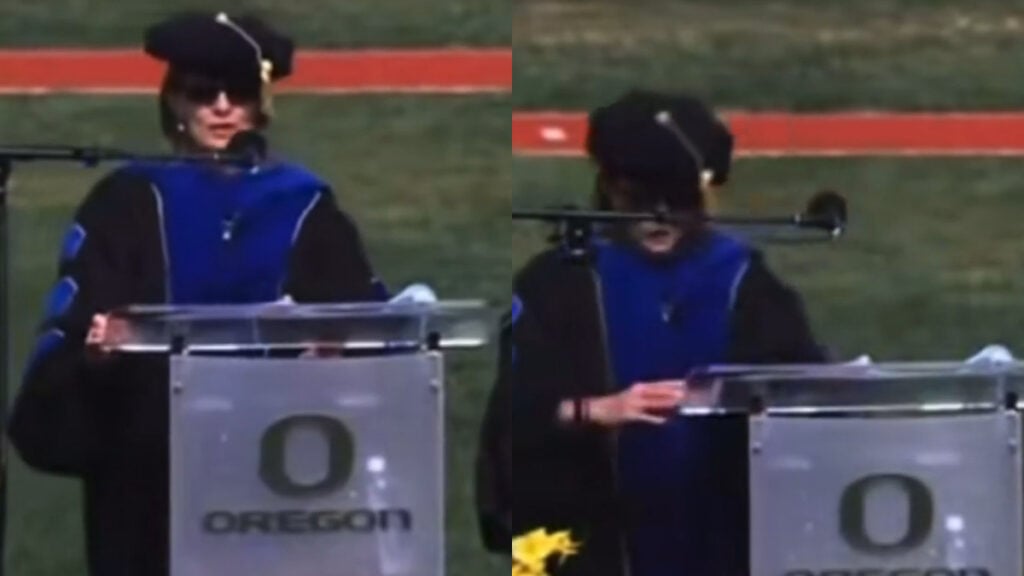
A graduation ceremony at the University of Oregon’s College of Design was briefly disrupted after the dean collapsed while speaking on stage during extreme heat. The incident happened at Hayward Field as temperatures reached about 97 degrees. Emergency responders responded quickly, and the dean was taken off the stage on a stretcher.
The moment was captured by attendees and later posted online, where it spread across social media, including Reddit’s r/mildlyinfuriating. The post gained significant attention as users reacted to both the collapse and the decision to continue holding the ceremony outdoors in dangerous heat conditions.
In the footage, the dean is seen addressing Oregon graduates before suddenly losing consciousness and falling mid-speech. The dean is then carried away for treatment while the ceremony pauses briefly before continuing with adjusted remarks and guidance for attendees to stay hydrated and avoid prolonged sun exposure.
There has yet to be an update on the Oregon dean’s condition. According to The Emerald, the event took place under a heat advisory issued for the area, with forecasts warning of unsafe afternoon temperatures. Earlier in the day, the university had already modified other graduation events due to heat risks, including moving one ceremony indoors.
University Of Oregon Heat Incident Sparks Online Debate
The video sparked widespread discussion online, with many users questioning why large outdoor ceremonies are still held during extreme weather warnings. Several commenters pointed to a lack of preparation, particularly the absence of shade, water stations, or alternative indoor plans. One user wrote, “Do they not learn from other graduations where similar things happen? The educational institutions are supposed to teach and learn, right? Right?”
Others noted that similar fainting incidents are common in long outdoor ceremonies and pointed to experiences from marching bands, military formations, and other events requiring prolonged standing in heat. Some users explained that remaining still for extended periods in high temperatures can increase the risk of fainting, especially without hydration or movement.
The discussion also shifted toward institutional responsibility, with commenters saying universities need better contingency plans for extreme heat as these events become more common. Others suggested that scheduling choices may be driven more by logistics or cost considerations than by safety priorities.
Other reactions were more critical or sarcastic, with users mocking the University of Oregon’s lack of planning and joking about what the dean may have been about to say before collapsing. A few also stressed that event planning is typically handled by university administration rather than individual faculty members, shifting focus away from the dean personally.