A California teacher was left stunned after her 10th-grade students struggled to find Chapter 2 in a book.
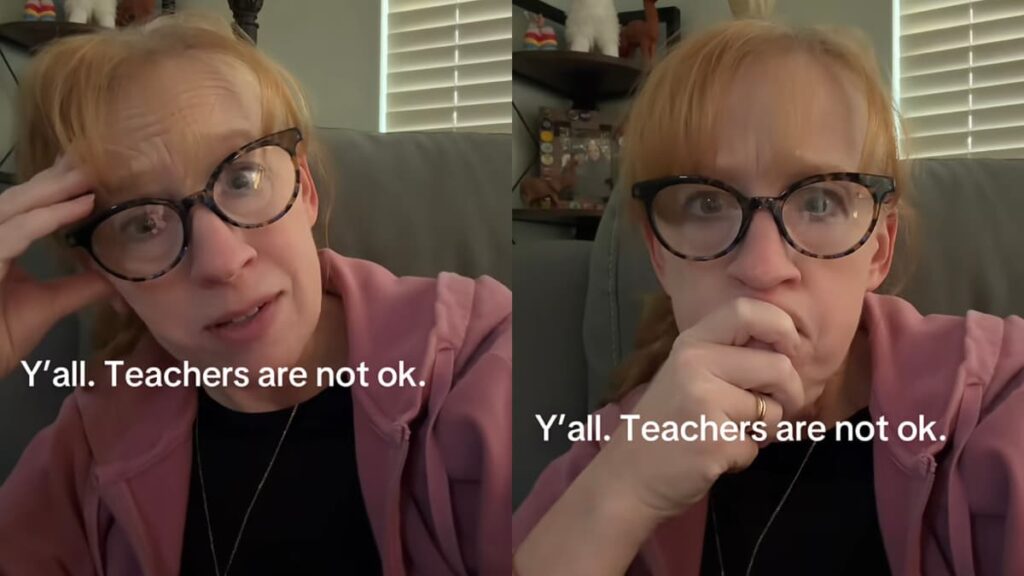
The teacher, identified as Sarah on TikTok, shared a video with the text “Y’all. Teachers are not okay” displayed on the screen. She began by expressing disbelief over what had happened, saying that she wished she were making up the story she was about to share.
Sarah explained that the incident reflected what she believed high school education was currently like. According to her, three of her 10th-grade students approached her and proceeded to “shove” their books at her. Each student then complained that they couldn’t find the second chapter. “How am I supposed to find chapter 2?” Sarah recalled the students asking her.
“It’s after chapter one,” the teacher responded in disbelief. She then demonstrated how she had instructed the students to look through their books and turn the pages until they reached the chapter. “These are 10th graders,” Sarah repeated, struggling to understand how students their age could have difficulty completing such a simple task.
The remainder of the video showed Sarah appearing speechless as she tried to process what had happened. She also expressed her frustration in the caption, writing, “What come after learned helplessness on the scale? Because that’s where we are at.”
In a separate video, Sarah claimed that school administrators did not want students to fail because schools were evaluated based on their students’ passing rates. She explained that even when students failed a class, they could enroll in an online credit recovery course to make it up. However, she worried that some students might use AI to complete the coursework instead of doing it themselves. Frustrated by the situation, Sarah concluded her video by saying, “We can’t win.”
Sarah’s experience struck a nerve with viewers who shared similar frustrations about students struggling with basic classroom tasks. While her story involved just three students, it sparked a larger conversation about how much help some teenagers need with assignments that teachers expect them to complete independently.
Some critics blame the education system for allowing students to advance through grades without mastering essential skills. Others point to excessive reliance on technology and limited opportunities to develop independent thinking. Sarah’s comments about schools prioritizing passing rates have also raised concerns that some students may be promoted despite not meeting expected academic standards.
Viewers Shocked Over California Teacher’s Story
Many viewers online expressed shock over the California teacher’s experience, with some voicing frustration about students struggling with basic tasks. “This is the residue of no child left behind,” one person wrote, blaming education policies for the situation. Another teacher shared a similar experience, commenting, “I set a deadline and locked an assignment on google classroom and a SENIOR ran out of the class and told the counselor I was ruining her mental health…like I don’t even know if the general public knows how wild it is right now in education.”
Others continued expressing disbelief over the incident. Some worried about how students who struggle with basic tasks might manage responsibilities as adults. “Imagine them as adults….. This country is in trouble…..” one person commented. Another blamed the practice of promoting students who have not mastered essential skills. “The natural result of consistently passing kids to the next grade when they can’t do their current grade-level work,” they wrote. Someone else questioned why the students didn’t seem embarrassed by the situation. “I cannot believe they aren’t embarrassed for themselves,” they added.
Sarah’s experience brought attention to concerns about the state of education. This includes whether students are developing the basic skills expected at their grade levels. It also highlighted the frustration and exhaustion some teachers experience when they have to repeatedly explain simple tasks while managing their other classroom responsibilities.