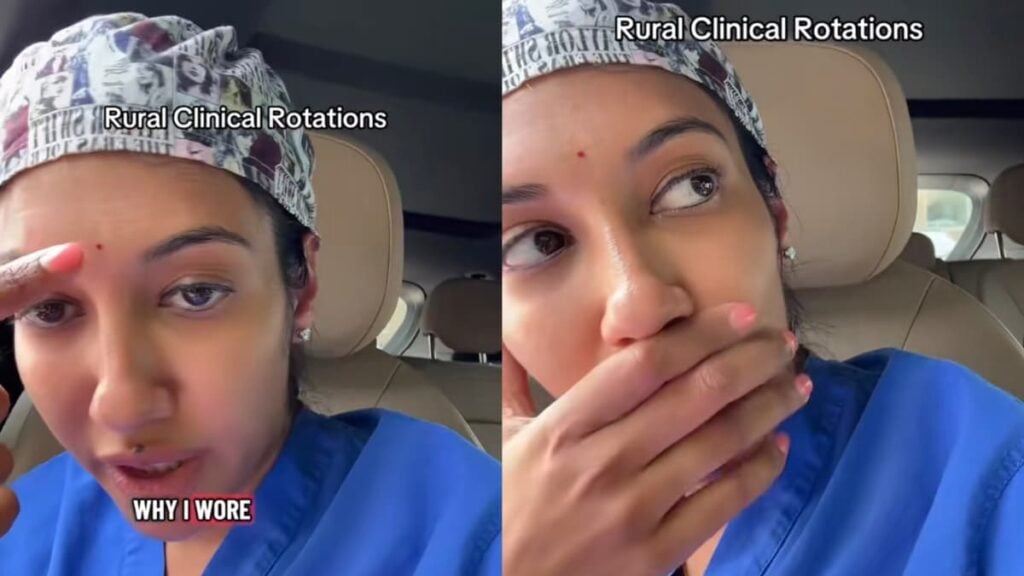
An Indian medical student says a routine patient visit during a clinical rotation in rural Georgia took an unexpected turn after a patient made a remark about her bindi that left her “too stunned to speak.”
The incident also drew attention to the cultural significance of the bindi, which was central to the patient’s remark. A bindi is a small decorative dot or ornament traditionally worn on the forehead, most commonly by women in India and among people of South Asian heritage. While many people wear bindis as a fashion accessory today, they also hold cultural and religious significance for many Hindus, symbolizing tradition, spirituality, or marital status depending on the context. Because of this significance, many viewers said the patient’s comment was offensive and disrespectful.
The medical student shared a video describing an experience she said occurred during one of her rural clinical rotations. According to her, she was in a small town in Georgia examining a patient with diabetes when the patient’s wife asked why she was wearing a “dot,” referring to her bindi. Before the student had a chance to explain its cultural significance, she said the patient’s husband interrupted with a racist remark.
According to the medical student, the patient then told his wife, “I’ll tell you why she wears that dot. When she gets married, her husband scratches it off and finds out if he won a motel or a gas station.” After recounting the interaction, the student covered her mouth in disbelief, reflecting on how stunned she had been by the remark. “I drove home in silence,” she said as the video concluded.
Viewers Divided Over Georgia Man’s Racist Remark
The video sparked reactions online. Viewers were divided over how to react to the Georgia man’s remark. While many described the comment as racist and said they were shocked by it, others said they found the situation absurd while still acknowledging that the remark was offensive. “Too stunned to speak…,” one person wrote. Another commenter said, “They be so racist but accidentally funny [expletive].”
Another commenter argued that incidents like this can discourage healthcare workers from practicing in rural communities, saying, “Fun fact, there’s a shortage of medical personnel across rural communities. This video is a great example as to why.”
More viewers expressed disbelief over the patient’s remark. “Omg. Patients say the worst racist and sexist comments but you have to give him credit for creativity,” one person wrote.
While many viewers condemned the alleged remark, others said the story highlighted one of the lesser-discussed challenges healthcare workers can face when treating patients in unfamiliar communities.